ANTARCTICA
My Antarctica Cruise Packing List: What I Brought, Borrowed, Rented, and Actually Used
•
SHARE:
This post contains affiliate links. If you book through them, I earn a commission at no cost to you. Learn more
I decided to go to Antarctica while sitting in an apartment in Buenos Aires, planning a totally different trip. I was mapping out a few weeks in Patagonia, saw Ushuaia sitting right there as the jumping off point for half the Antarctic cruises on earth, and thought, well, if I’m going to be down there anyway, why wouldn’t I? So I booked it.
I’d been living as a digital nomad for a while, based out of warm weather cities, and my suitcase reflected that. Crop tops, light dresses, workout leggings, one lightweight puffer that had no business being my only piece of cold weather outerwear. I wasn’t packing for Antarctica, I was packing for the idea of Antarctica.
This is the Antarctica cruise packing list I wish I’d had: what I actually used, what I had to rent once I got to Ushuaia, and what I’d tell anyone to pack, whether you’re planning this six months out or you just haven’t taken “cold” seriously enough yet.
Planning a trip to Antarctica?
🚢 Book your expedition cruise: G Adventures
🏥 Antarctica Travel insurance: IMG travel insurance
🛌 Book your pre-cruise hotel: Booking.com
🚣🏻♀️ Book pre-cruise Ushuaia tours: Viator
🚘 Rent a car in Ushuaia: Discover Cars
Antarctica Cruise Packing List at a Glance
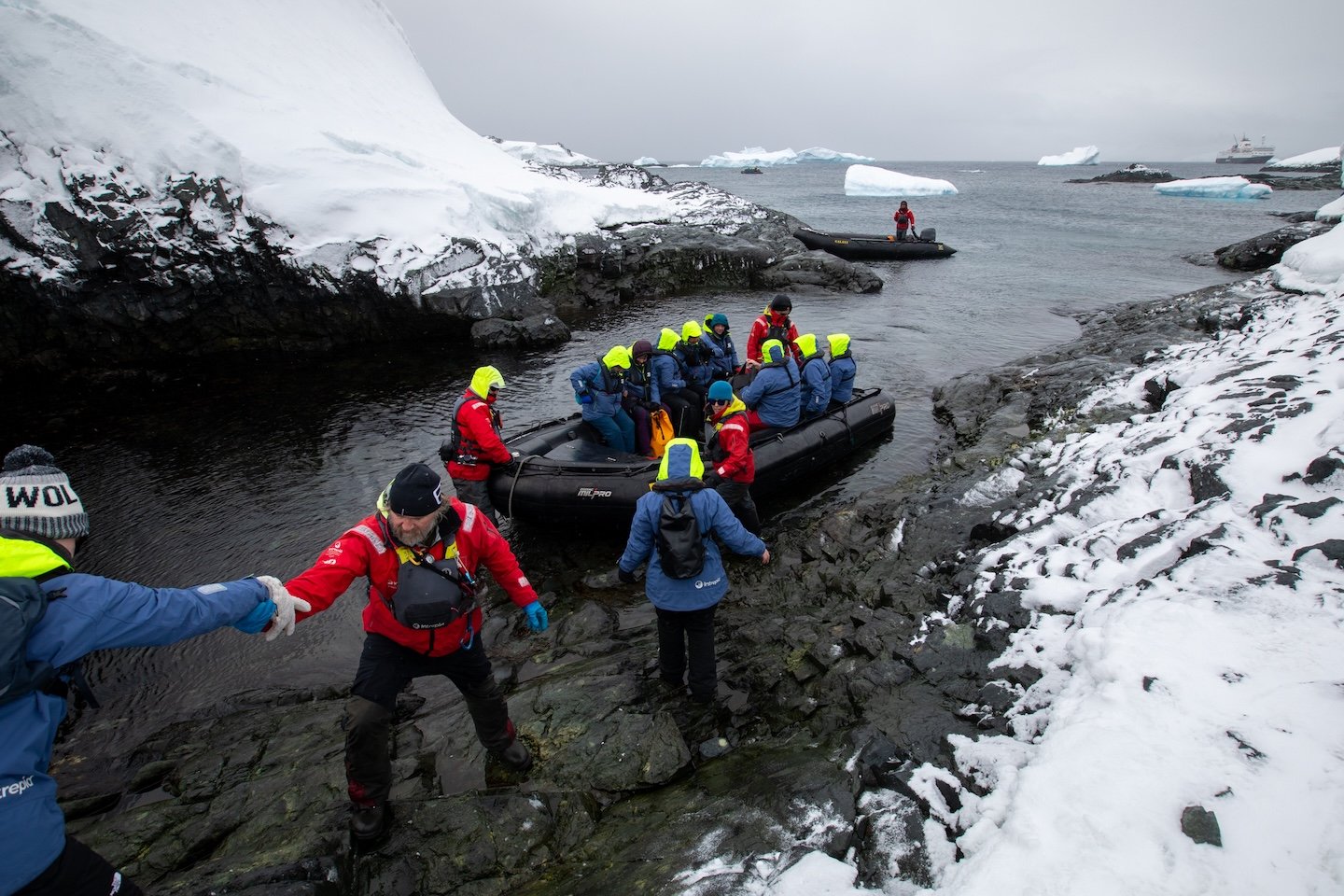
Packing for an Antarctica expedition cruise comes down to five groups of gear. Before buying anything, I’d check what your cruise operator provides. My operator, Intrepid, supplied the expedition parka and muck boots, which saved me from carrying two of the bulkiest items.
|
Packing group |
What you need |
My recommendation |
|---|---|---|
|
Warm base layers |
Fitted layers for your upper body, legs, and feet |
Buy or bring your own because they sit directly against your skin |
|
Mid layers |
A fleece, sweater, or lightweight puffer |
Borrow or rent if you rarely travel somewhere cold |
|
Outer layers |
Waterproof pants, gloves, parka, and boots |
Check what your operator provides before buying anything |
|
Ship clothing |
Comfortable casual clothes, closed-toe shoes, sleepwear, and swimwear |
Keep it comfortable—the ship is heated |
|
Personal and excursion essentials |
Sunglasses, dry bag, medication, camera gear, entertainment, and a power bank |
Bring these yourself because they are personal or frequently used |
My own setup was a mix: I brought the small personal items, borrowed fleece layers, rented waterproof gear in Ushuaia, and used the parka and boots provided. In this post, I’ll break down what I wore, what was worth renting, and what I would skip next time.
What makes Antarctica packing different
Antarctica doesn’t pack like a normal cold weather trip. You’re not just dealing with low temperatures, you’re dealing with conditions that can change within the same excursion. There’s a few things that threw me off before I understood them:
- It’s technically a desert. Antarctica gets very little precipitation, but between wind, sea spray, and snow, you can still end up wet on the outside. At the same time, the air is dry enough to crack your skin and lips fast.
- The sun barely sets. Most cruises run during the Antarctic summer, when you get close to 24 hours of daylight. Polarized sunglasses are essential, the glare off snow and water is intense.
- Conditions can flip fast. I had excursions go from calm and sunny to a snow squall within an hour. Layers you can add or strip matter more than one heavy “Antarctica coat.”
- Ship clothes and excursion clothes are different problems. What’s comfortable indoors won’t hold up on a zodiac.
Once that clicks, the rest of this list makes a lot more sense. It’s less “bring your warmest stuff” and more “build a system you can adjust hour to hour.”
What Antarctica Cruise Operators May Provide
Before you build that system, it’s worth checking how much of it your cruise already covers. Many expedition ships provide a waterproof parka and muck boots for landings, along with a locker to store with your other cold gear.
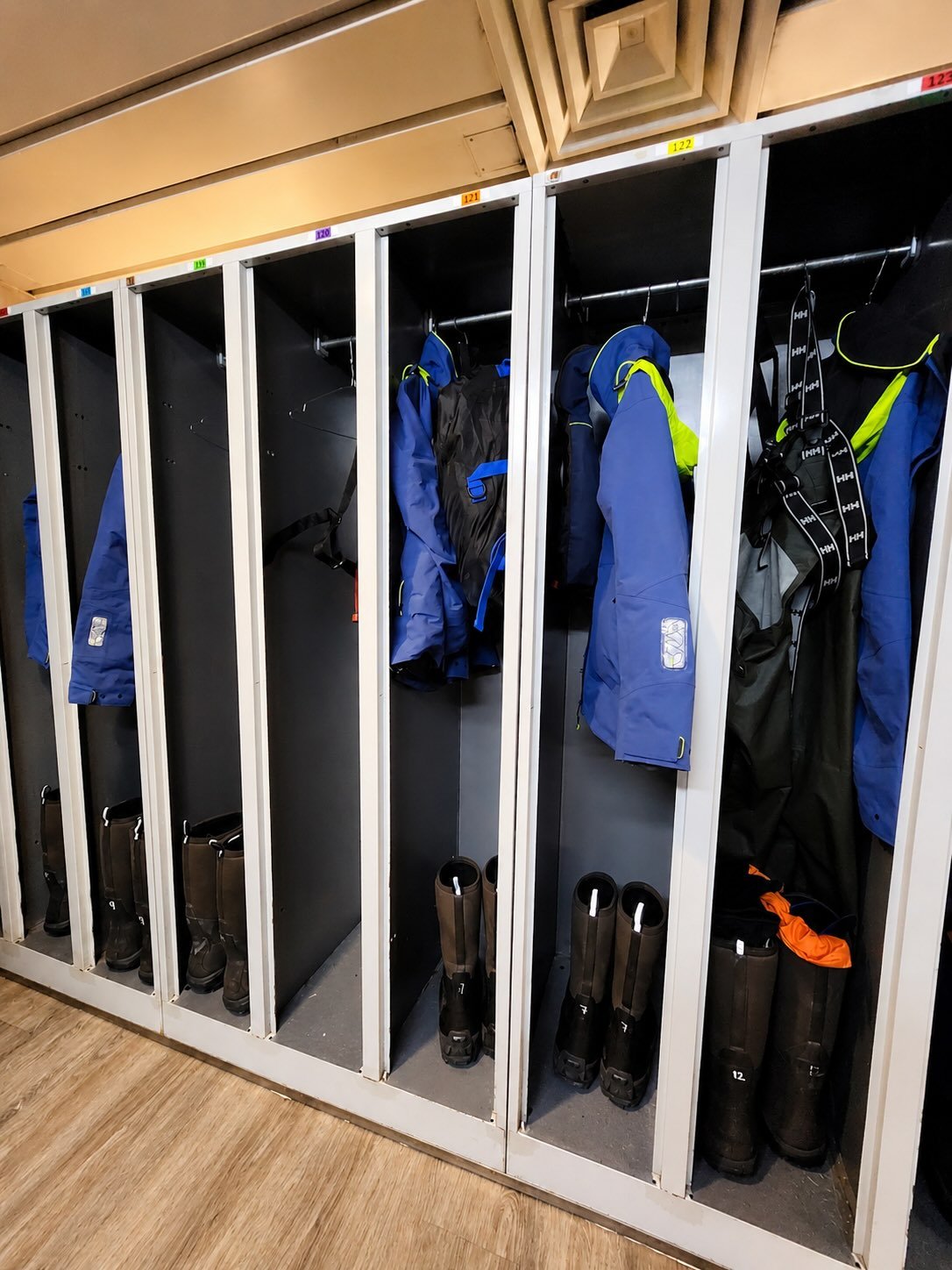
My cruise included both the boots and parka for me, plus a branded puffer to keep. That alone changes what you need to pack versus rent, so confirm it with your specific cruise first.
What to Wear in Antarctica: My Layering System
When it comes to packing for Antarctica, the whole system comes down to three layers you can add or strip as the day changes, since it genuinely can change more than once on a single excursion.
Base layer
This sits against your skin and does most of the work on calmer days. Most days, I wore a lightweight long sleeve hiking top, or a thin long sleeve fleece layer when it was colder.
Similarly, for my bottoms, I’d wear workout leggings on warmer days and switch to fleece leggings on cold days.
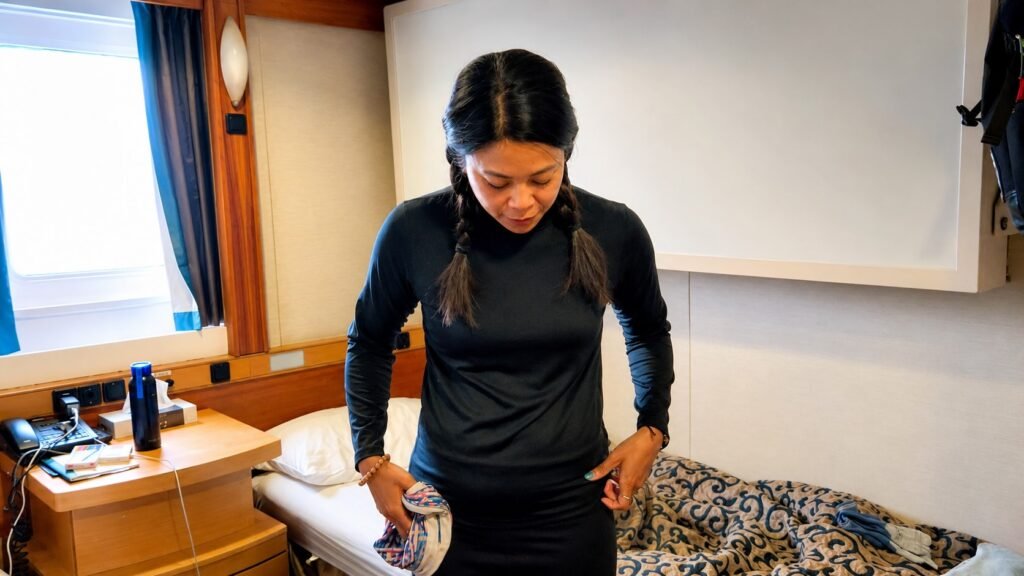
For feet, thin sock liners under wool ski socks. My toes tend to get cold, so if you run cold too, this is the spot to over-prepare rather than your torso.
Mid layer
One warm layer that traps heat without adding too much bulk. For my upper body, I used my Mountain Hardwear lightweight puffer I already owned, but a fleece jacket or wool sweater does the same job, which you can wear onboard too. Personally, I prefer this layer to have a zipper so I can open it up if I get too warm, outside or onboard.
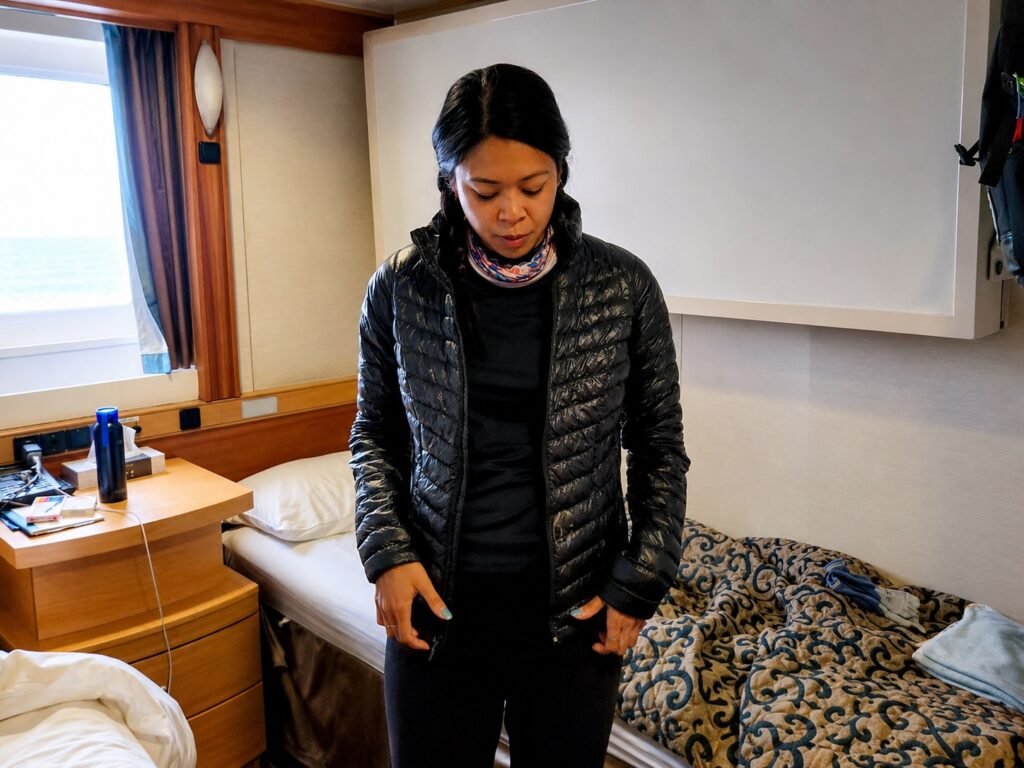
For my bottoms, on land excursions I skipped the mid layer and just wore my leggings under waterproof pants as it gets warm when you’re walking around. On very cold days I’d toss a pair of hiking pants over my base layer, which worked for me.
Outer layer / Cold Gear
This is the layer that actually keeps you dry, which on a zodiac matters more than how warm any single piece is.
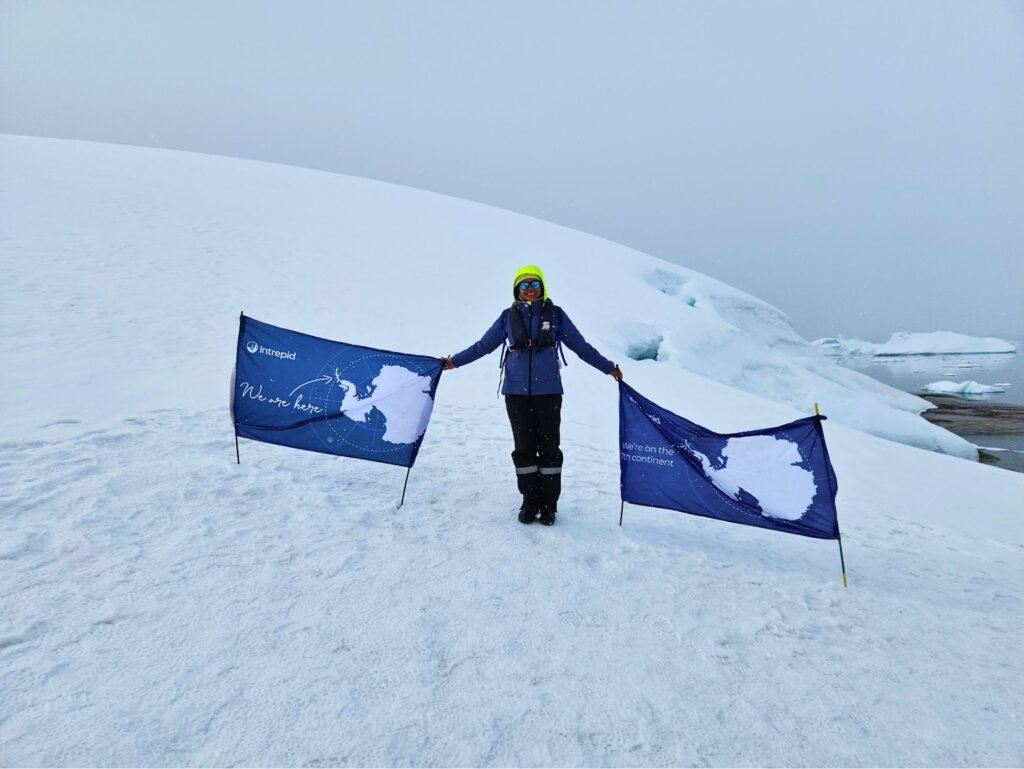
- Waterproof Parka: This is usually provided by your cruise operator, and goes over everything else. These parkas are usually both waterproof and insulated, keeping you protected from the elements.
- Gloves: A thin pair underneath with waterproof mittens on top. The reason is simple — if you’re taking photos, you’ll likely take your thicker mittens off and still want protection from the cold air. Look for gloves with touchscreen fingertips, it’ll make your life so much easier. For mittens, make sure you get the waterproof mittens with the strap that goes around your wrist so they don’t drop on the ground.
- Waterproof Pants: When purchasing or renting, make sure you size up so the legs fit over your muck boots rather than bunching above them; this helps keep snow and water away from the boot opening, and the last thing you want is wet feet. I rented mine, but if you want your own I’d look into something like the Columbia Storm Surge Pants, as they have adjustable waist and and cuffs which is good for layering.
- Boots: Your cruise issues muck boots, which worn over both sock layers.
- Head: A hat, a neck buff, and polarized sunglasses. I went with a neck buff over a scarf since I could pull it down the second I started overheating from walking.
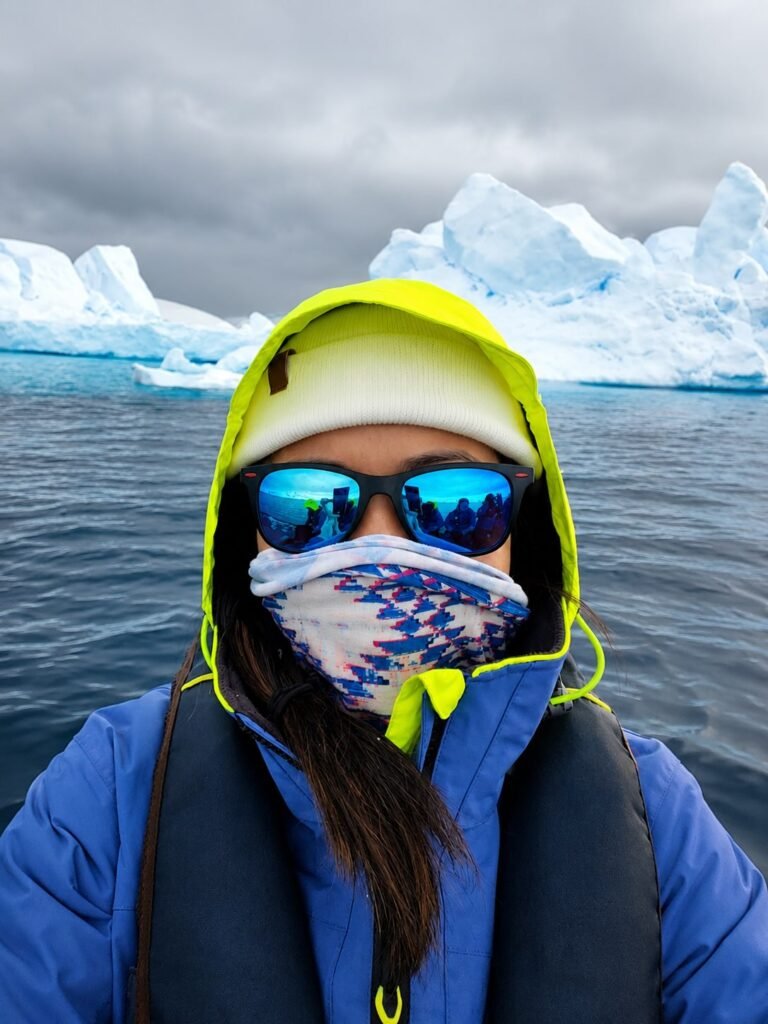
Another expedition note: bring a dry bag on every excursion, even if everything you’re wearing is already waterproof. Mine carried my phone, camera gear, an extra battery, and whatever layer I’d just stripped off mid expedition.
What to wear on the ship (non-excursion days)
Excursion days get all the attention, but you’ll spend plenty of time on the ship too, especially during the two sea days crossing the Drake Passage each way. This is a much smaller packing decision than your excursion layers, since the ship itself is heated.
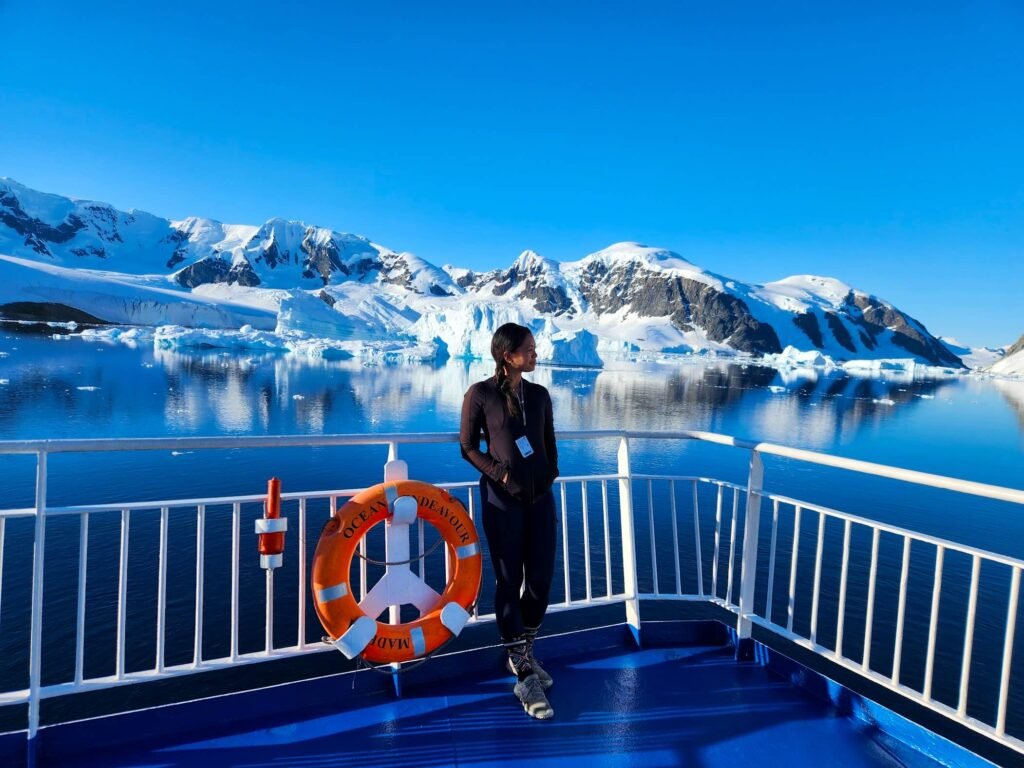
I mostly lived in a long sleeve top with my puffer jacket over it when it got chilly near the windows or out on deck, hiking leggings, and regular socks. Sneakers or any comfortable closed toe shoe work fine, you don’t need your muck boots indoors.
A few extras worth packing for ship life specifically:
- A swimsuit, for the sauna and hot tub, both of which are worth using after a cold excursion
- Workout clothes, if you plan to use the gym on sea days
- Something a little nicer for dinner if that matters to you, though my ship had a more expedition vibe than luxury, so this is low on my list of priorities.
How to Build an Antarctica Packing List Without Owning Winter Gear
If you’re not someone who already owns winter layers, you don’t need to buy a full cold weather wardrobe for one trip. Renting and borrowing covered most of what I was missing, and it’s worth knowing your options before you assume you have to buy everything new.
Renting Gear in Ushuaia
Ushuaia has gear rental shops set up specifically for this, since plenty of travelers passing through are in the same position I was. I rented a package that included waterproof gloves, waterproof pants, a dry bag, and hiking poles from Ushuaia Gear Rental for $195, which was super helpful.
Borrowing What You Can
I didn’t own a proper fleece layer since I had been living in Buenos Aires through the summer, so I borrowed one, along with fleece pants, from a friend before the trip. If you know anyone who’s done cold weather travel or snow sports, it’s worth asking before you buy, mid layers especially are easy to borrow since fit matters less than with outerwear.
What I’d Buy Instead of Rent
Gloves, base layers, and socks are worth owning rather than renting, they’re cheap enough, and renting something that sits directly against your skin is less appealing anyway. Outer shells, waterproof pants, and hiking poles are reasonable to rent if you don’t expect to use them again soon.
A Few Antarctica Packing Notes for Women
Most of this list applies regardless of gender, but a couple of things are worth calling out specifically.
For your base layer bottoms, I’d lean toward leggings or tights over sweats or wide pants. You’re putting waterproof pants on top of whatever you’re wearing, and tights slide into them a lot more easily than pants with pockets and seams bunching up underneath. It’s a small thing, but it makes getting dressed for excursions faster, and you’re doing that multiple times a day.
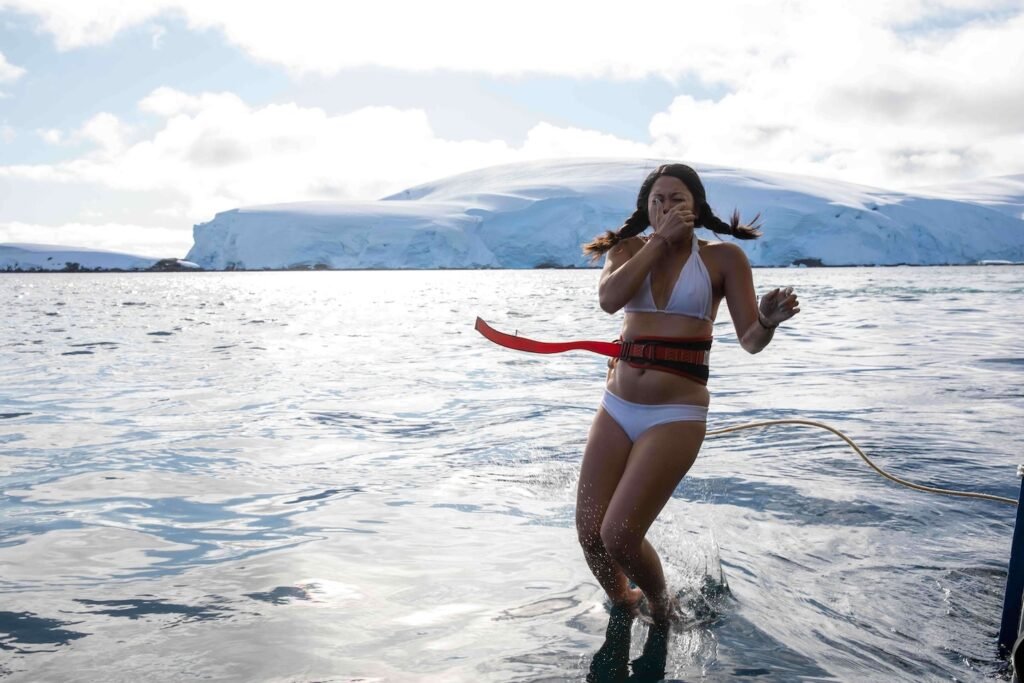
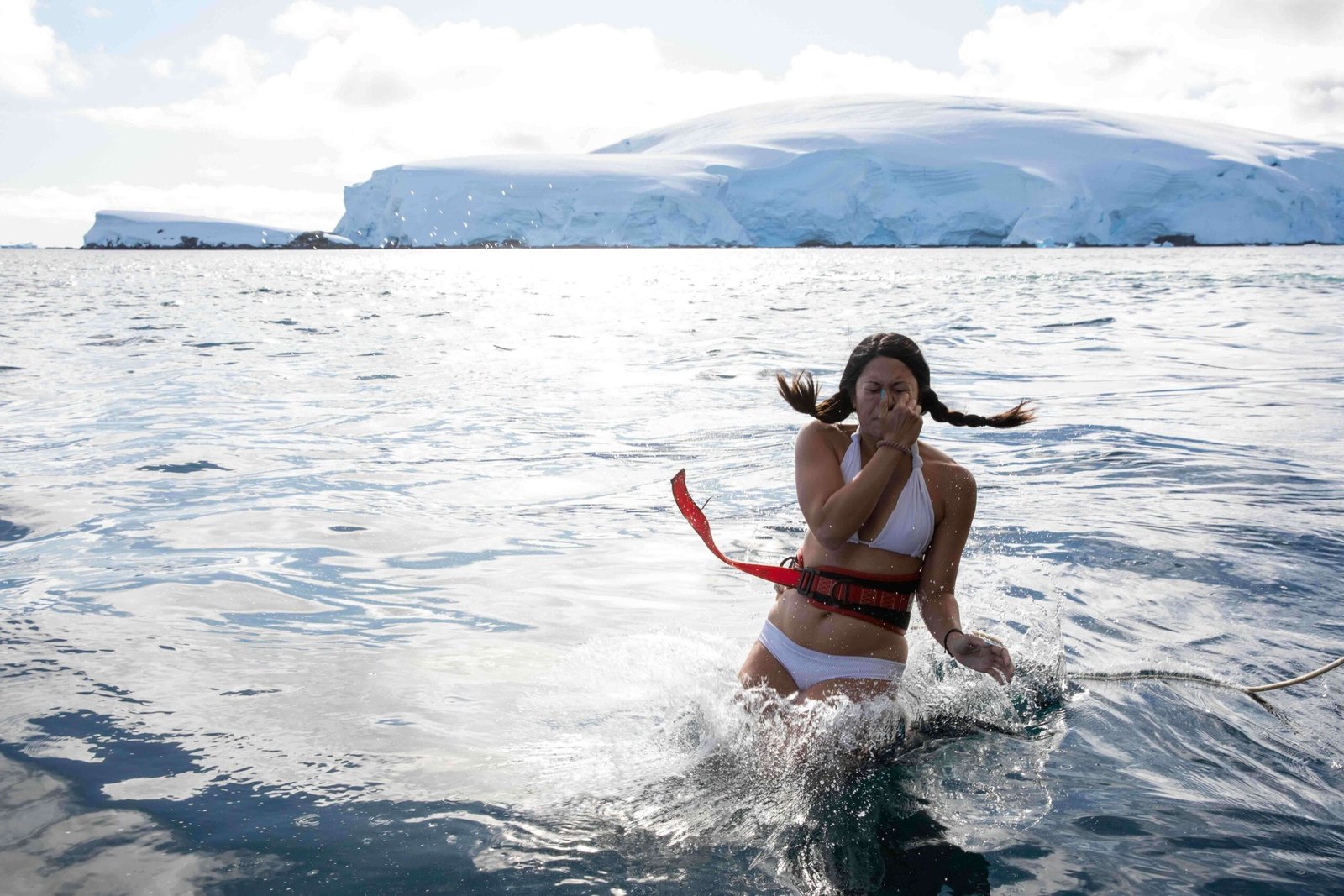
If you’re planning to do the polar plunge, think about what you’re jumping in. I had been living in summer for the previous months and only had a summer string bikini with me. It worked fine, but if you’d rather not jump into freezing water in a bikini, pack a one piece or something you’re comfortable in specifically for that one moment.
Camera Gear and Electronics
Antarctica is the perfect spot for nature photography, but what you bring depends on how serious you’re shooting. Firstly, recreational drones are not allowed, so don’t pack one expecting to fly it.
I tend to take more video than photos, so I own a DJI Osmo Pocket 3 and a DJI Osmo Mobile (the gimbal you use with a phone). I ended up using the phone gimbal the entire trip as my smartphone has an optical zoom, while the Pocket only has a 2x digital zoom when filming in 4K. Optical zoom means less of a chance of blur, and I cared more about photo and video quality than convenience.
If you mostly want simple, grab and go footage, the DJI Osmo Pocket or a similar compact camera is easier to use one handed on a moving zodiac. If you care about zoom quality for wildlife shots you might print or edit later and don’t have a nice camera, a phone with a gimbal is worth the extra setup.
A power bank helpful as you’ll be shooting more than you expect. I personally used a lightweight one from Nitecore and was glad I didn’t bring anything bulkier.
Lastly, bring an external hard drive. WiFi is limited and expensive onboard, so backing up to the cloud isn’t easy, and you’ll want a way to back up your photos and videos just in case something happens. I use the Samsung T7 Portable SSD since it’s small, lightweight, and holds up to 1TB.
Medications
Pack any regular medications you take, basics like pain relievers or antacids. I’d recommend some cold medications just in case — you’re on a ship with a bunch of people, and illnesses can spread fast. In my own experience I watched some cold or flu spread through the ship, day after day. You’ll be on the ship for two weeks or more, so its good to be prepared just in case.
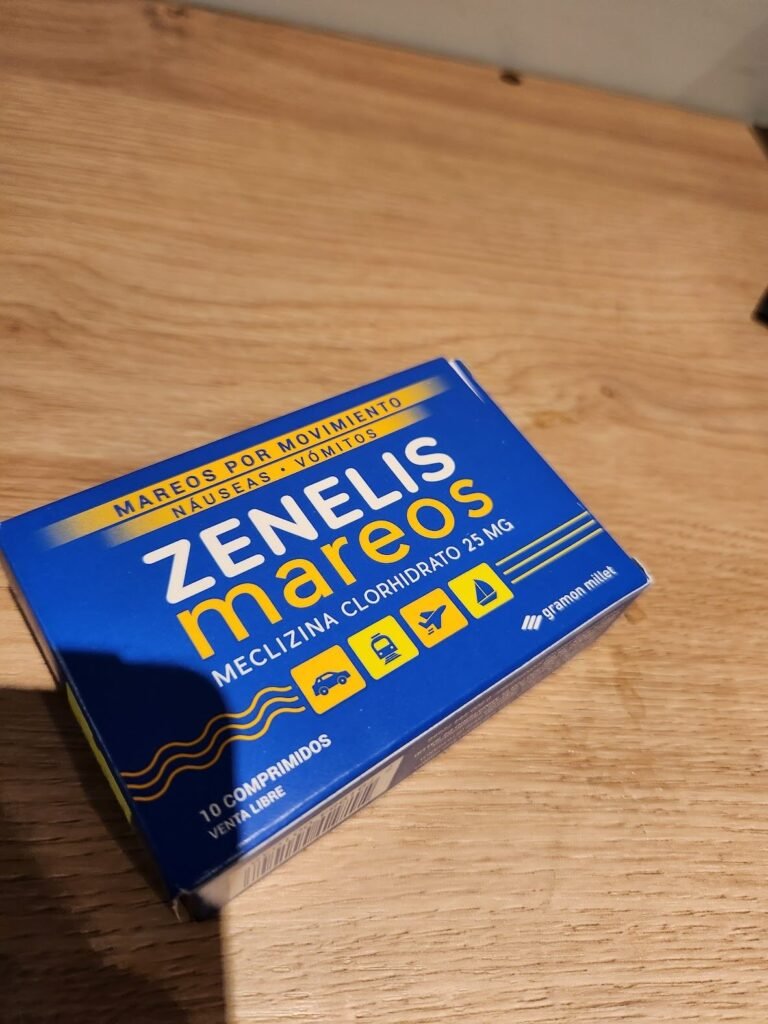
The one medication I’d prioritize planning for is motion sickness medication. For me, I took it before we hit the Drake Passage and was fine, but my roommate spent several days sick in bed.
Crossing the Drake Passage means a couple of days of unpredictable waves, so it’s worth talking to your doctor beforehand about what’s right for you. You can typically find this medication in the form of pills and patches.
Medication options and side effects vary, so talk to your doctor or travel clinic before departure. The CDC also has a useful overview of motion sickness while traveling.
Skincare and Personal Care for Antarctica
The cold gets the attention, but the dry air is what actually got me. Antarctica is technically a desert, so between the low humidity and constant wind, your skin and lips take a beating even though it doesn’t feel like a “drying” climate the way a hot desert does.
A good facial lotion with SPF and a lip balm with SPF were essential for me. I used ISDIN for my facial sunscreen and reapplied on my face even on overcast days, since the glare off snow and water means more sun exposure than the cold would suggest. Sun Bum is my go to lip balm, since it has SPF 30.
A deep moisturizing body lotion is the one thing I’d pack more of than usual, because my skin was constantly dry every day. With exposure to extreme cold conditions, your skin can crack which can be uncomfortable.
What I Didn’t Use
Hiking poles. I rented a pair with my other gear but never used them in Antarctica. Between carrying a dry bag and keeping my camera accessible, having another item in my hands wasn’t worth it. If you regularly rely on poles for balance or support, bring a collapsible pair that packs away easily.
Keep in mind that anything touching the ground must be thoroughly cleaned and disinfected before and after each landing. Antarctica’s strict biosecurity protocols are designed to prevent seeds, soil, and other foreign organic material from being introduced.
A tripod. On our expedition, tripods weren’t permitted during shore landings because they come into contact with the ground and require decontamination. For stabilized photo and video, a handheld gimbal is a more practical option anyway.
For more information about Antarctica’s biosecurity measures, read the IAATO decontamination guidelines.
What I Wish I Packed
Hand warmers. These would have made the coldest excursion days noticeably easier, especially before I’d warmed up after putting on gear in the mud room. They’re small enough, inexpensive (you can get a pack of 10 for $10 on Amazon) that there’s no real downside to packing a handful just in case.
Polarized sunglasses. I had regular sunglasses on me, but the ice glare and reflections off the water were intense enough that I bought $50 polarized glasses onboard. If I had prepared better, I would’ve brought some of my goodr Polarized Sunglasses because they come in fun colors that would make you stand out in Antarctica photos.
A spare pair of gloves. If your gloves get wet on one excursion, you may not have time to fully dry them before the next one.
A water bottle. It gets really dry spending multiple days in Antarctica, so having a water bottle helps you stay hydrated. I ended up buying one right before I boarded my ship.
A heavier lotion than I normally travel with. The dry air dries out your skin fast, and my regular travel sized lotion didn’t keep up.
Final Thoughts on Packing for Antarctica
The number one thing to think about when packing for an Antarctica cruise is layers. You want warm, adjustable pieces that work together, reliable waterproof protection, and enough flexibility to add or remove clothing as conditions change.
You also do not need to own a permanent polar wardrobe to travel to Antarctica. Before buying anything, check what your operator already provides, invest in the personal pieces that matter most, and borrow or rent the bulky gear you won’t use in the future.
That approach saved me from overpacking, helped me avoid buying an entirely new winter wardrobe, and still gave me everything I needed for landings, Zodiac rides, and time onboard.
FAQ
READ MORE ABOUT USHUAIA & ANTARCTICA
Looking for more information about traveling to Antarctica? Here’s some further reading that may be helpful for your trip:
🏨 Looking for a place to stay in Ushuaia before Antarctica? Where to stay in Ushuaia Argentina: My Top Areas & Hotels
⛴️ Want to know what to expect when traveling to Antarctica? Read my guide How to Travel to Antarctica: What I Wish I Knew Before Booking.
⛰️ Want information on what to expect in Ushuaia before your expedition? Read Ushuaia to Antarctica: What I Wish I Knew Before Boarding My Expedition Cruise.
💰 Curious about what to expect in terms of cost for an Antarctica trip? Check out my budget breakdown: How Much Does a Trip to Antarctica Cost?
🧳 Don’t know what you need for Antarctica? Check out my Antarctica Cruise Packing List.
🚣🏻 Want to know how you’ll spend your time in Antarctica? Read Things to Do in Antarctica: What You Actually Do on an Expedition Cruise.
💁🏻♀️ Curious about traveling to Antarctica solo? Read Solo Travel to Antarctica: What it’s Really Like Going Alone

I’m Marie, a slowmad and adventurer who left settled life in the U.S. to live abroad and explore the world.
I live in countries for months at a time to understand new cultures and explore deeply, sharing my insights on what it’s like to live abroad and the travel adventures along the way.
MORE ANTARCTICA
-
Solo Travel to Antarctica: What It’s Really Like Going Alone
I traveled to Antarctica alone without knowing anyone onboard. Here’s what the experience was really like, including meeting other solo travelers, sharing a cabin, staying safe as a solo woman,…
-
Ushuaia to Antarctica: What I Wish I Knew Before Boarding My Expedition Cruise
Traveling from Ushuaia to Antarctica is more layered than simply arriving at the port and boarding a ship. Here’s what I wish I knew before my expedition cruise, including how…
-
Antarctica Cruise Packing List: What I Brought, Borrowed, Rented, and Actually Used
Packing for an Antarctica cruise is different from preparing for a typical cold-weather trip. Here’s what I wore, rented, and what I would leave at home next time.
-
Things to Do in Antarctica: What You Actually Do on an Expedition Cruise
Wondering what you actually do in Antarctica? Here’s my firsthand experience of Zodiac cruises, shore landings, wildlife encounters, polar plunge, and more.