ANTARCTICA
How to Travel to Antarctica: What I Wish I Knew Before Booking
•
SHARE:
This post contains affiliate links. If you book through them, I earn a commission at no cost to you. Learn more
Before I booked my trip to Antarctica, I didn’t actually understand how regular people got there. I knew Antarctica was possible, technically. I’d seen the photos: penguins, icebergs, expedition ships cutting through icy water, but the logistics felt vague. Can you fly? Do you need special permission? Is this kind of trip reserved for some specific kind of wealthy adventurer?
And honestly, how much money were we really talking?
I ended up traveling to Antarctica on an expedition cruise from Ushuaia while I was slow traveling through Argentina and Patagonia. I wasn’t an Antarctica expert. I was just someone who realized, “I’m already heading this far south… is this the moment?”
That impulsive decision turned out to be one of the best I’ve made.
This post is everything I wish I understood before booking: how travelers actually get to Antarctica, what the trip is like, what it costs, and what I’d think through before doing it again.
Can regular people travel to Antarctica?
Yes. You don’t need to be a scientist, a professional explorer, or some ultra-wealthy traveler to visit Antarctica. The majority of people who visit Antarctica are regular people who booked an expedition cruise, and the range of ages and backgrounds onboard my ship made that very clear.
I met retirees who had been saving for years, a group of women in their 30s on a big trip together, and a surprising number of people in their 20s who had somehow made it work financially. It skewed older overall, but the mix was wider than I expected.
Most people go as part of a guided expedition with strict environmental and safety rules. I did my expedition through Intrepid Travel on the Ocean Endeavour which started in Ushuaia, Argentina, cruised through the Beagle Channel, the Drake Passage, down to the Antarctic Circle, passed various islands, then back the same way.
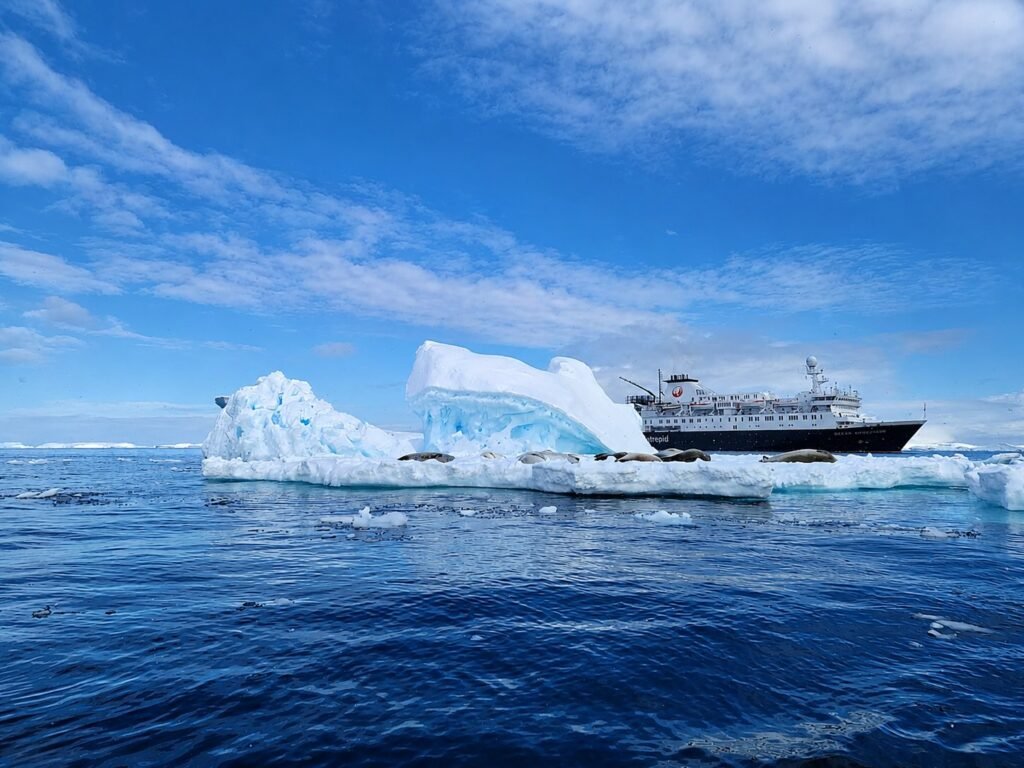
What you need to go to Antarctica:
- A budget (more on the range below)
- A passport
- Travel insurance that covers Antarctica
- The willingness to be on a ship for up to two weeks with some unpredictable weather thrown in
One stat they shared with us onboard that still gets me: only about 0.002% of the world’s population has ever set foot on Antarctica. If you go, you’ll be in genuinely rare company.
How to Travel to Antarctica from Ushuaia
One of the most popular ways to travel to Antarctica is by expedition cruise from Ushuaia, Argentina. The Ushuaia to Antarctica route is common because Ushuaia sits near the southern tip of South America, making it one of the closest departure points for reaching the Antarctic Peninsula by sea.
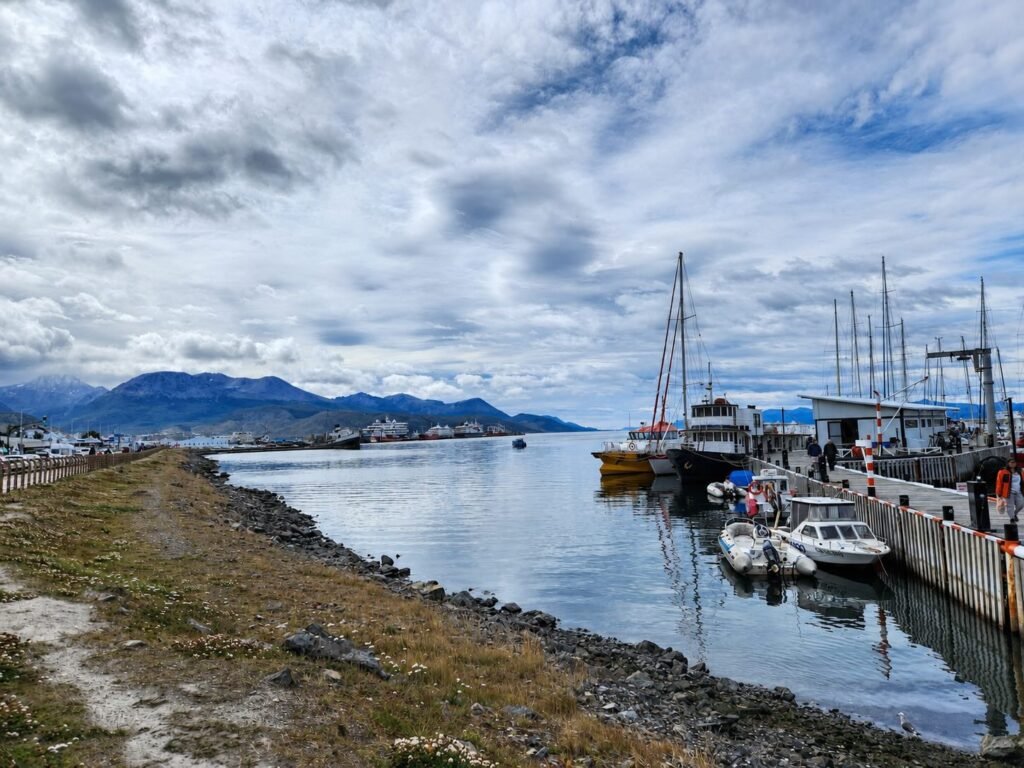
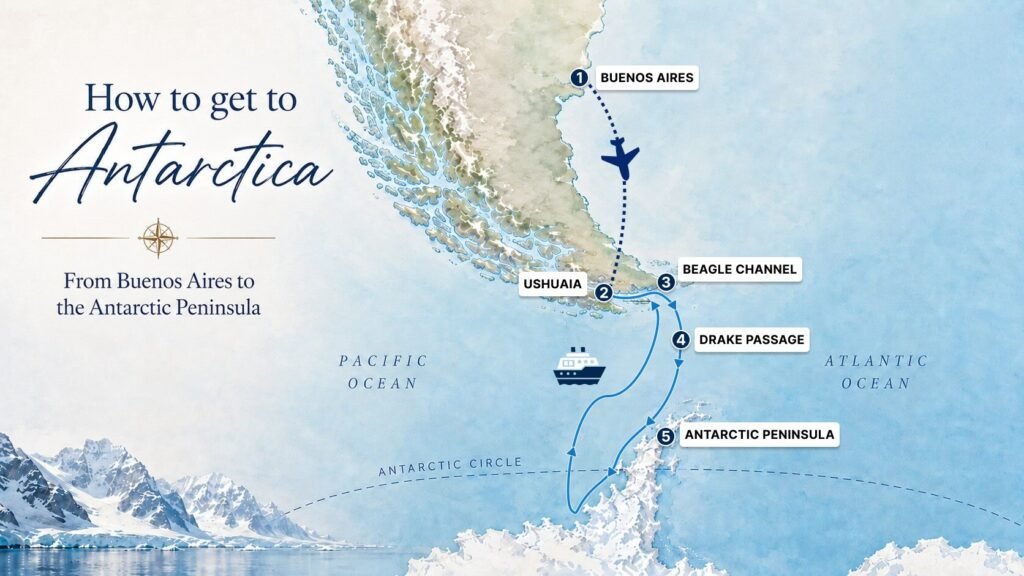
For international travelers, the route looks something like this: fly into Buenos Aires, take a domestic flight to Ushuaia, board an expedition ship, sail through the Beagle Channel, cross the Drake Passage, then explore Antarctica by Zodiac boat and guided landings.
Since I was already traveling through Argentina, I flew from El Calafate to Ushuaia after exploring Patagonia. I came in a day early and stayed at Hostería y Restaurante América so I could get familiar with the city, buy a few last-minute items (hello, motion sickness pills!), and rent the cold-weather gear I still needed before boarding.
What about flying to Antarctica?
A common question is whether you can just fly to Antarctica instead of taking a ship the whole way.
The short answer is yes, some travelers do visit Antarctica through a fly-cruise itinerary. I didn’t take this route, so I’m not going to in depth here, but the basic idea is that you fly from Punta Arenas, Chile, to King George Island, then board a ship to explore the Antarctic region.
The main appeal is that flying can help you avoid or reduce time crossing the Drake Passage, which is one of the biggest concerns for many Antarctica travelers because of seasickness and rough conditions. That said, fly-cruise trips are usually more expensive and still weather-dependent.
How long does it take to travel to Antarctica?
A classic Antarctic Peninsula expedition is roughly 10 to 12 days. Routes that continue south to the Antarctic Circle are typically 14 days or more. My trip was the latter, 14 days total including the embarkation day in Ushuaia.
|
Route |
Trip Length |
Total Sea Travel Days |
|---|---|---|
|
Antarctic Peninsula |
10-12 days |
~4 |
|
Antarctic Circle |
14+ days |
~5-6 |
For both routes, the Drake crossing itself is roughly the same: about two days in each direction. The Antarctic Circle route covers more distance overall, so you usually end up with a little more total time at sea.
Just a note: sea days are a meaningful part of the experience, too. On my trip, they included wildlife lectures, citizen science activities, watching the first icebergs appear on the horizon, and celebrating once we crossed the Antarctic Circle. It didn’t feel like waiting for the trip to start — it felt like part of the expedition.
How much does it cost to travel to Antarctica?
Antarctica is pricey, and the cruise fare is only part of the total cost.
For context, I traveled in February on a longer itinerary that went toward the Antarctic Circle, and my expedition cruise cost $9,520 for a shared cabin. I booked about a month in advance and got what felt like a decent deal for that itinerary, but booking late is risky — cabin options can be limited, flights may cost more, and solo travelers may have fewer chances to find a roommate match.
Beyond the cruise itself, you’ll also need to budget for the costs around the expedition: getting to Ushuaia, staying there before boarding, sorting out insurance, renting or buying gear, and covering any onboard extras or optional add-ons. When you’re planning to travel to Antarctica, don’t just look at the advertised cruise price.
Planning a trip to Antarctica?
🚢 Book your expedition cruise: G Adventures
🏥 Antarctica Travel insurance: IMG travel insurance
🛌 Book your pre-cruise hotel: Booking.com
🚣🏻♀️ Book pre-cruise Ushuaia tours: Viator
🚘 Rent a car in Ushuaia: Discover Cars
What do you actually do once you get to Antarctica?
I expected Antarctica to be mostly about seeing ice and wildlife, but the day-to-day rhythm of the trip was more active than I realized.
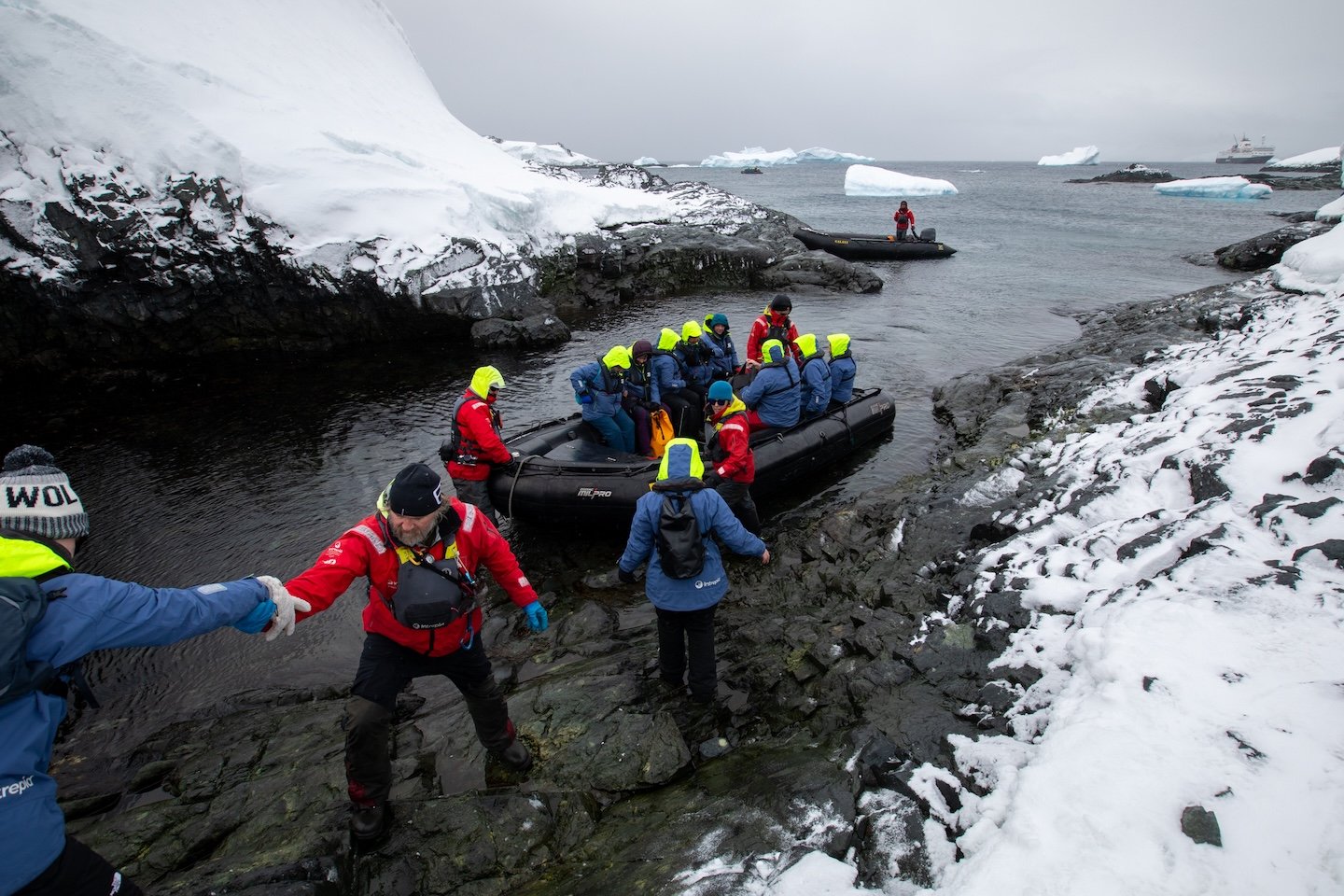
On expedition days, you’re getting off the ship two times a day by Zodiac — these small (but durable) inflatable boats that take groups of 10 people from the ship to explore Antarctica.
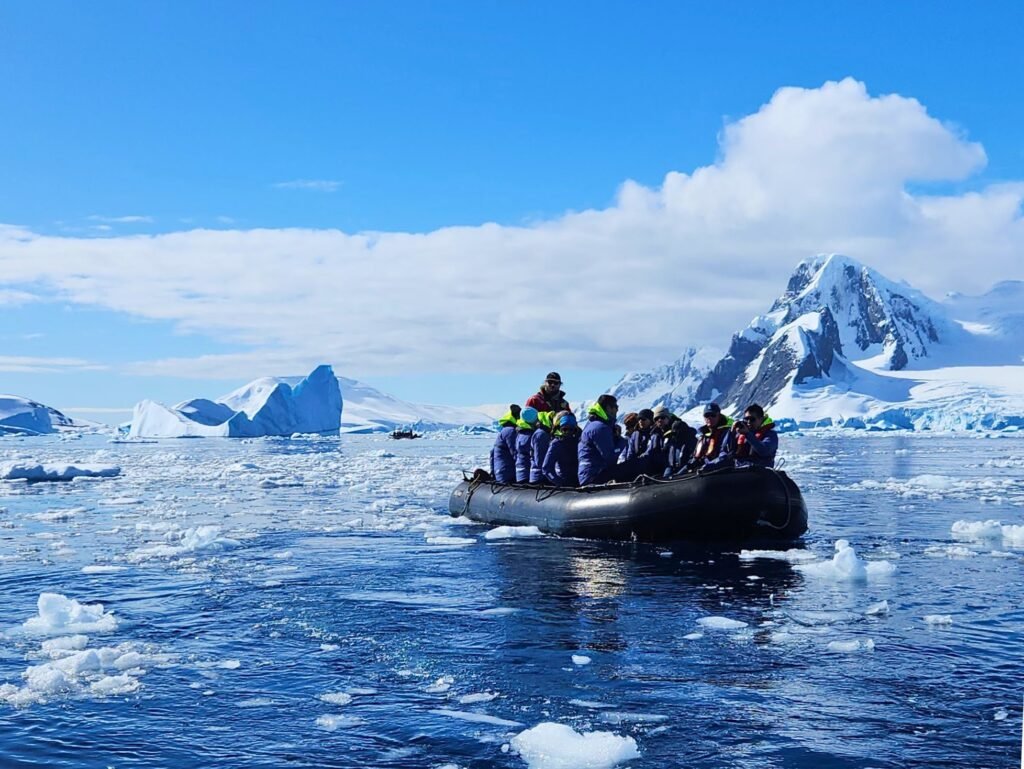
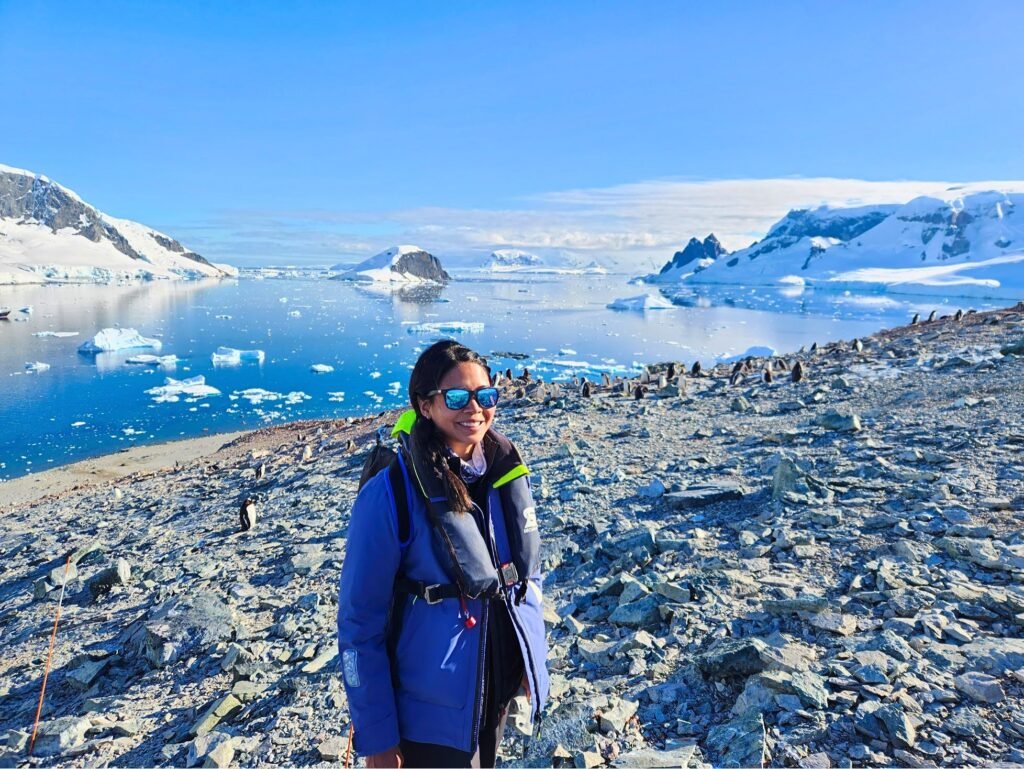
Some excursions are landings, where you get to wander through the snow near penguin colonies, historic sites, and snowy viewpoints (following specific guidelines to protect the wildlife and environment, of course). Others you’ll be cruising on the Zodiac, weaving through icebergs, looking for seals and whales, and getting up close and personal with glacier faces.
The exact schedule depends on weather, ice, wildlife, and safety conditions. On my trip, plans changed constantly. Some excursions were rerouted, cut short, or canceled altogether. My first Zodiac outing turned into a blizzard mid-ride, and my group never made it to the historic hut we were supposed to visit, while the group that went out before us had completely different conditions. That’s Antarctica.
The ship itself also becomes a big part of the experience. During sea days and between excursions, we had wildlife lectures, citizen science activities, daily briefings, time on deck watching for whales, and quiet moments just watching ice pass by the windows. I also spent random free hours practicing bachata in an empty lounge, building card castles on a rocking ship, and journaling while the landscape outside kept changing.
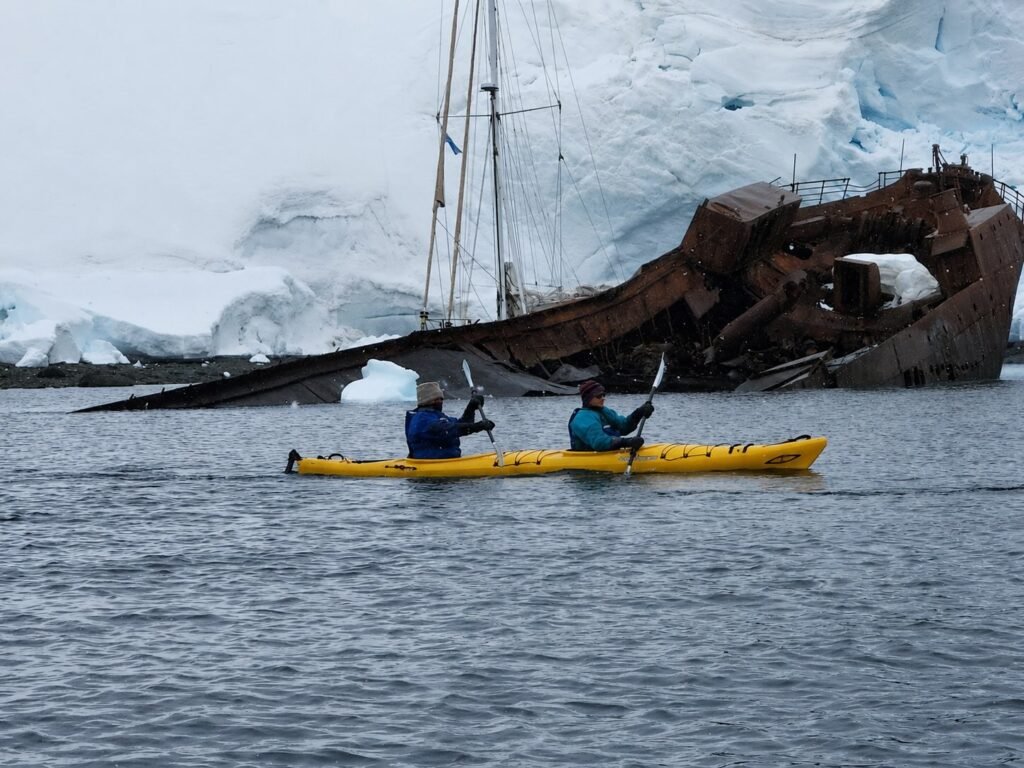
There are optional add-ons like kayaking, camping, and photography programs, plus the polar plunge if you’re willing to jump into freezing Antarctic water. I did it, and yes, it was as cold as it sounds.
The Drake Passage: what I wish I understood before booking
The Drake Passage is the stretch of ocean between the southern tip of South America and the Antarctic Peninsula. It has a reputation for being one of the roughest sea crossings in the world, and before I went, I honestly didn’t think much about it. I booked the trip, got excited about penguins and icebergs, and sort of glossed over the part where I’d spend about two days each way crossing open ocean.
When you cross, you’ll usually hear people talk about one of two possibilities: the Drake Lake or the Drake Shake.
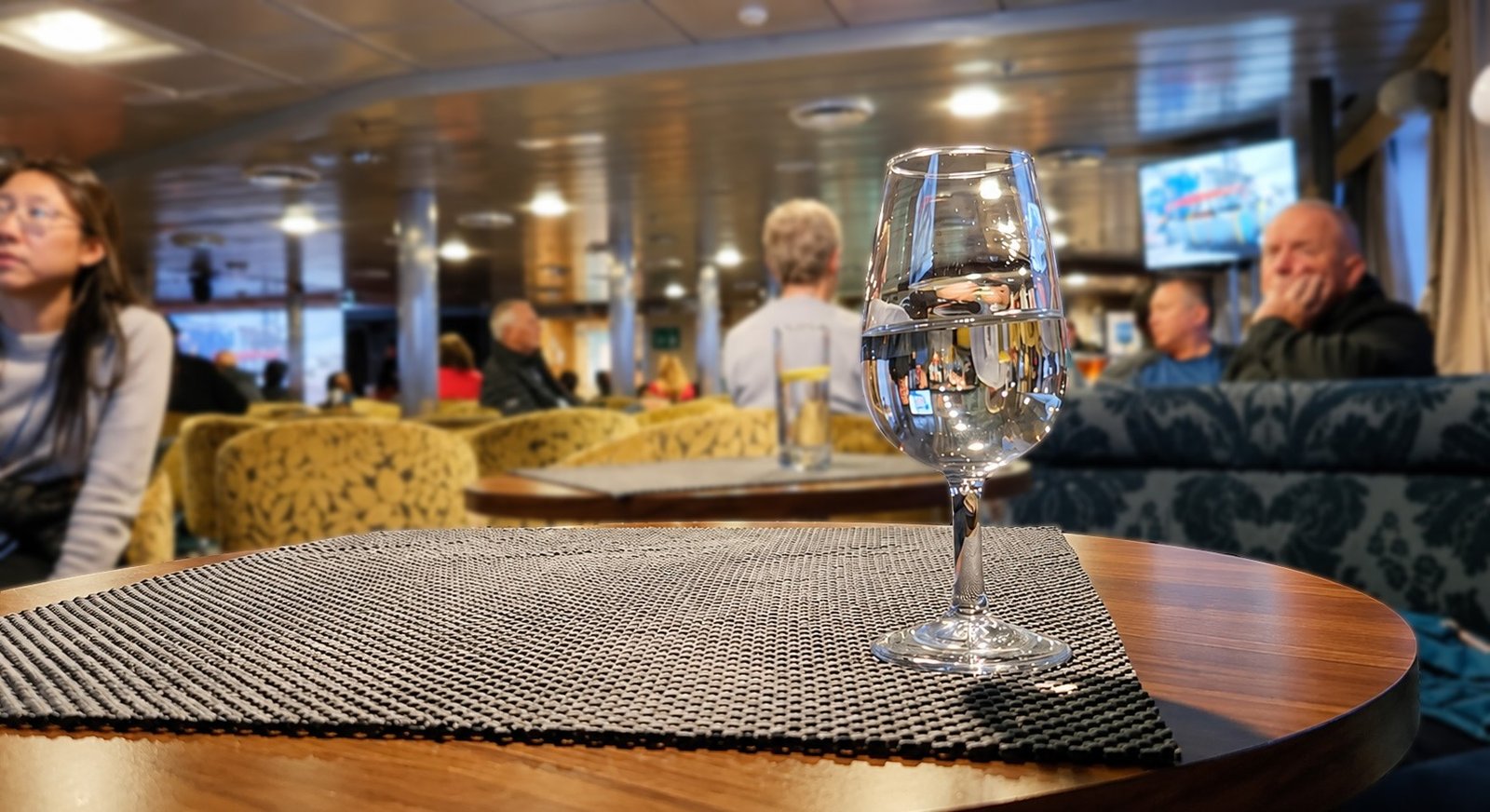
We got lucky and landed closer to a Drake Lake. Waves peaked at around 3.4 meters, or about 11 feet. That sounds dramatic, but in practice it meant the water in your glass moved back and forth, you’d occasionally drift from one side of a hallway to the other, and sleeping felt like being gently rocked — until it didn’t. On the way back, the swells picked up again and I woke up in the middle of the night feeling my head sliding toward the window.
A true Drake Shake is a different story. I met people who had crossed during rougher conditions on previous Antarctica trips, and they were genuinely terrified by it. The Drake is not something I’d panic over, but it is something I’d prepare for.
Bring motion sickness medicine, and take it before you hit the waves. I personally ended up being fine, but my roommate got really seasick and spent most of the passage in bed, which was rough to watch.
Common options include pills and patches. If you know you’re prone to motion sickness, the patch may be worth looking into as it lasts several days and you don’t have to remember to keep taking pills.
Can you travel to Antarctica solo?
Yes, absolutely. One big concern people have when deciding to go solo is cost, but you can reduce that if you’re open to sharing a cabin. Some cruises offer shared cabin options where you’re matched with a roommate instead of paying for a private room or single supplement. That’s what I did, and I ended up rooming with Narumi, a Japanese woman around my age who was kind, easy to share space with, and became part of the experience in the best way.
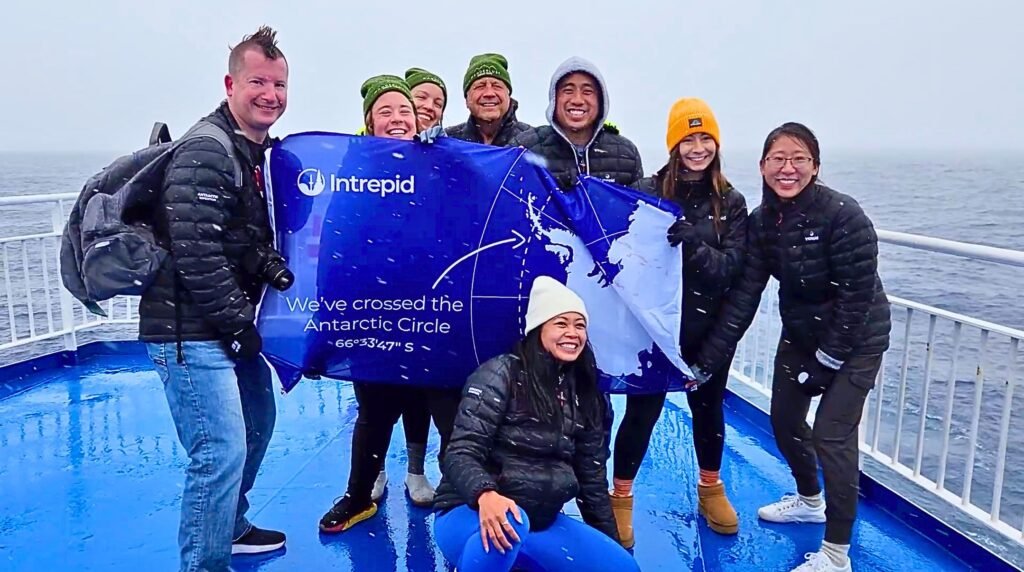
Socially, Antarctica was also much better for solo travel than I expected. I made an entire friend group of other solo travelers onboard, and it was easy to find people to sit with at meals, join for excursions, or hang out with during sea days.
At the same time, it was also easy to get alone time. Even with nearly 200 passengers on the ship, there were quiet corners, outer decks, lounges, and random pockets of time where I could journal, wander, or just stare out at the ice by myself.
So yes, Antarctica can work really well as a solo trip.
What should you pack for Antarctica?
I made packing for Antarctica harder on myself because I was slow traveling mostly with summer clothes. Before this trip, my bag was full of things like crop tops, dresses, workout clothes, and one lightweight puffer. Not exactly a polar expedition wardrobe.
So before boarding, I had to piece together a layering system. I borrowed fleece layers from my dance instructor in Buenos Aires, then rented winter gear in Ushuaia, including waterproof pants, waterproof mittens, and a dry bag. My tour provider also provided key expedition gear: a puffer jacket to keep, plus a winter parka and muck boots to use during the cruise.
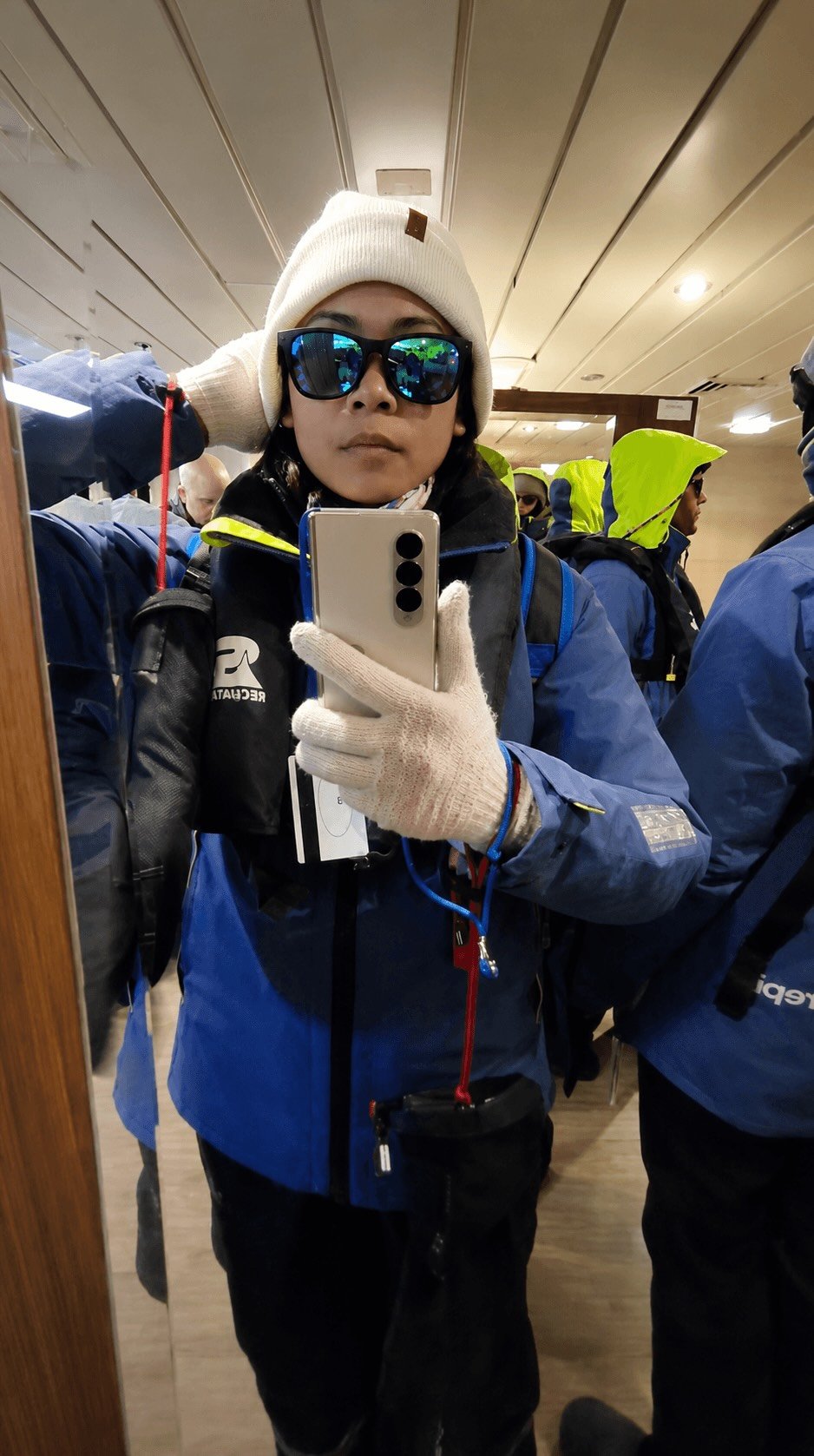
The biggest thing to understand is that Antarctica packing is mostly about layers and waterproofing. You need to stay warm and dry while sitting in a Zodiac, walking through snow, or standing on deck in wind and spray.
At minimum, think through your base layers, insulating layers, waterproof outerwear, warm socks, gloves or mittens, hat, buff, sunglasses, seasickness medicine, and a dry bag for Zodiac excursions.
What I wish I knew before booking Antarctica
A few things worked out for me, but looking back, I got lucky in ways I didn’t fully understand at the time.
Solo pricing can change everything.
If you’re traveling solo, don’t assume the advertised cruise price is the final price you’ll pay. The first trip I booked looked cheaper online, but a few days later I found out the remaining cabin wasn’t eligible for roommate matching. That meant I would have had to pay a single supplement — basically the cost of a second person in the room.
So the “cheaper” trip would have almost doubled in price.
If you’re booking solo, especially last minute, cabin layout and roommate availability matter just as much as the sale price.
Last-minute booking can save money, but it is still a gamble.
Booking late helped me find a better price, but it also meant fewer cabin options and less flexibility. If you have fixed dates, limited vacation time, or expensive flights to coordinate, booking last minute may be more stressful than it’s worth.
If you’re flexible and already in South America, it can work. Just know it’s not guaranteed.
Antarctica will change your plans.
This was the biggest lesson. On my trip, we rerouted because of a medical situation onboard. We had excursions cut short by weather, missed a landing I had been excited for, and at one point the ship couldn’t move as planned because of ice.
But some of those changes led to the most memorable parts of the trip. Because we rerouted, we saw orcas that were rare for that time of year. When the ice blocked us, everyone was out on deck watching the ship sit completely still, surrounded by frozen water in every direction.
You can prepare for Antarctica, but you can’t control it. And honestly, that’s part of what makes it so unforgettable.
🏥 Don’t assume your insurance covers Antarctica
One thing I didn’t realize at first is that not every travel insurance policy covers Antarctica. Because this was such an expensive trip, I wanted to make sure my policy specifically included the destination, not just general international travel.
After comparing options, I chose IMG for my expedition, focusing on medical care and evacuation, trip cancellation, and Antarctica coverage.
Final thoughts on traveling to Antarctica
Antarctica was one of the best experiences of my life. I say that having traveled to a lot of places, and I mean it without hesitation.
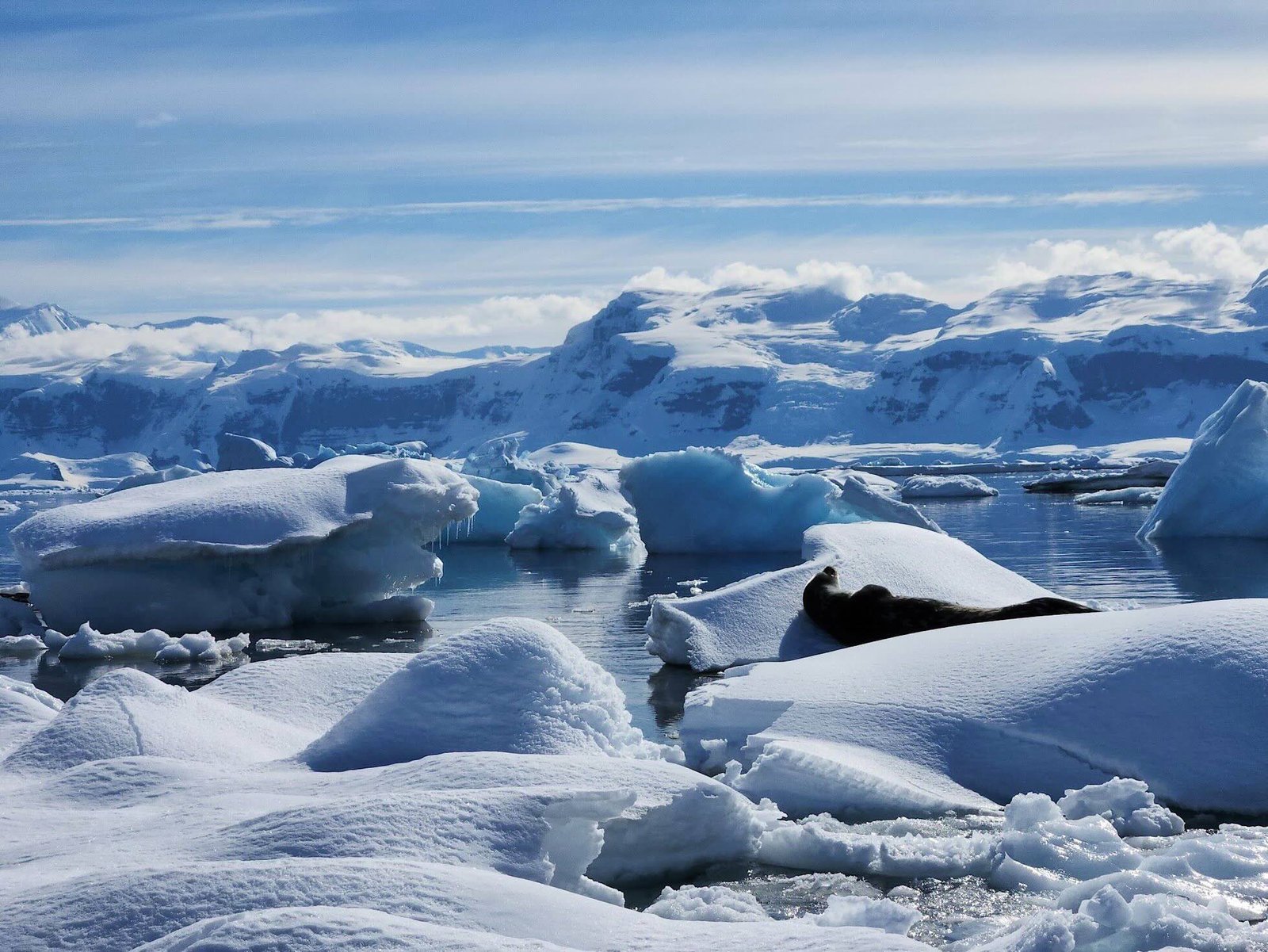
It was impulsive, it hit my savings harder than I’d like to admit, and I showed up underprepared in more ways than I probably should have.
And I would do it again without blinking.
There’s something that happens when you’re that far removed from regular life — no phone notifications, no news, no noise — just a floating ship in the middle of one of the most remote places on Earth. I’d go out to the deck close to midnight and it would still be bright, with that soft, strange light sitting on the horizon and glaciers reflecting off the dark water below.
It felt less like a place I was visiting and more like something I’d dreamed.
If you’re on the fence, start with the practical pieces: understand the cost, choose your route carefully, plan your gear, and give yourself enough buffer before boarding. But if you’re asking whether Antarctica was worth it for me, the answer was never really in question.
FAQ: How to travel to Antarctica
READ MORE ABOUT USHUAIA & ANTARCTICA
Looking for more information about traveling to Antarctica? Here’s some further reading that may be helpful for your trip:
🏨 Looking for a place to stay in Ushuaia before Antarctica? Where to stay in Ushuaia Argentina: My Top Areas & Hotels
⛴️ Want to know what to expect when traveling to Antarctica? Read my guide How to Travel to Antarctica: What I Wish I Knew Before Booking.
⛰️ Want information on what to expect in Ushuaia before your expedition? Read Ushuaia to Antarctica: What I Wish I Knew Before Boarding My Expedition Cruise.
💰 Curious about what to expect in terms of cost for an Antarctica trip? Check out my budget breakdown: How Much Does a Trip to Antarctica Cost?
🧳 Don’t know what you need for Antarctica? Check out my Antarctica Cruise Packing List.
🚣🏻 Want to know how you’ll spend your time in Antarctica? Read Things to Do in Antarctica: What You Actually Do on an Expedition Cruise.
💁🏻♀️ Curious about traveling to Antarctica solo? Read Solo Travel to Antarctica: What it’s Really Like Going Alone

I’m Marie, a slowmad and adventurer who left settled life in the U.S. to live abroad and explore the world.
I live in countries for months at a time to understand new cultures and explore deeply, sharing my insights on what it’s like to live abroad and the travel adventures along the way.
MORE ANTARCTICA
-
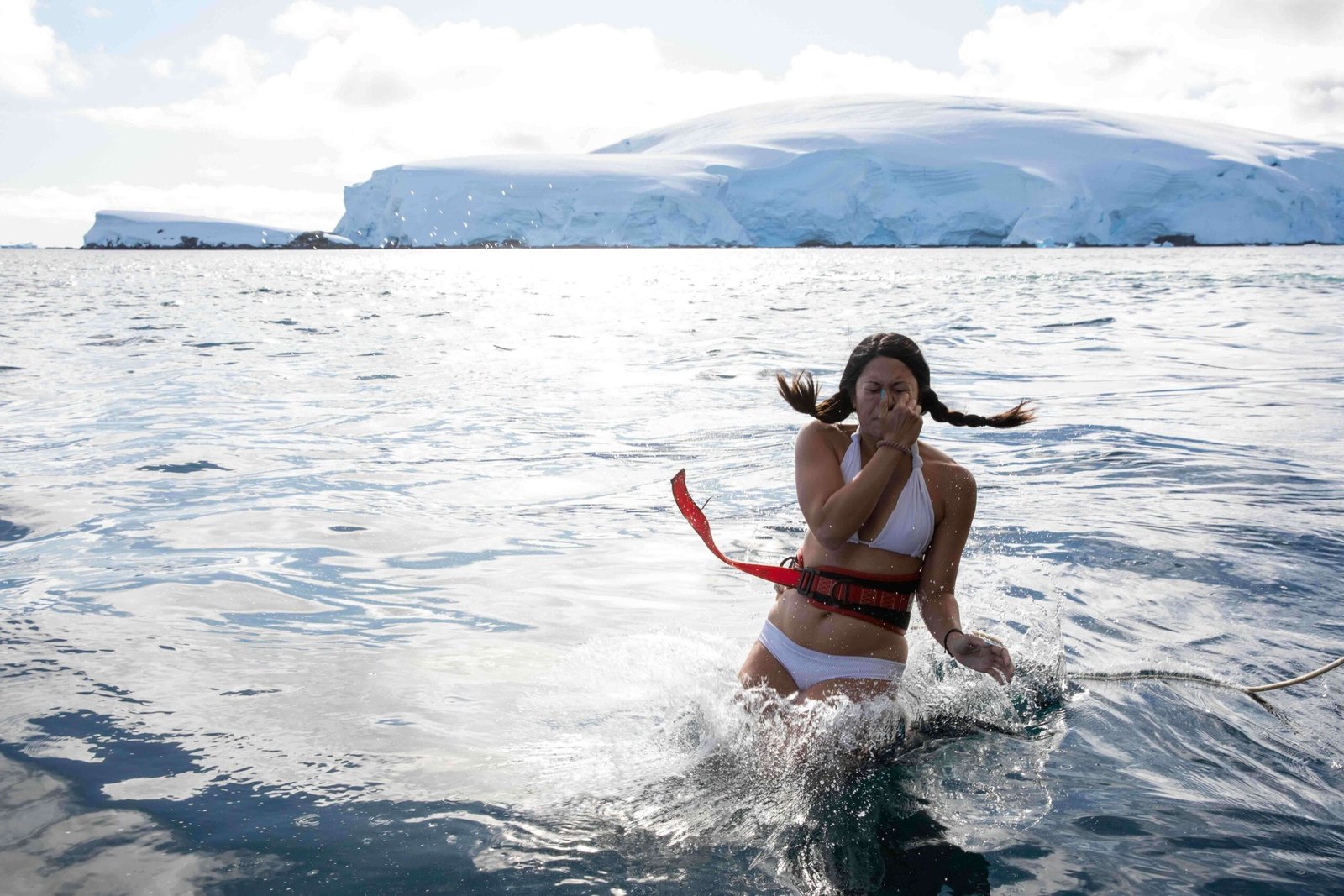
Solo Travel to Antarctica: What It’s Really Like Going Alone
I traveled to Antarctica alone without knowing anyone onboard. Here’s what the experience was really like, including meeting other solo travelers, sharing a cabin, staying safe as a solo woman,…
-
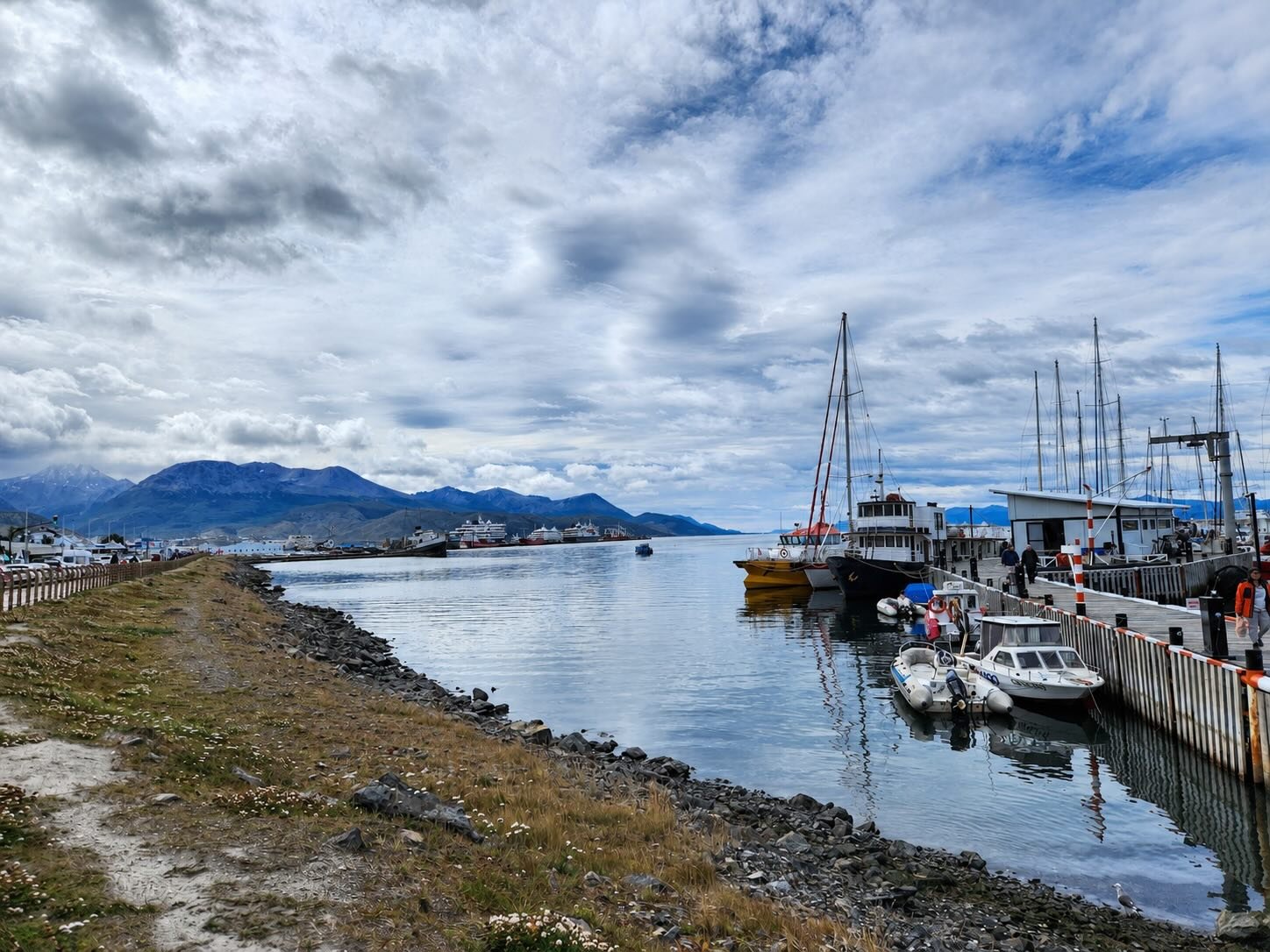
Ushuaia to Antarctica: What I Wish I Knew Before Boarding My Expedition Cruise
Traveling from Ushuaia to Antarctica is more layered than simply arriving at the port and boarding a ship. Here’s what I wish I knew before my expedition cruise, including how…
-
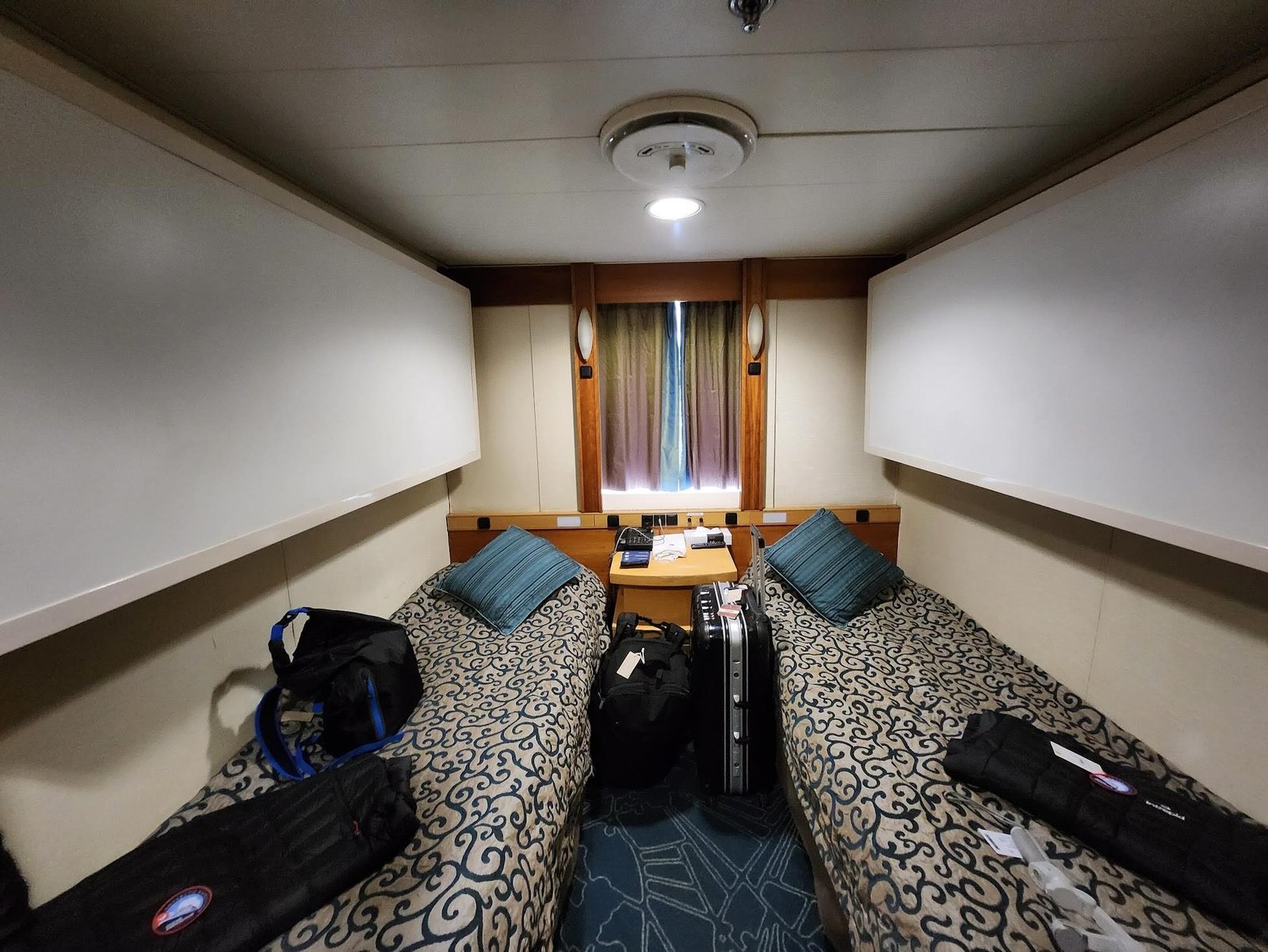
Antarctica Cruise Packing List: What I Brought, Borrowed, Rented, and Actually Used
Packing for an Antarctica cruise is different from preparing for a typical cold-weather trip. Here’s what I wore, rented, and what I would leave at home next time.
-
Things to Do in Antarctica: What You Actually Do on an Expedition Cruise
Wondering what you actually do in Antarctica? Here’s my firsthand experience of Zodiac cruises, shore landings, wildlife encounters, polar plunge, and more.