BRAZIL
Pedra da Gávea Hike: How Hard Is It Really?
•
SHARE:
This post contains affiliate links. If you book through them, I earn a commission at no cost to you. Learn more
Pedra da Gávea was my first major hike in Rio, and between the climbing, enormous rock faces and views over the coast, it became one of my favorite adventures in the city. I enjoyed it so much I ended up going back twice.
So how hard is the Pedra da Gávea hike, really? Having done it three times, with others and solo, I’d call it difficult because you’re combining a sustained uphill hike with scrambling and an exposed climbing section called Carrasqueira. I have rock-climbing experience and found going up manageable, though coming down was a different story.
Here’s what I’d want you to know before going, from the terrain and changing weather to whether I’d recommend booking a guide.
Difficulty: Steep hiking, scrambling and exposed climbing.
Route: Carrasqueira
Distance: ~7.5 km round trip
Time: ~6 hours
Summit: 840 m above sea level
Location: Tijuca National Park
Why Hike Gávea?
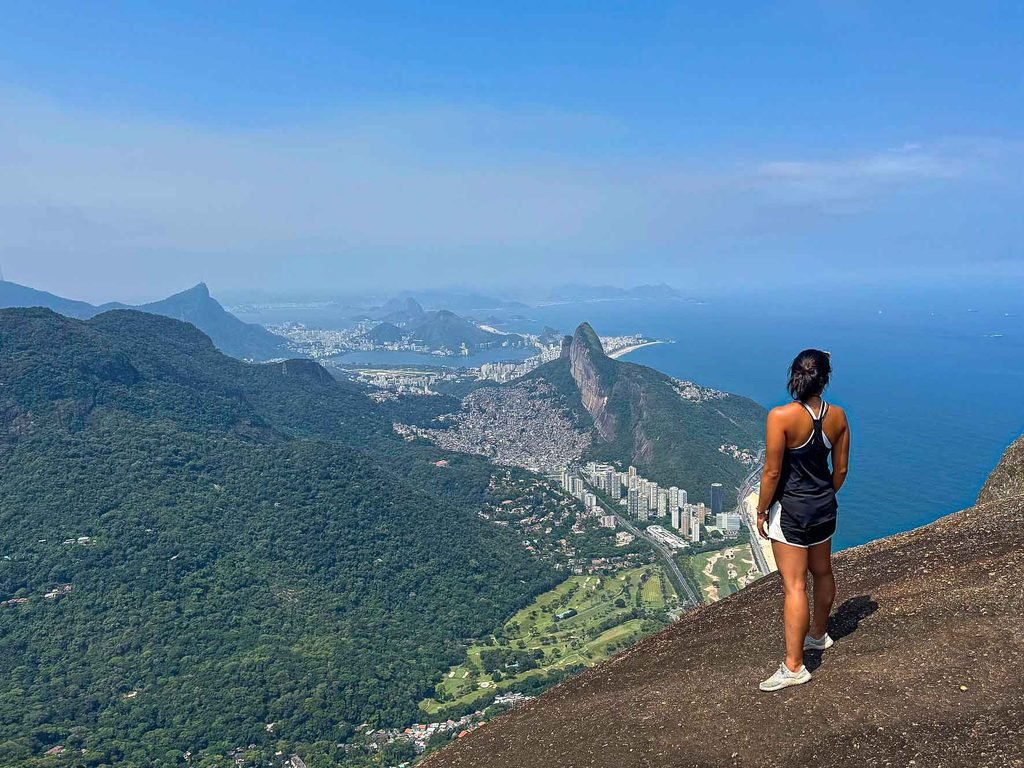
Pedra da Gávea is the huge, flat-topped granite mountain rising above Barra da Tijuca, in Tijuca National Park. From the summit, you can look across Rio’s mountains, neighborhoods and coastline, seeing how closely the city and forest fit together.
It’s a popular hike specifically for those views and the epic photo’s you’ll get. But for me, part of the appeal is getting there. You spend hours hiking through the forest and climbing over rock before emerging above the city; by the time you reach the summit and take in those views, it feels earned.
How Difficult Is the Pedra da Gávea Hike?
Gávea’s difficulty comes from two things: getting yourself up the mountain, and being comfortable climbing exposed rock once you’re higher up. Being good at one doesn’t necessarily mean you’ll enjoy the other.
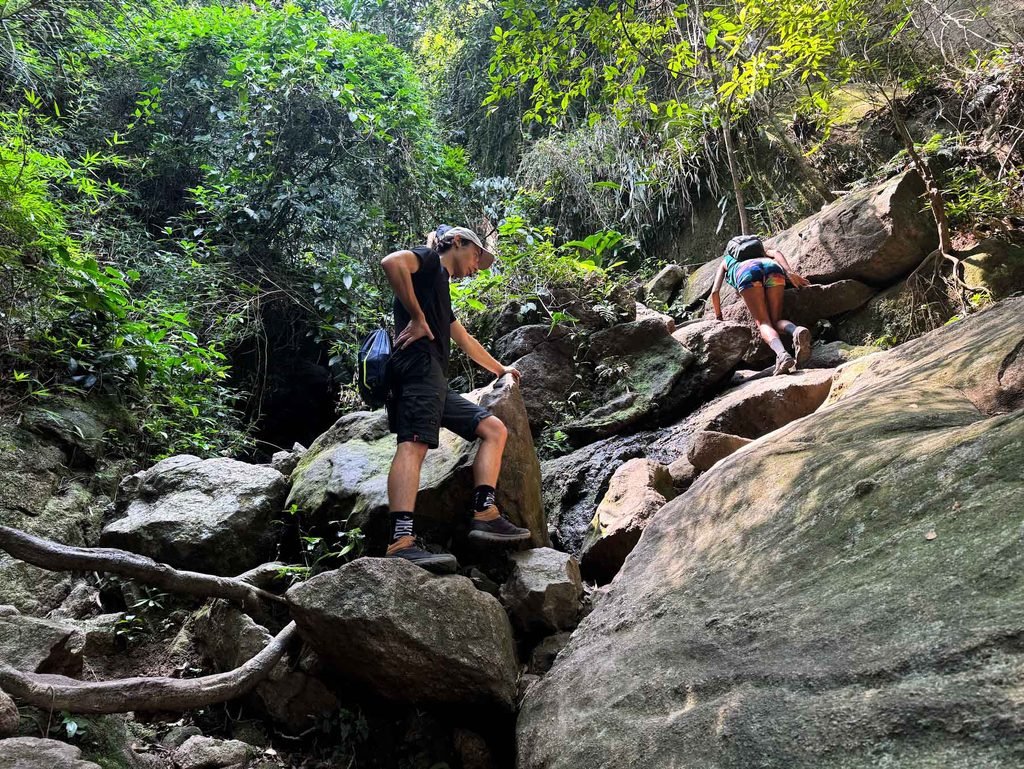
There’s plenty of uphill walking over roots and uneven rocks, with boulders where you’ll need your hands to help you up. By the time you reach Carrasqueira, you’ve already done a ridiculous amount of climbing through the forest, so I’d give this hike a day of its own rather than try to squeeze it between other activities.
My climbing experience made a difference to how manageable I found Carrasqueira, while some people in my first group were much more nervous. I’d assess your comfort with exposed rock as well as your fitness, and remember that you’ll need enough energy and confidence for the descent too.
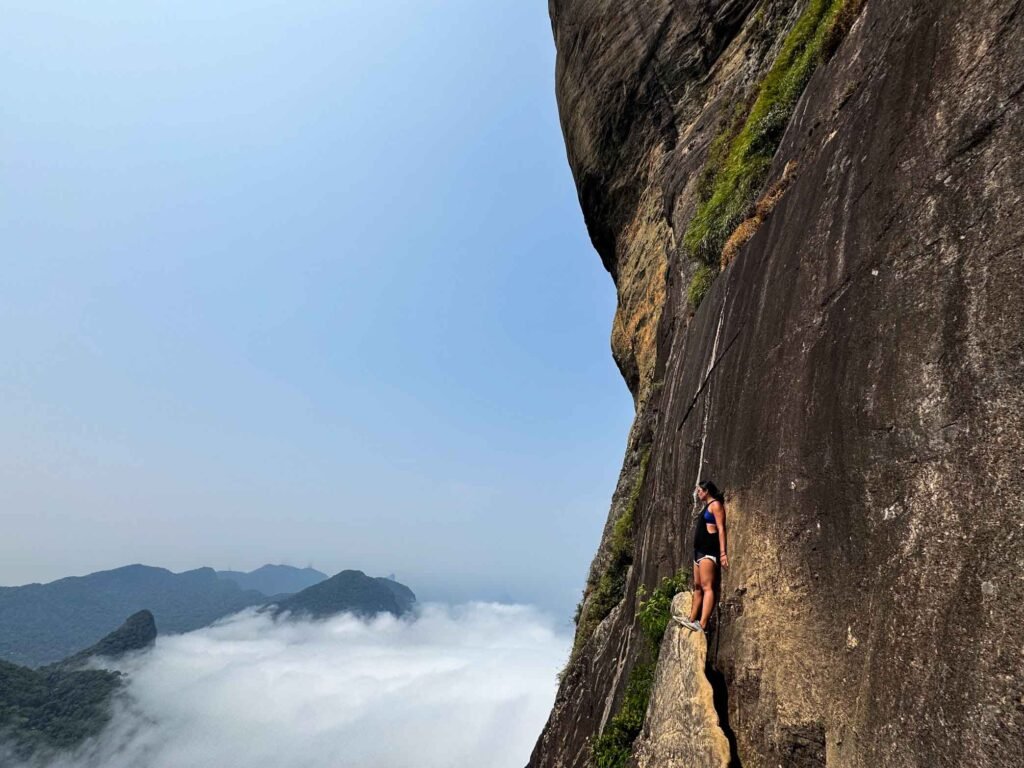
Is Pedra da Gávea dangerous? For most of the hike, no. But a fall at the exposed climbing section, Carrasqueira, could have serious consequences. The official Tijuca park website reports accidents on the trail, including deaths, and strongly recommends climbing safety gear and going with someone experienced with climbing. I wouldn’t choose this hike as a first introduction to hiking or climbing on your own.
Do You Need a Guide for Pedra da Gávea?
I’d recommend a guide if you don’t have climbing experience, feel nervous around heights, or are visiting Rio for the first time and want someone who knows the route and conditions.
Even with my climbing background, I wouldn’t have felt comfortable doing it solo on my first visit, because there’s so much variability in climbing a rock face you don’t know. I was glad I had people to go with and a chance to get familiar with the route before returning on a solo hike.
On my first hike, we had experienced local climbers in our group who were able to help the people that were less confident. Sometimes it helps simply to have someone show you a handhold or explain where to put a foot. If you’re unfamiliar with this kind of terrain, that support can make a big difference.
If you’re an experienced hiker with some climbing experience, I think going independently is an option to consider, but only if you’ve prepared for the route and its exposed sections. I climbed up and down without ropes on all three visits, but I’d still take the park’s advice seriously rather than base your decision on what I felt comfortable doing.
A guide also doesn’t remove the work you need to do to get uphill. If you rarely hike or exercise, I’d consider Pedra Bonita, an easier hike with impressive views, before booking.
If you want to experience Gávea but are nervous about navigating the trail and the climb, I’d recommend going with a local guide that can provide safety and guidance for your adventure.
What to Expect on the Hike
I took the traditional route via Carrasqueira on all three visits, so that’s the experience I’ll describe below.
The Forest Trail and First Rocky Sections
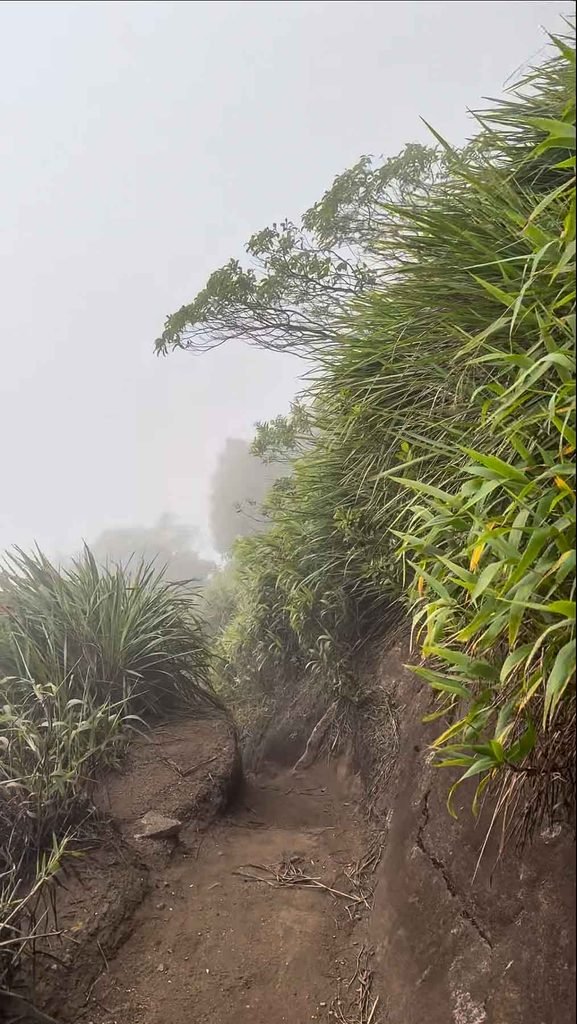
The hike starts in the forest, with dirt paths, roots and increasingly uneven terrain. I found most of the trail straightforward to follow, but the walking gradually becomes more of a full-body effort.
You’ll come across rock slabs and boulders that require hands as well as feet. One of the earlier steep sections has a fixed chain to help you climb up. This is separate from Carrasqueira, so don’t assume you’ve reached the main climbing section when you see it.
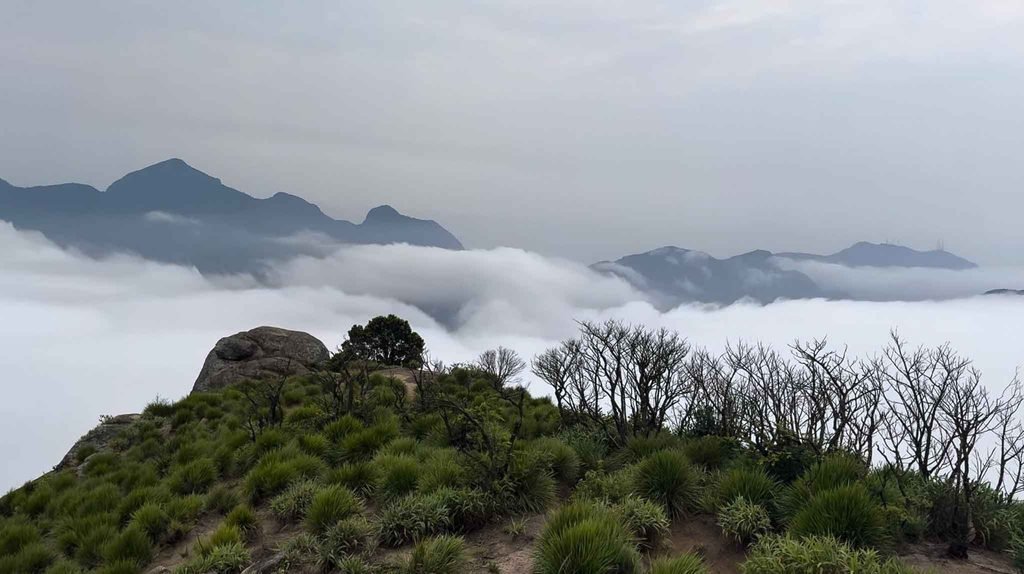
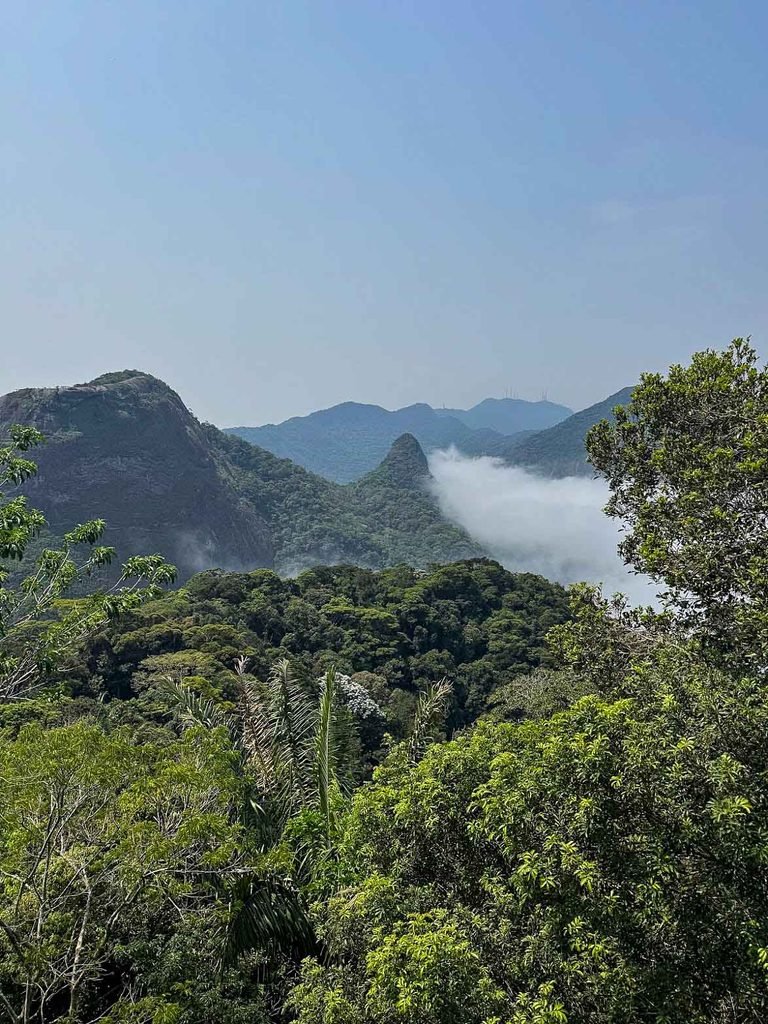
Something I loved about this trek was the way the scenery slowly opened up. After being surrounded by trees, we reached clearings overlooking green mountains and enormous rock faces. On my first visit, mist was already gathering in the valleys, with peaks sticking out above the trees and clouds.
Climbing Carrasqueira
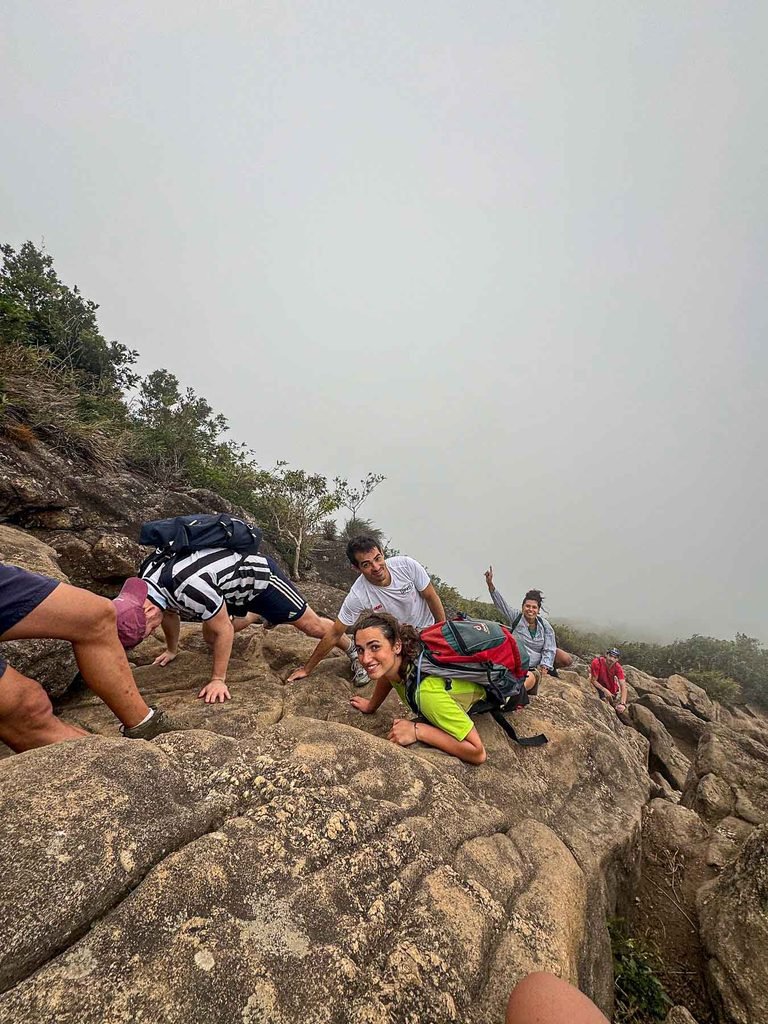
At Carrasqueira, you’re climbing exposed rock, using your hands to pull and balance while figuring out where to place your feet. This is the section I’d pay particular attention to when deciding whether the hike suits you, especially if most of your hiking experience has been on walking trails.
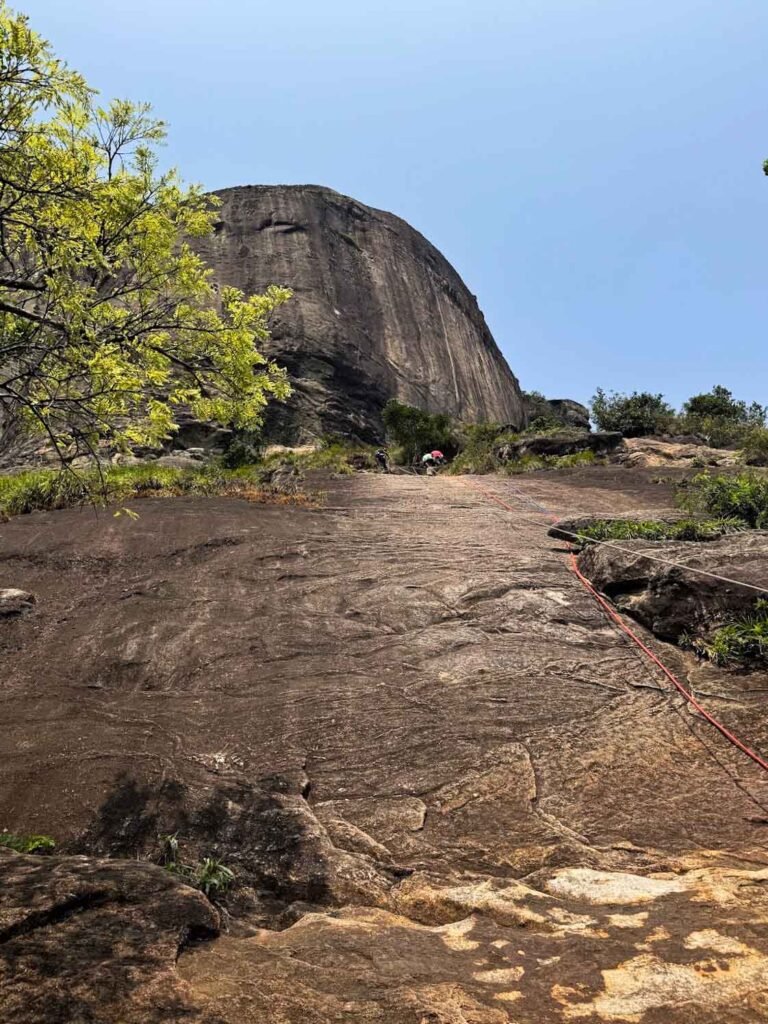
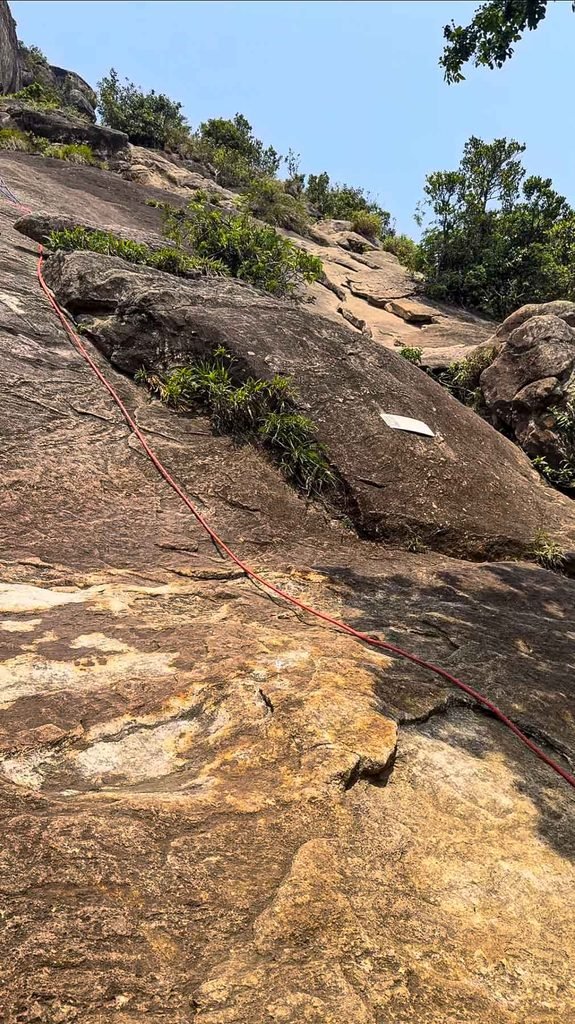
The rock varies across this section, with a broad, smoother slab on the left and more broken rock with ledges and obvious holds to the right. I always climbed on the right, where I found plenty of places to put my hands and feet. With my climbing experience, I found that side of the rock face manageable without gear. That said, I’ve seen guided groups using ropes on both sides, so it comes down to your ability and comfort.
Even if you’re comfortable climbing, the weather can make things more difficult. Clouds rolled in during my solo hike up, reducing visibility and slowing my pace as I became more conscious of where I placed my hands and feet.
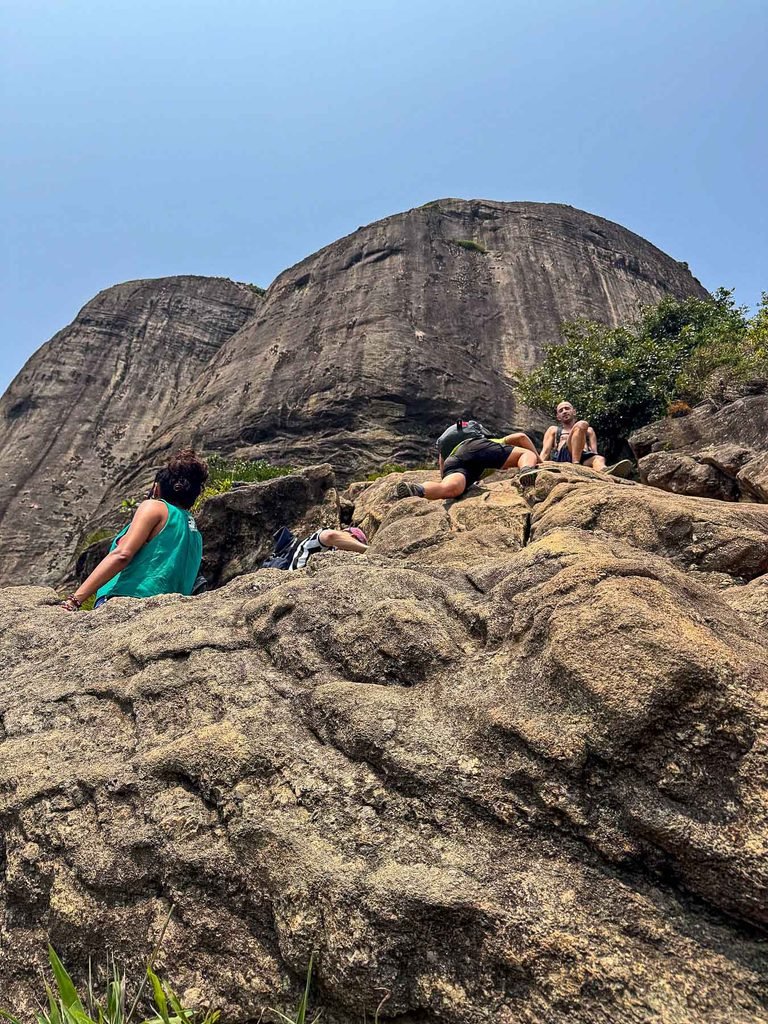
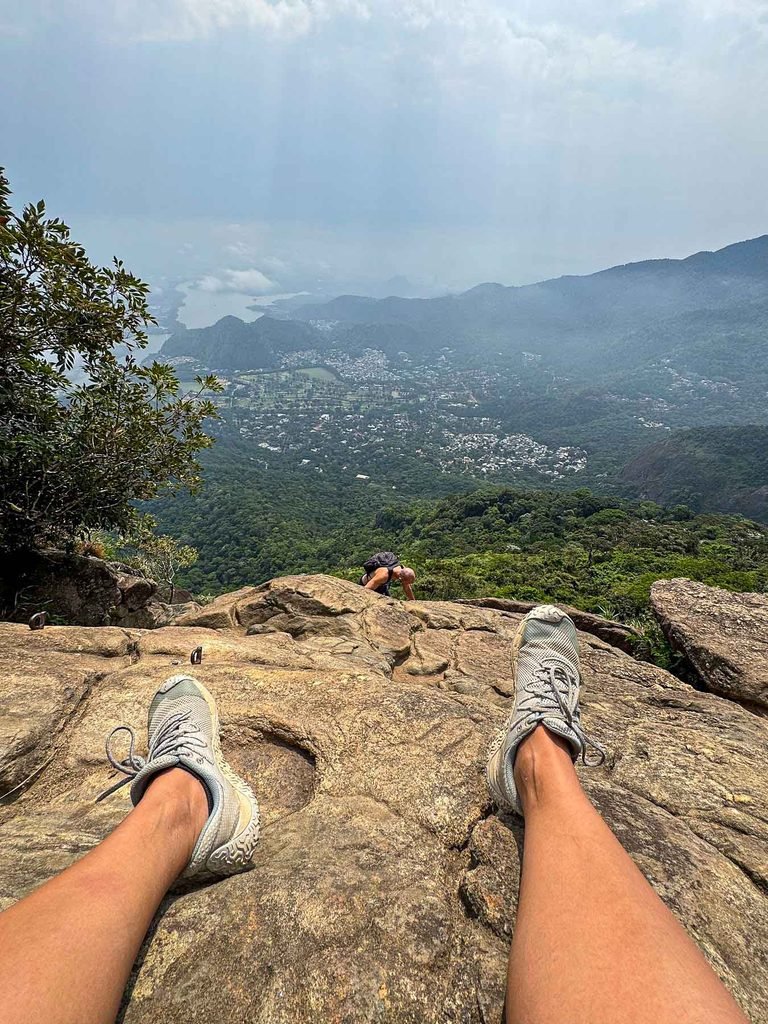
If you reach Carrasqueira and feel out of your depth, you may find people offering paid help with equipment. I remember this costing around R$60 when I visited, though I wouldn’t count on the same price or someone being available at the exact moment you decide to go. If you feel uncomfortable and there’s no reliable support, I’d reconsider continuing.
The Summit and Views
While this hike will physically push you, you’ll be rewarded with some of the best views in the area (depending on the weather).
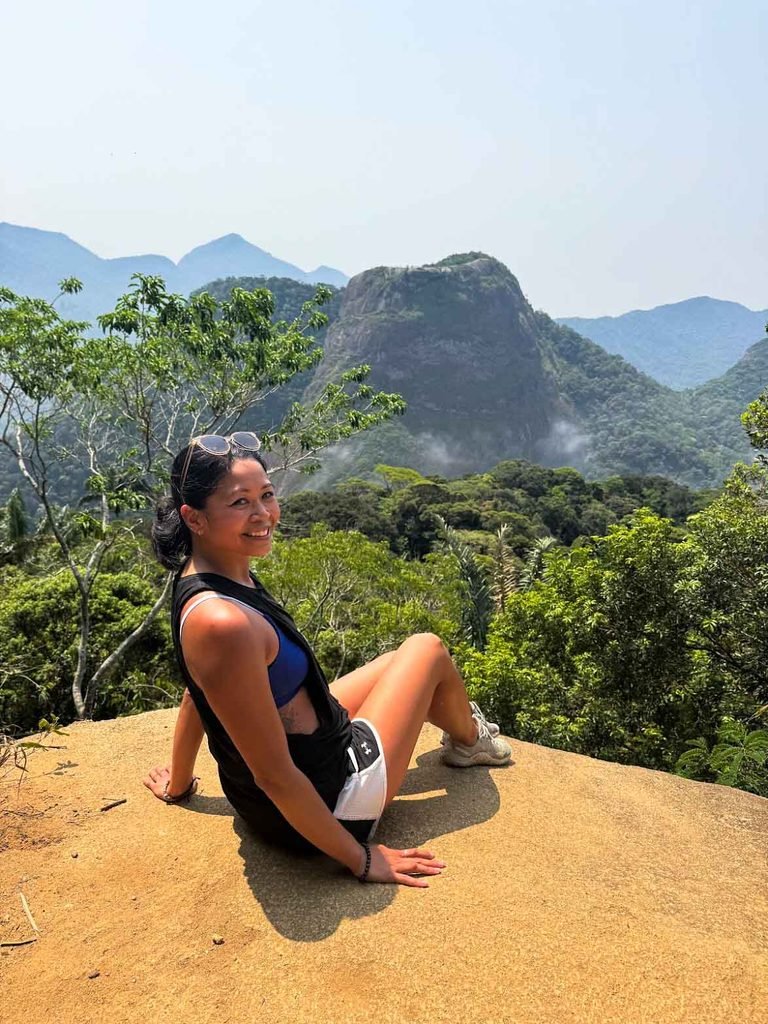
What strikes me is how high you feel, with neighborhoods stretching along the coast and the beaches and ocean opening out below. During clear moments, it felt like I could see everything, including the iconic Dois Irmãos from the backside—a different perspective from the one you usually see from the city.
And the colors were just as memorable, with greens against the tan of the beaches, white waves breaking along the shore and blues spreading beyond them. All of it together looked like a beautiful painting.
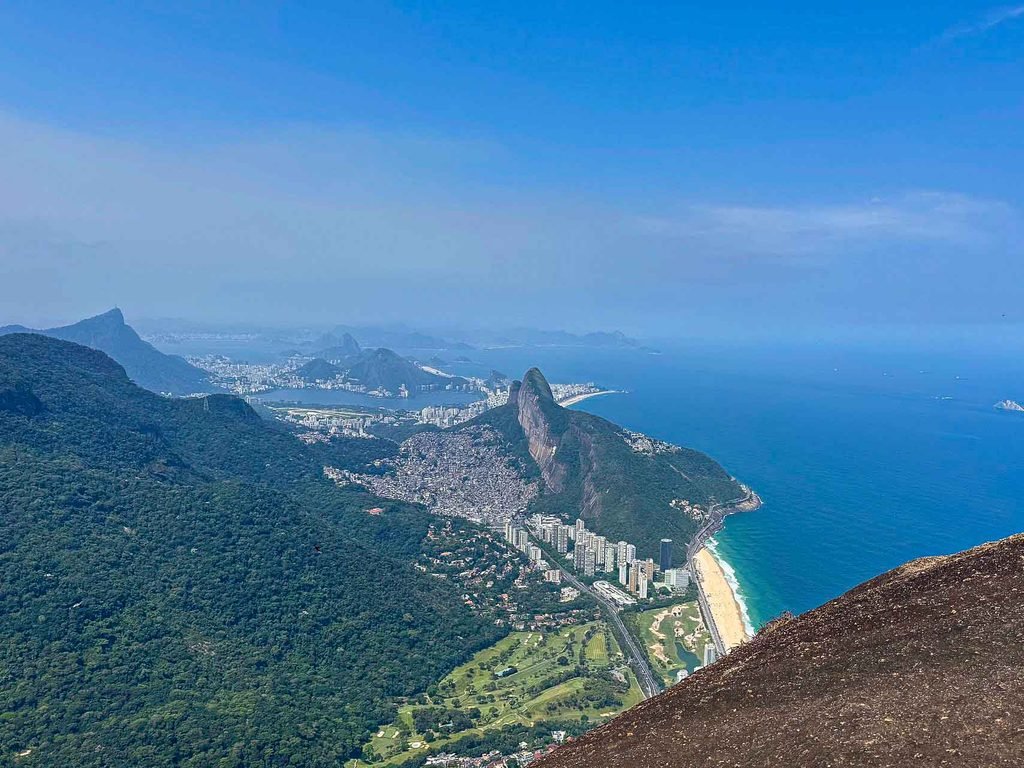
On my first hike, our group went to a quieter side of the summit to avoid the crowds. Getting there involved more scrambling, even after we’d finished the main climb. It was worth it for us, but reaching the upper area doesn’t mean every viewpoint is equally straightforward to see.
Clouds rolled in once we reached the summit and hid most of the landscape, growing so thick that it felt like we were inside them, above everything else. It was still surreal, and we spent time eating and relaxing on the rocks before the wind picked up and it started getting cooler.
Coming Back Down
For me, coming down was harder than climbing up. Some of the next useful footholds were farther away or less obvious from above, so I had to slow down and adjust how I moved between sections.
The clouds can make it difficult here too, reducing visibility as you try to figure out where to place your hands and feet. Again, in these conditions I had to take my time navigating the rock, carefully checking each step before moving on.
How Long Does the Pedra da Gávea Hike Take?
The hike is approximately 7.5 km round trip, though the elevation and climbing make it more demanding than the distance suggests. I’d allow around 5-6 hours on the trail, including breaks and time at the summit, with extra time if you move slowly through the climbing sections.
It took me about three hours to reach the summit with a group, compared with around two and a half hours on my solo hike. Getting down was much quicker overall, outside of the climbing sections.
Allow for travel time too: on some days, my Uber from Zona Sul took up to 45 minutes just to reach the park. Between getting there, hiking and returning, I’d give this outing most of the day.
If you book a guided tour, check whether transport is included.
How Do I Get to the Gávea Trailhead?
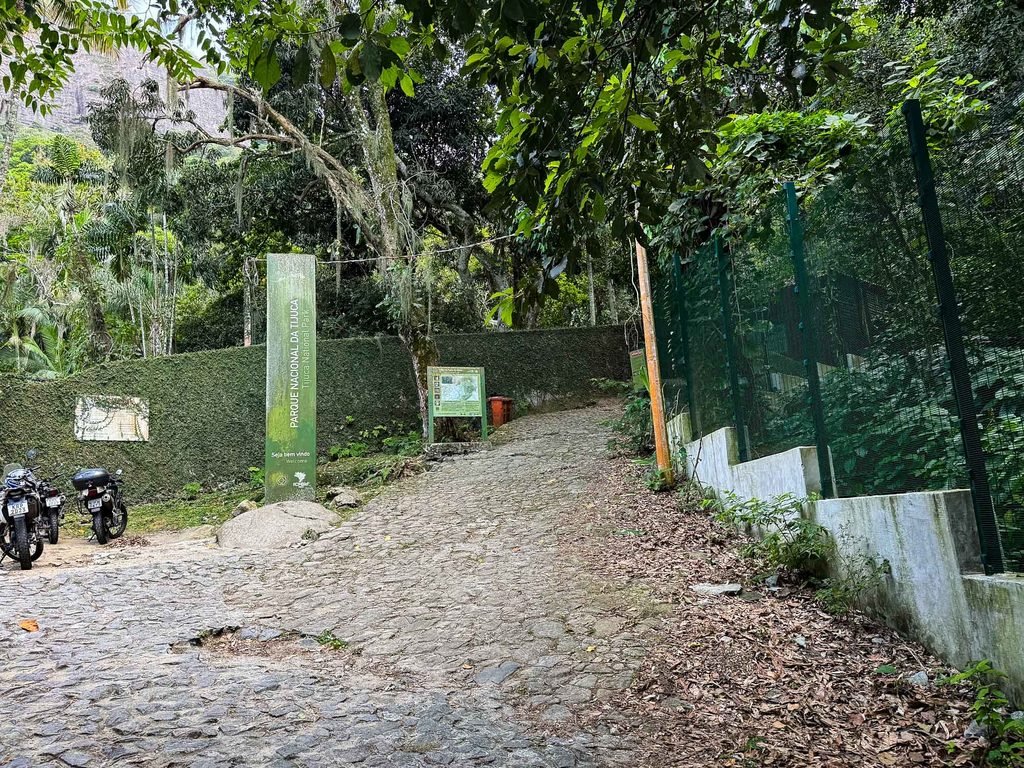
The Carrasqueira trail starts from 📍Estrada Sorimã in Barrinha, on the Barra da Tijuca side of Rio. If going on your own, I’d recommend taking an Uber to the entrance area.
When you’re dropped off, you’ll see an entrance gate where you can sign in before entering the park, then you’ll continue up the trail to your destination.
Heads up, Tijuca National Park’s trail-access hours are from 8 a.m. to 5 p.m., so keep those hours in mind when planning your arrival and return.
When to Hike Pedra da Gávea
Personally, earlier is always better for me. If you’re going without a group, I’d aim to start close to the park’s 8 a.m. opening so you have the trail mostly to yourself and you save yourself from hiking in the high heat of the afternoon.
Check the weather forecast before going, though. Avoid any days where there’s a chance of storms, rain, or strong winds, because these will directly impact the difficulty and safety of your climb up. If you can, leave some flexibility in your Rio itinerary so you can choose a better day if conditions change.
Some days, the hike starts sunny, then clouds cover Gávea by the time you reach the summit—unfortunately, you can’t control that. But if you’re patient, you can sometimes wait it out and get clear views before they return. Waiting can be worthwhile, but keep an eye on the time rather than let the chance of a view leave you rushing back down the mountain.
What to Bring
Gávea is a serious hike, so make sure you’re prepared for a full day out in nature. Here’s what I’d plan to bring on this trek:
Shoes with good tread.
Wear footwear with good grip that you’re comfortable hiking and scrambling in, as you’ll be moving over uneven rock and looking for secure foot placements. Your shoes’ tread can help on some of the slanted rock sections.
Layers and sun protection. It can feel hot climbing through the forest and much cooler when you stop higher up, so bring a light layer as well as sun protection and insect repellent.
Water and food.
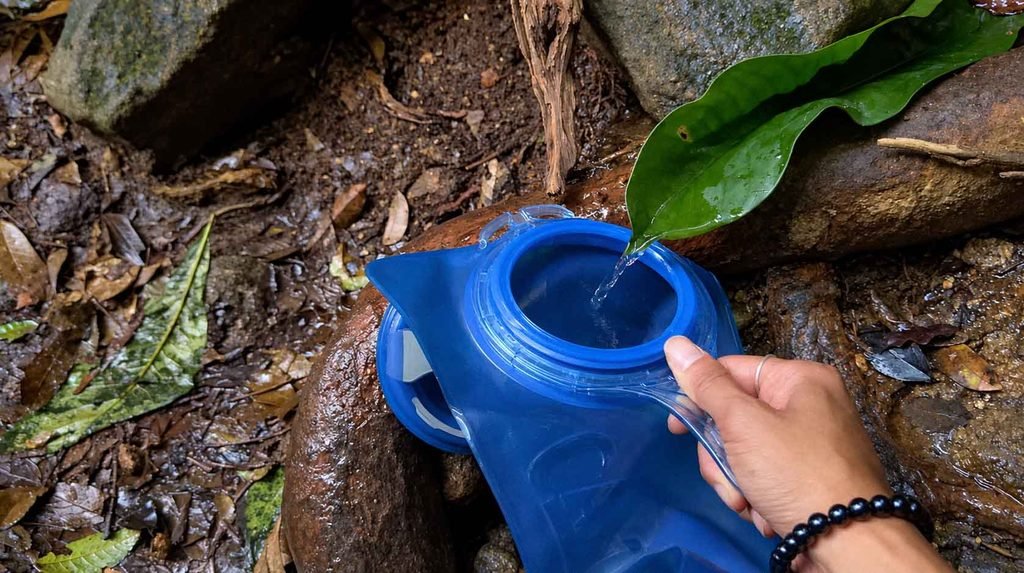
Bring enough water for the full outing, and food you can eat during breaks. I’ve found it pleasant to pack a small sandwich lunch to enjoy at the summit while looking at Rio below.
Is Pedra da Gávea Worth It?
After hiking Pedra da Gávea three times, I’d definitely say it’s worth it. Between the variability in terrain, views, and physical challenge, this trek always leaves me satisfied. There’s something about that feeling of being high above the coast and city that’s addicting.
I’d recommend it if you’re excited about the hike and climbing as well as the views, and willing to prepare for both. For me, the variety of the climb is part of what makes reaching the top so satisfying.
If you want to experience Gávea but want support navigating the trail and the climb, I’d recommend going with a local guide that can provide safety and guidance for your adventure.
Planning a trip to Rio de Janeiro?
🛌 Book a hotel: Booking.com, and Expedia
👓 Book local tours: Viator, and GetYourGuide
📱 Setup international data Airalo
🏥 Travel insurance: IMG
READ MORE ABOUT RIO DE JANEIRO
Looking for more information about traveling to Rio de Janeiro? Here’s some further reading that may be helpful for your trip:
👀 Need ideas for things to do in Rio? Here are the 12 Best Things to Do in Rio de Janeiro.
🪅 Visiting Rio de Janeiro for Carnival? Read my Rio Carnival Guide.
🥾 Curious which hike to do in Rio de Janeiro? I reviewed the best ones here: Best hikes in Rio de Janeiro.
🌅 Want to catch the best sunrise in Rio? Check out my Dois Irmãos Sunrise Hike Guide.
🌄 Want to get the best panoramic views of the city and surrounding nature? Sugarloaf Mountain: 3 Ways to Reach the Top.
⛰️ Looking for a good workout with phenomenal views? Read my Guide to Pedra da Gávea.

I’m Marie, a slowmad and adventurer who left settled life in the U.S. to explore the world more deeply.
I spent four months in Brazil, including three living in Rio de Janeiro, and traveled widely beyond the city — from island escapes and jungle landscapes to the Pantanal and Brazil’s northeast.
I share what I learned firsthand, from local life and culture to the adventures that made me want to keep exploring.
MORE BRAZIL
-

Is Rio Carnival Safe? What I’d Actually Worry About
I loved Rio Carnival, but I wouldn’t call it carefree. After witnessing two phone thefts in two days, here’s what actually felt risky and what I’d do differently.
-

Sugarloaf Mountain Rio: 3 Ways to Reach the Top
A firsthand guide to visiting Sugarloaf Mountain in Rio by cable car, hiking Morro da Urca, or climbing Costão, with tickets, timing and sunset advice.
-

What Is Rio Carnival Like? My Honest Experience
I returned to Rio for Carnival after living there for a few months. From spontaneous street parties to the Sambadrome and a stolen phone, here’s what the experience was really…
-

Dois Irmãos Hike in Rio: Sunrise, Vidigal & What to Expect
I hiked Dois Irmãos for sunrise without a guide. Here’s what to expect, from taking a moto taxi through Vidigal to the steep trail, summit views and walk back down.