MOVING ABROAD
How I Choose the Right Neighborhood Abroad
•
SHARE:
This post contains affiliate links. If you book through them, I earn a commission at no cost to you. Learn more
When you move abroad, one of the first big questions is: what neighborhood should you actually live in?
It sounds simple, but the neighborhood you choose shapes a huge part of daily life. It affects how you work, where you get groceries, how easy it is to get around, how social you feel, how much peace and quiet you have, and whether life in that city feels energizing or draining.
Pick the wrong neighborhood for your personality, priorities, or routine, and it can wear on you fast. Pick the right one, and settling into a new country can feel so much easier.
When I’m trying to choose the right neighborhood abroad, I usually start with the kind of life I actually want there. Do I want something lively and social, or calmer and more local? Do I care more about being around people, or about having a setup that supports focus, routine, and everyday ease?
This post is for digital nomads, people moving abroad, or anyone trying to choose the right neighborhood in a new city based on real life, not just a pretty first impression.
If you’re trying to figure out how to move abroad, start with my guide to Moving Abroad as a Digital Nomad which covers the full process including setting up banking, phone, healthcare, and other practical preparations that helped me leave the U.S.
The Main Neighborhood Types I Think About
These are some of the main neighborhood types I think about when I’m deciding where I want to live in a new city. None of them are automatically better than the others. It really just depends on the kind of life you want while you’re there.
Social, trendy, or expat-friendly neighborhoods
If you want easy access to restaurants, bars, and a built-in social scene, these neighborhoods can make life easier fast.
They’re often the easiest places to land when you’re new to a city. You have options right outside your door, it’s easier to meet people, and you don’t have to work as hard to feel plugged in.
The downside is that they’re usually more expensive, less peaceful, and less local-feeling. If you stay long enough, you also start noticing the other side of that convenience: more noise, more crowds, and less separation between home and the busiest parts of city life.
In Buenos Aires, Palermo felt like this to me. It made life very easy socially because there were so many bars, restaurants, and people out. It also felt easier to navigate as a foreigner, since businesses there were more likely to speak English than in other parts of the city. The downside was that it was more expensive, and compared with some other neighborhoods, it didn’t feel especially local.
This kind of neighborhood usually makes the most sense if you’re prioritizing ease, social access, and convenience, especially at the beginning.
Quiet residential or more local neighborhoods
If you want something calmer, more everyday, and more rooted in local life, residential neighborhoods can be a much better fit.
These are often the neighborhoods that feel better once the novelty of a city wears off. They can make it easier to build routine, sleep well, grocery shop without stress, and feel like you actually live there instead of just passing through.
The downside is that they can feel a little less exciting at first. If you’re new to a city, you may have to be more intentional about meeting people or seeking out activity.
In Buenos Aires, Almagro felt more like this to me. It felt more local and more residential, which made everyday life feel grounded, but it also felt less immediately exciting than neighborhoods with more built-in energy.
This kind of neighborhood often works especially well if you care more about routine, peace, and day-to-day livability than built-in buzz.
Bohemian or character-filled neighborhoods
If you care about atmosphere, personality, and having places nearby that you genuinely enjoy spending time in, you may be drawn to a more character-filled neighborhood.
These are usually the places with cute cafés, art galleries, bookstores, older buildings, and streets that feel lived-in in a good way. They can make daily life feel more vibrant, especially if you like walking a lot and want the area around you to feel interesting.
The tradeoff is that they can be pricier than they first seem and, depending on the city, may come with older buildings or a little less convenience than you expected.
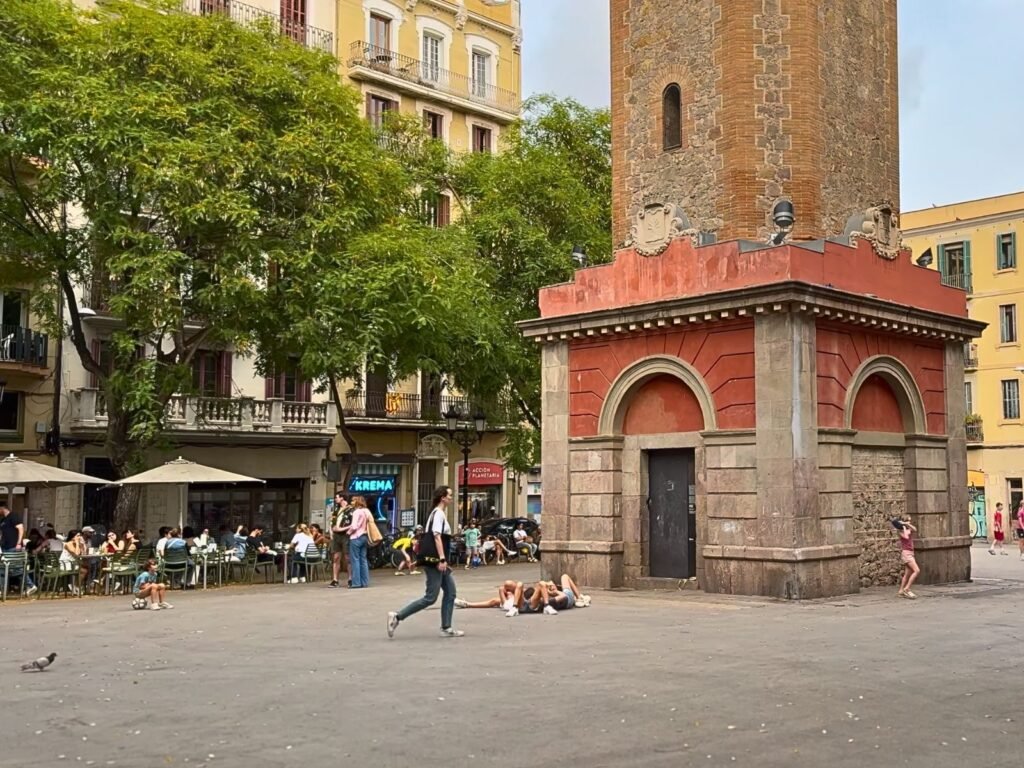
In Barcelona, Gràcia felt like this for me. It had charm, personality, and a very local feel, but it was still connected enough that I didn’t feel cut off from the rest of the city. What I liked most was that it felt genuinely livable. It was cute, neighborhood-y, and full of places I actually wanted to spend time in.
This type of neighborhood can be a great fit if you want a place with soul, not just convenience.
Polished, newer, or more comfortable neighborhoods
Some neighborhoods feel more polished from the start. The buildings are nicer, the apartments are often more updated, the streets feel cleaner, and daily life can feel easier right away. These areas can be especially appealing if comfort matters a lot to you, as sometimes being in a new city can feel intense.
The tradeoff is that they can also feel a little too polished, a little too curated, or just not especially memorable. Sometimes they make life easier, but not necessarily more interesting.
Recoleta in Buenos Aires felt like this to me. I liked the nicer buildings and the overall comfort, but compared with other neighborhoods, it felt a little less interesting day to day.
This kind of neighborhood makes sense if ease, comfort, and infrastructure matter more to you than charm or local texture.
Balanced or middle-ground neighborhoods
Honestly, this is often my favorite category.
Some neighborhoods give you enough local life, enough energy, and enough convenience without leaning too hard in any one direction. They’re not the most social, the most polished, or the most “authentic,” but they work really well.
These are often the neighborhoods that hold up best over time because they’re easier to actually live in.
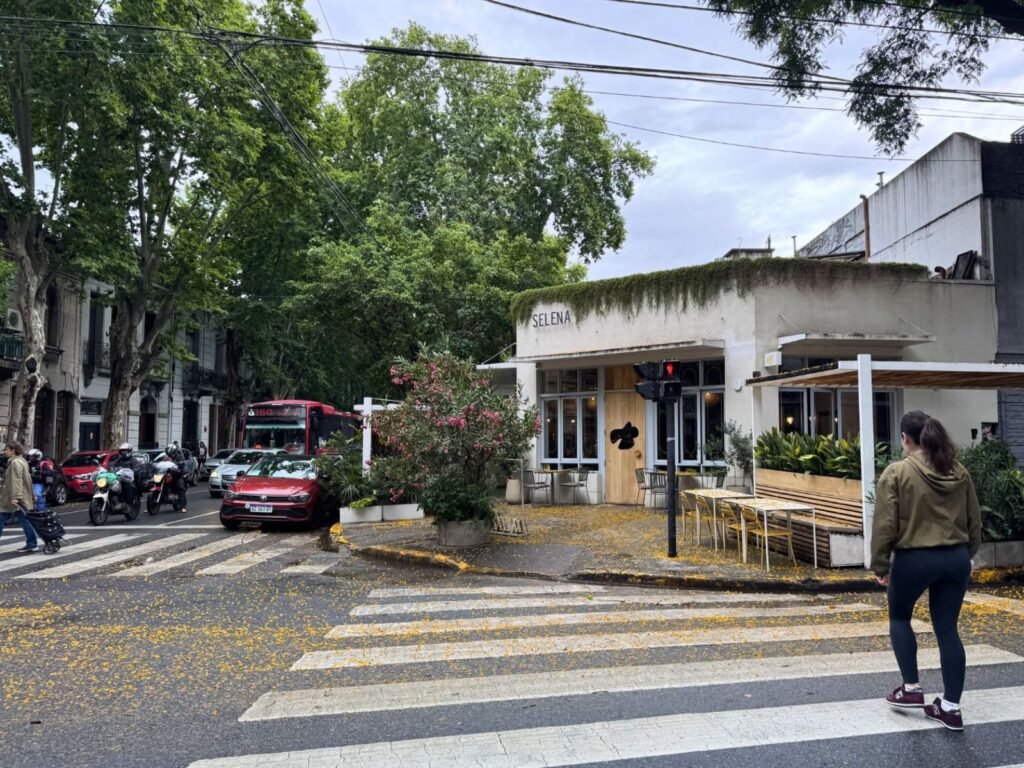
Villa Crespo in Buenos Aires felt like that for me. It had more local character than Palermo, but still enough personality and energy that it didn’t feel sleepy. It was also close enough to Palermo that I could get to the action when I wanted it, without living directly in it.That kind of middle ground is often what I end up liking most for longer stays.
If you’re staying somewhere for more than a few weeks, this kind of balanced neighborhood is often worth paying attention to.

Think About Ease Versus Immersion
Another thing I think about is whether I want to be in a more expat-heavy area or in a neighborhood that feels more local.
Living in an expat-friendly part of town can make a huge difference when I’m first arriving somewhere new. It can be easier to communicate, easier to meet people, and easier to get the basics of daily life sorted out. In some places, that kind of soft landing really helps.
The downside is that these neighborhoods are usually more expensive and can keep you a little removed from the rhythm of everyday local life. You may end up surrounded mostly by other foreigners, hearing more English, and interacting less with the version of the city that locals experience day to day.
On the other hand, living in a more local neighborhood can make you feel much more immersed in the place. You may hear less English, rely more on the local language, and settle into a rhythm that feels closer to everyday life there. That can be really rewarding, but it can also come with a steeper learning curve.
Personally, I usually want some balance. I don’t need to be in the center of the expat zone, but I also don’t always want to make life unnecessarily hard on myself in a brand new country. I’m not trying to prove anything. I just want a setup that helps me ease in while still feeling connected to where I actually am.
A lot of the time, the best fit is not choosing one or the other completely, but finding a neighborhood that gives you some local texture without making daily life harder than it needs to be.
How I Try to Choose the Right Neighborhood Abroad Before I Arrive
This part is not always easy, especially if you’ve never been to the city before.
A lot of the time, you’re not going to know exactly how a neighborhood feels until you’re there. So the goal is not to get it perfect. It’s to make the best decision you can with the information you have.
A few things that help:
- Search the neighborhood directly. Don’t just search the city. Look up the neighborhood name with terms like “what it’s like,” “best neighborhoods,” or “where to live.”
- Use blogs and YouTube videos. They can help you actually see the streets, the buildings, and whether the area feels more local, polished, quiet, or social.
- Ask someone who knows the city. If you know a local, another traveler, or someone who has lived there, ask them what daily life in that neighborhood is actually like.
- Compare a few areas, not just one. Even narrowing it down to two or three neighborhoods can help you understand what kind of fit you want.
- Rule out what clearly doesn’t fit you. Sometimes that’s easier than finding the perfect answer. For example, if you know you don’t want something hectic, too isolated, or too touristy, start there.
I’ll also go deeper into this in my city guides, where I’ll break down neighborhoods based on daily life, livability, and the kind of experience each area actually gives you.
For me, this process is usually about getting close enough. If I can narrow down the kind of neighborhood I want, do some research, and rule out what clearly doesn’t fit, that usually gets me in the right zone.
Final Thoughts
There’s no universally best neighborhood abroad. There’s just the one that fits the kind of life you want right now.
Some areas make it easier to meet people and settle in quickly. Others give you more peace, more local texture, or a better everyday rhythm. Choosing the right neighborhood abroad is really about finding the best fit for your real life, not just the area that sounds coolest on paper. It’s to choose one that will actually feel good to live in once daily life starts feeling normal.
That’s usually what I come back to when I’m deciding. Not just what looks good, but what kind of life that neighborhood is going to give me.
If you’re also figuring out what to look for in the apartment itself, I wrote a separate guide on How I find apartments abroad for a 1–6 month stay. I’ll also be sharing more city-specific guides over time with neighborhood breakdowns based on what daily life there actually feels like.
More Resources for Moving Abroad
Choosing the right neighborhood is only one part of creating a life abroad that feels comfortable, practical, and sustainable. These guides cover the other major parts of the process.
✈️ How to Move Abroad: My Step-by-Step Digital Nomad Setup
Start here for the full moving-abroad process, including finances, residency, healthcare, housing, phone service, and the practical preparations I made before leaving the U.S.
🏠 How I Find Apartments Abroad for a 1–6 Month Stay
Learn how I search for mid-term rentals, compare listings, verify locations, evaluate apartment functionality, and avoid common rental red flags.
💳 Best Bank Accounts and Cards for Living Abroad Full Time
See the bank accounts, credit cards, ATM strategy, and international money-transfer tools I use while living abroad.
📱Google Fi for Digital Nomads
Learn how I keep my U.S. phone number active for calls, texts, verification codes, and account access while traveling internationally.

I’m Marie, a slowmad and adventurer who left settled life in the U.S. to live abroad and explore the world.
I live in countries for months at a time to understand new cultures and explore deeply, sharing my insights on what it’s like to live abroad and the travel adventures along the way.
Learn more about how to move abroad
-

Best Bank Accounts and Cards for Living Abroad Full Time (My Exact Setup)
Most people don’t think about their financial setup until something goes wrong abroad — a declined card, a surprise fee, a transfer that costs way more than it should. Here’s…
-

Google Fi for Digital Nomads: What’s Worked for Me Living Abroad Full Time
Living abroad full time sounds freeing until you realize how much of your life is still tied to a U.S. phone number. Here’s the setup I use to keep mine…
-
How I Find Apartments Abroad for a 1–6 Month Stay
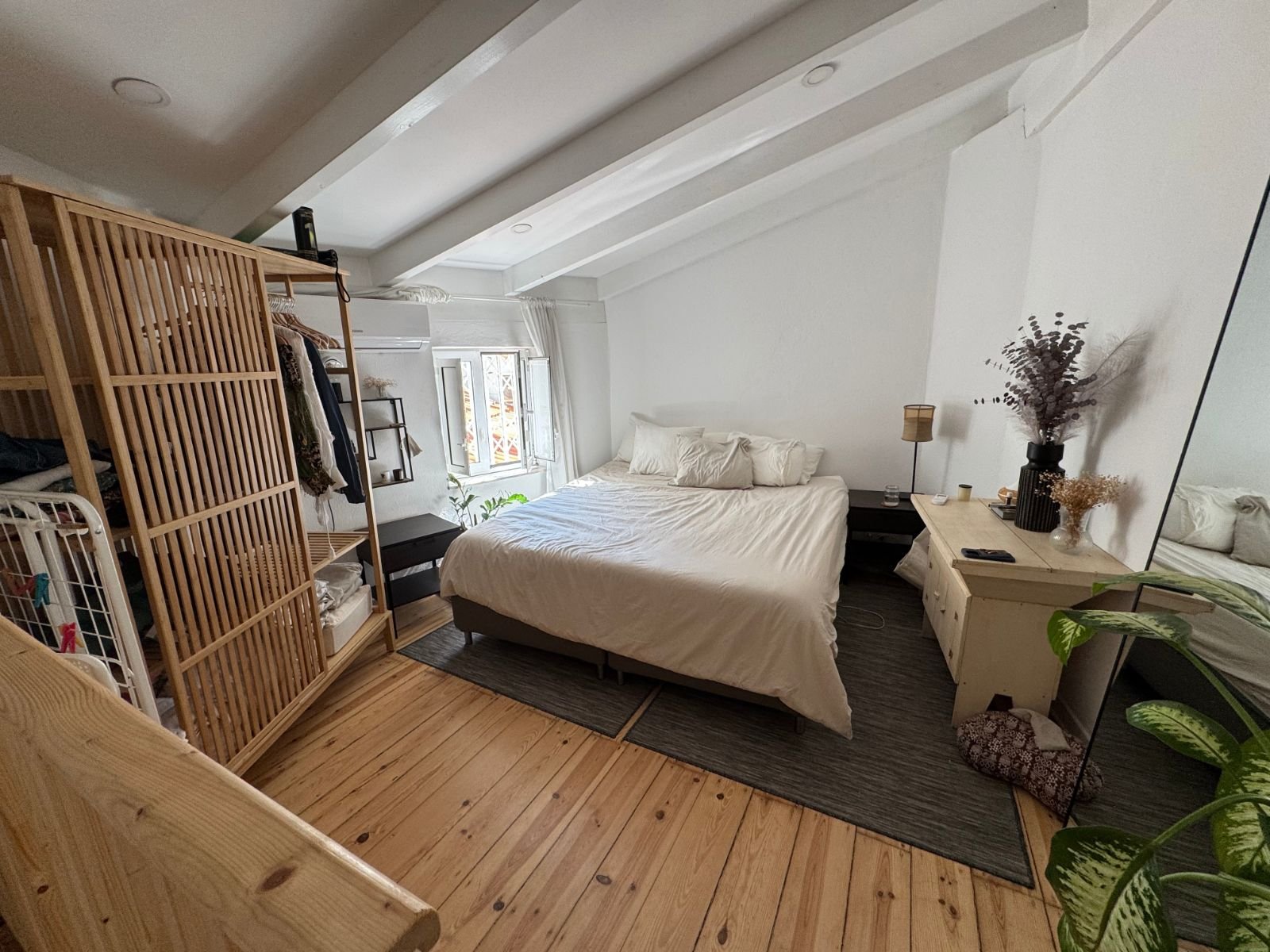
MOVING ABROAD How I Find Apartments Abroad for a 1–6 Month Stay What I look for in a place abroad, from neighborhood fit to walkability, wifi, and the details that…
-

How I Became a Digital Nomad: The Real Steps I Took to Move Abroad
What it really took to leave my life behind and start over abroad—from the logistics to the moments that mattered most.