COLOMBIA
My Lost City Trek Experience: What Colombia’s Ciudad Perdida Hike Is Really Like
•
SHARE:
This post contains affiliate links. If you book through them, I earn a commission at no cost to you. Learn more
On the last day of the Lost City Trek, I was sick.
Not “a little tired and sniffly” sick. Fever, pounding head, sore throat, 19 kilometers of jungle trail between me and civilization sick. I spent most of that final day behind my group, moving slowly up the hills and through the heat and humidity, sweating through what I’m fairly certain was a full fever, watching everyone else pull ahead while I just focused on putting one foot in front of the other.
And I would do it again without hesitation.
That’s probably the most honest summary of the Lost City Trek experience I can give you. It was one of the most uncomfortable experiences I’ve had traveling in South America, and it’s also one I think about more than almost anything else I’ve done in Colombia. This is the story of how I got there, what surprised me, and why I think it’s one of the most underrated adventures in the country.
I Almost Didn’t Do It
I wasn’t originally planning to do the Lost City Trek. I was already traveling through Colombia, and the trek wasn’t part of my original itinerary. But somewhere between Cartagena and Santa Marta, I wanted an adventure and decided to add it in. That’s one of the perks of traveling slower: sometimes there’s room to change the plan.
And lets just say, I was not well prepared.
I had no rain cover for my bag. I wasn’t carrying a rain jacket. I hadn’t specifically trained for a multi-day jungle trek. I just showed up in Santa Marta, spent a night getting settled, then met my group the next morning and got in the 4×4 heading toward the trailhead.
Sometimes that’s the right way to do things.
Day 1: Hot, Exposed, and Immediately Humbling
The drive from Santa Marta to the trailhead near El Mamey takes about three hours. There were 6 of us crammed in the back of a 4×4, getting to know each other on the bumpy ride. We stopped at Restaurante Neyla for lunch and a briefing for the trek — camp names, distances, elevations. It made the whole thing feel official and real at the same time.
And then we started hiking.
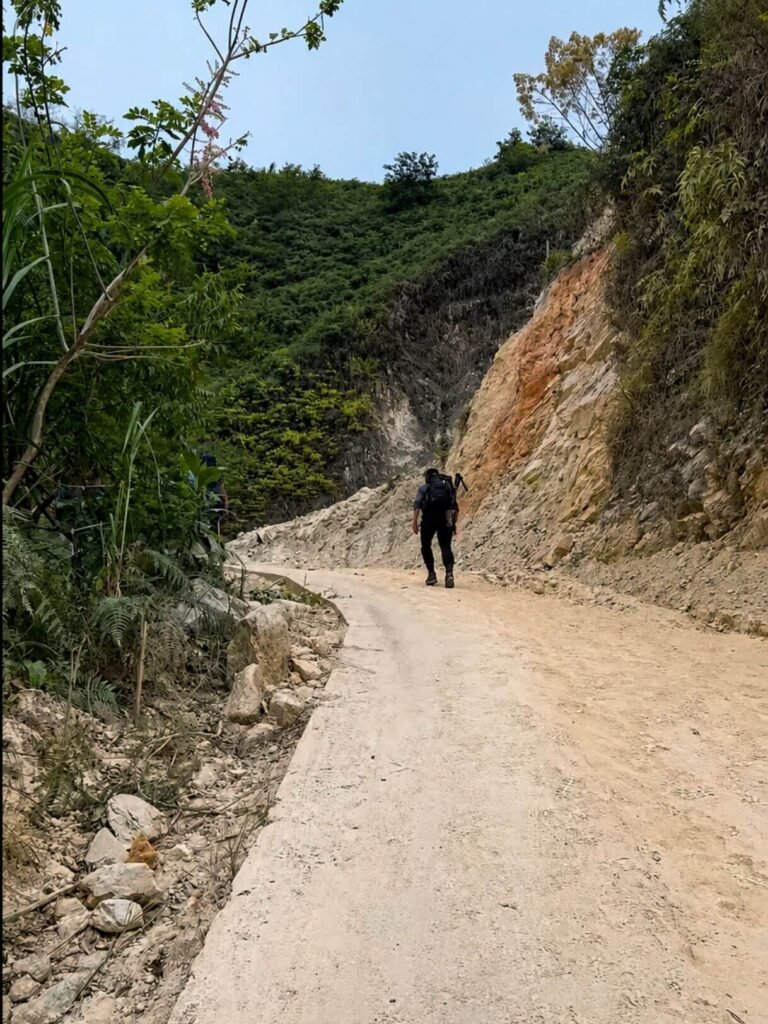
The first section is not gentle. Before you get deep into the jungle, the trail is open and exposed and the sun hits without mercy. We were climbing uphill on dirt roads and I was already sweating within the first twenty minutes. This is when you realize that whatever you packed, you’re carrying all of it, and the Sierra Nevada de Santa Marta does not care about your fitness assumptions.
Later in the afternoon, the trail got greener and more remote. The landscape started to shift — the vegetation got denser, and we could see lush mountains covered in fog around us. Then the rain came.
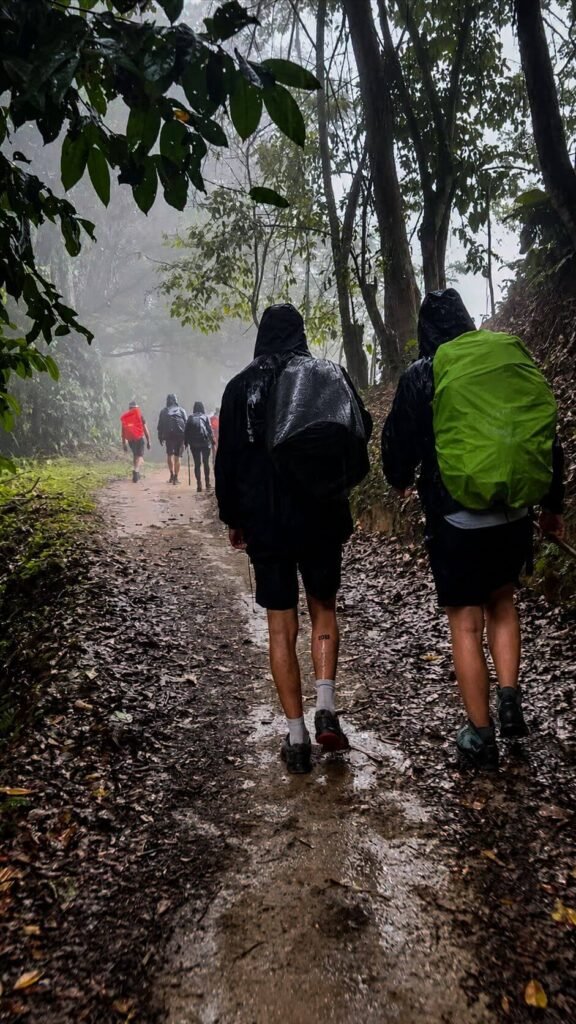
It just started pouring. We kept walking.
Some people in our group had rain jackets. I didn’t, but I made a quick decision not to be bothered by that. Tropical rain is warm. Rain jackets trap heat. Getting wet felt more manageable than overheating inside a jacket in that humidity. What I did regret was my bag situation… I had nothing waterproof over my pack. The guides ended up helping us by giving us plastic garbage bags to wrap our packs. It worked, but I wished I’d just brought a proper rain cover.
We finally made it to the first camp, Cabaña Adam, around 5 PM. As we headed in, we crossed a thin man-made bridge over the river to find our accommodation for the night. Rows of bunk beds with mosquito nets, cold showers in the dark, wet clothes hanging from every available surface. Someone had a parrot. In one corner of the camp there was a pile of freshly born puppies that absolutely nobody could walk past without stopping.
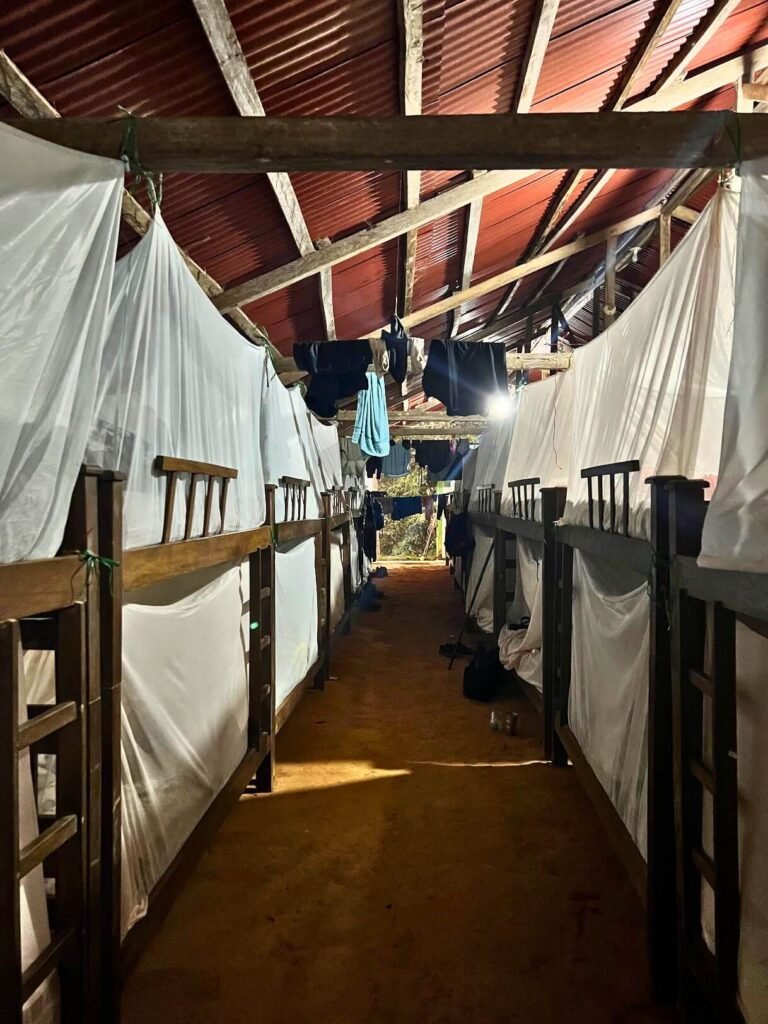
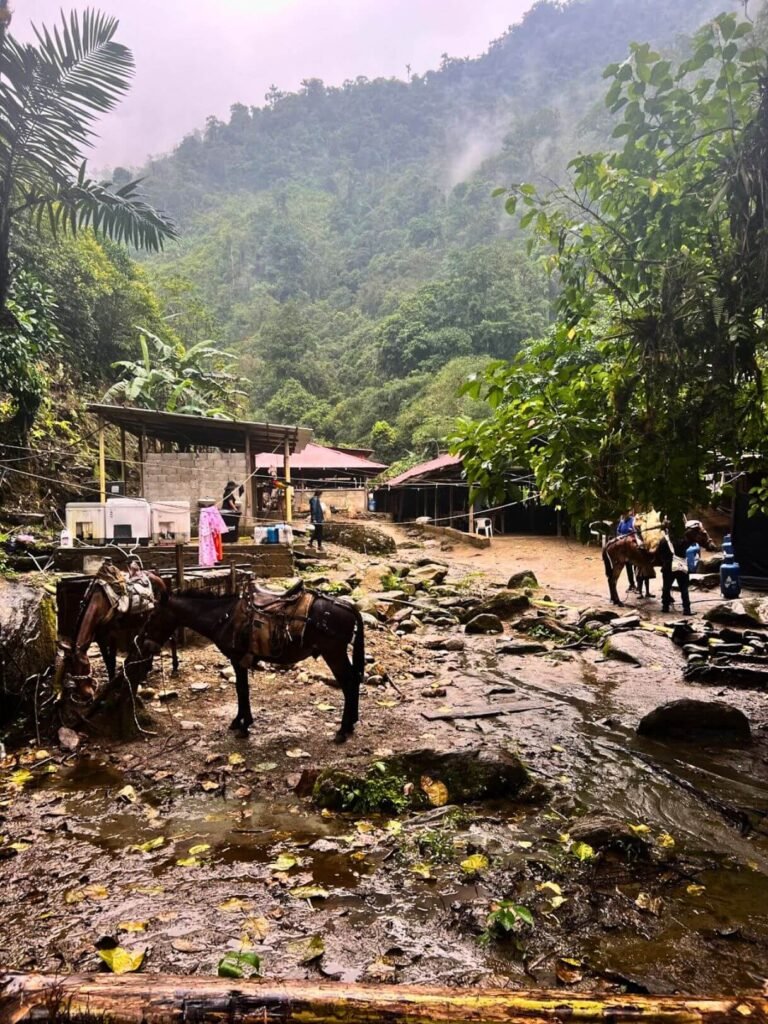
We ate fish, rice, salad, and patacón at long shared tables while other hiking groups filtered in around us. I hung up my wet clothes, took the coldest shower I’ve had in recent memory, and felt genuinely content about all of it.
Day 2: The Day the Trek Started Feeling Like Something
On Day 2 we were on the trail by 6 AM, watching the sunrise through the misty mountains. The air was cooler, the jungle was waking up around us, and there was this quiet that felt different from the first day. We were deeper in the mountains now and it felt like the further we walked, the further we got from anything resembling normal life.
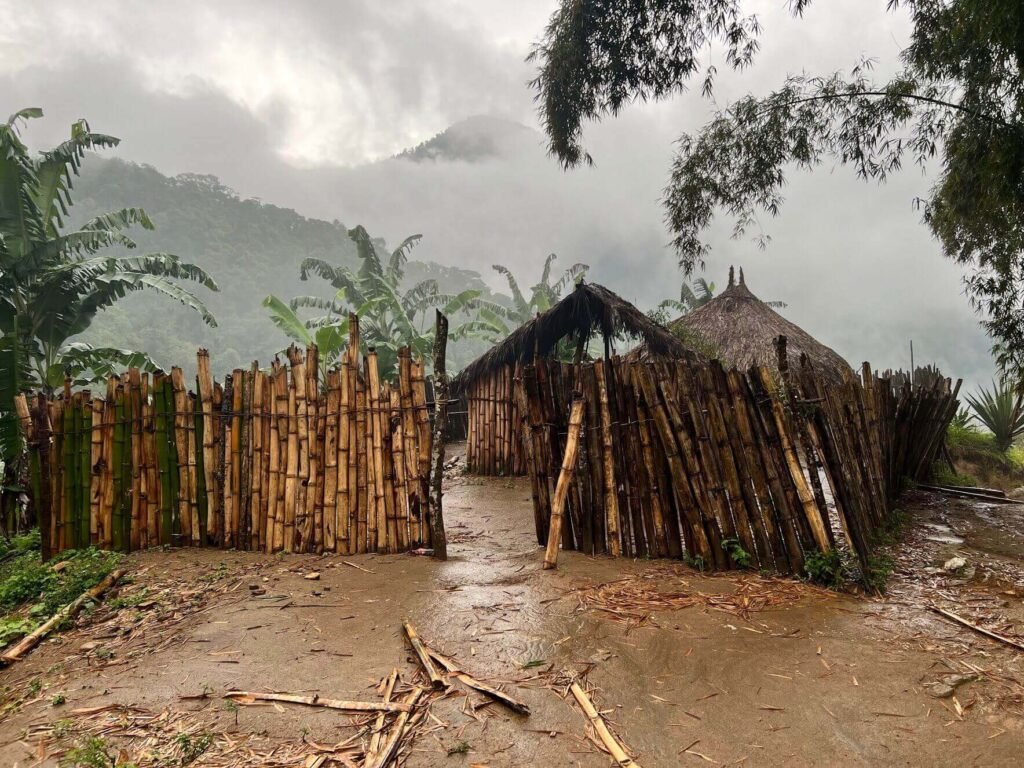
We stopped by a vendor selling watermelon to hydrate and cool down for a bit then passed by an Indigenous village. We walked by traditional homes that have been in the Sierra Nevada de Santa Marta for generations. The trek isn’t just a hike through jungle. You’re passing through living places, and that changes how the whole thing feels.
The swim in the Buritaca River was the highlight of my day. We stopped at a section of the river where you could get in, and everyone just jumped into the cold water. After the heat, sweat, and the humidity, it felt incredible. We were surrounded by jungle, completely off the grid, floating in a mountain river with a group of strangers who were rapidly starting to feel like friends. It was one of those moments where you think: this is exactly why I travel like this.
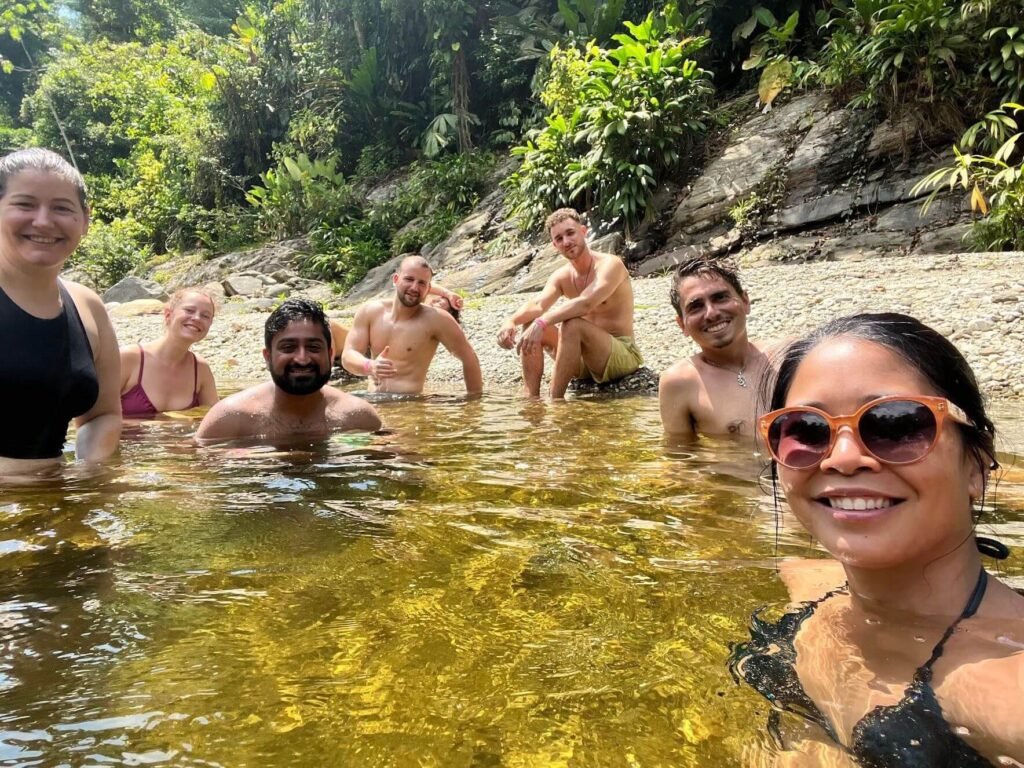
What was even cooler is that we saw some of the Indigenous children hanging out nearby too. There were a few hanging out in the river like us, and then others playing with a kinkajou. I initially thought it was some kind of monkey, but it’s actually a small rainforest mammal related to raccoons.
The afternoon brought more rain, more mud, and more slipping on the downhill sections. I fell more than once on the clay trails. By the time we reached Cabaña Paraíso, our camp for the night and the last stop before Ciudad Perdida, I was muddy, tired, but completely happy about it.
Day 3: The Stone Steps and the City
This was the day.
I woke up before most of the camp was moving, clothes still damp and hanging from the night before. There was something about the quiet of that early morning that made the whole thing feel ceremonial, like we’d spent two days earning the right to be there.
We crossed rivers and walked through dense jungle this day. At one point we crossed the Buritaca River on a carrucha, which is a small hanging cart suspended from a cable stretched over the water. You sit inside, someone pushes the cart from behind you, and then you’re carried across while the water rushes below. It takes about thirty seconds and it is one of the most memorable thirty seconds of the entire trek. I loved it completely.
Then the stone steps appeared.
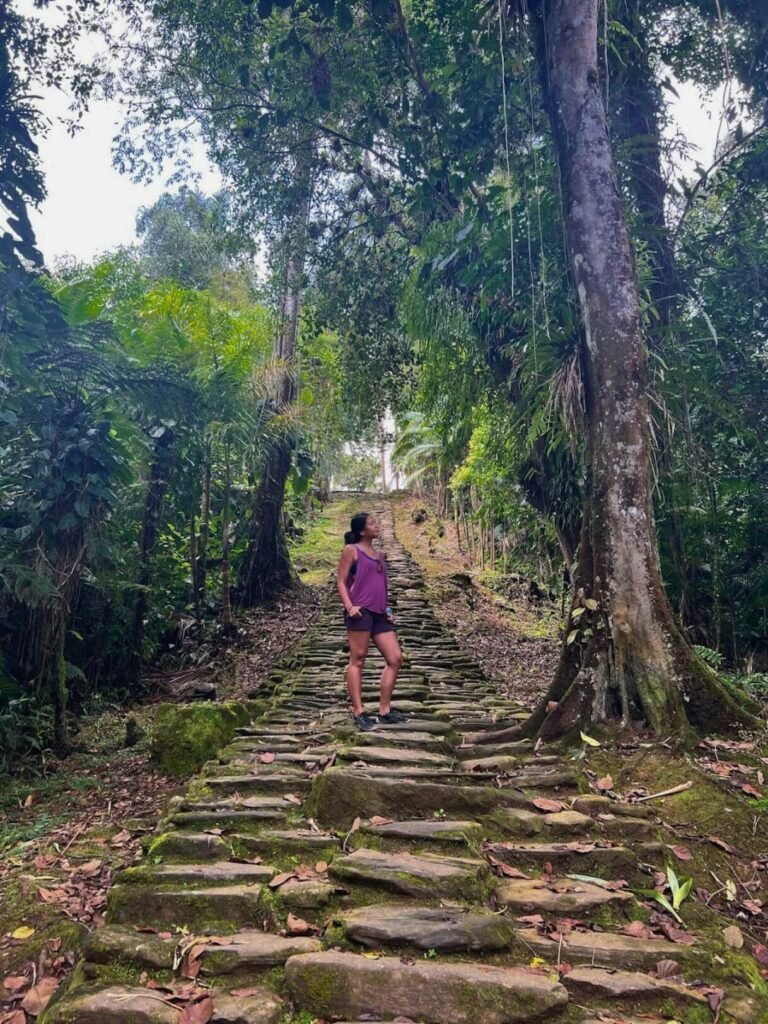
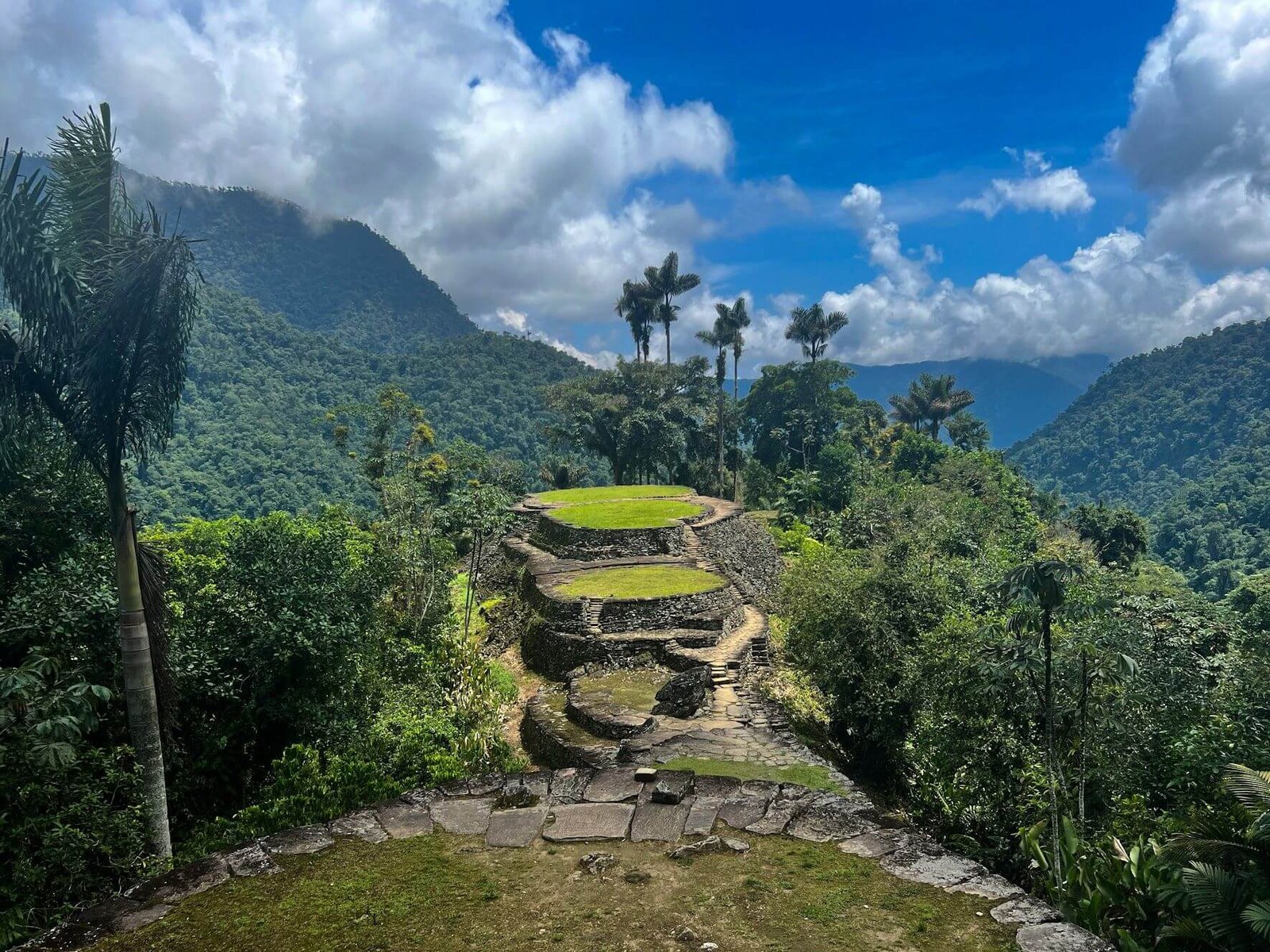
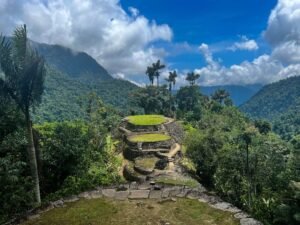
They rise through the jungle, uneven and mossy and ancient, roughly 1,200 of them climbing toward Ciudad Perdida. I don’t have a better way to describe what it felt like than this: I felt like I had walked through time. Every step was a step further away from the modern world and further into something that had been sitting in this jungle for over a thousand years. The Tayrona people built this city around 800 AD. They built it before Machu Picchu existed. And we were walking up the same stone path they carved into this mountain.
When we reached the top, the jungle opened up.
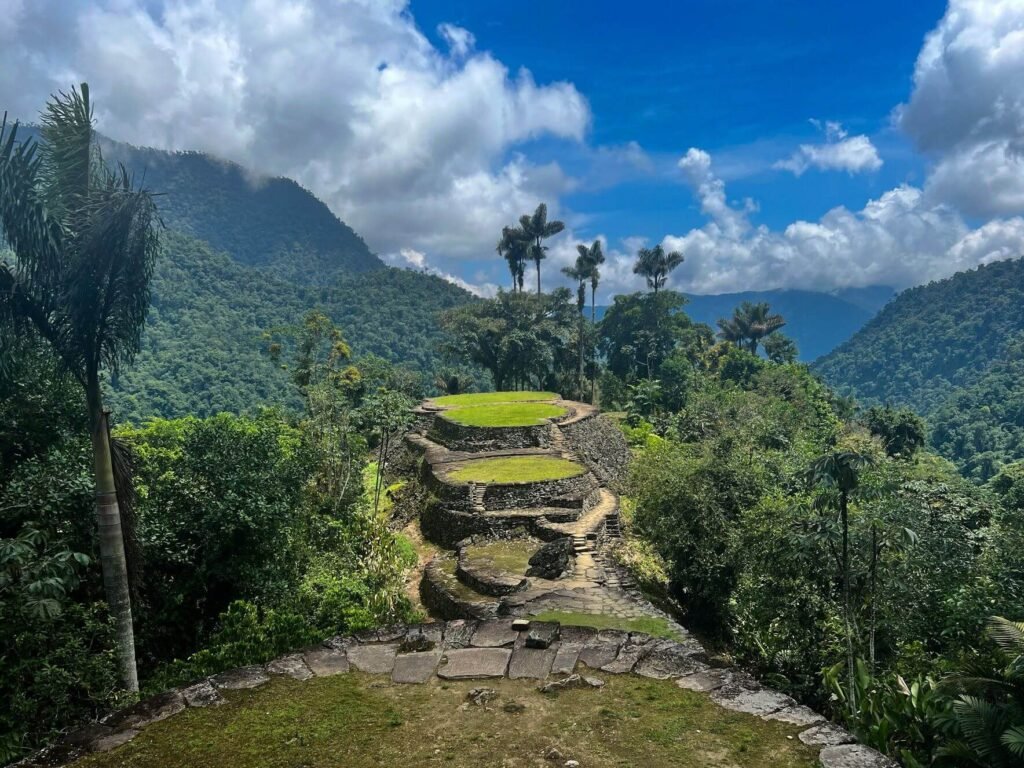
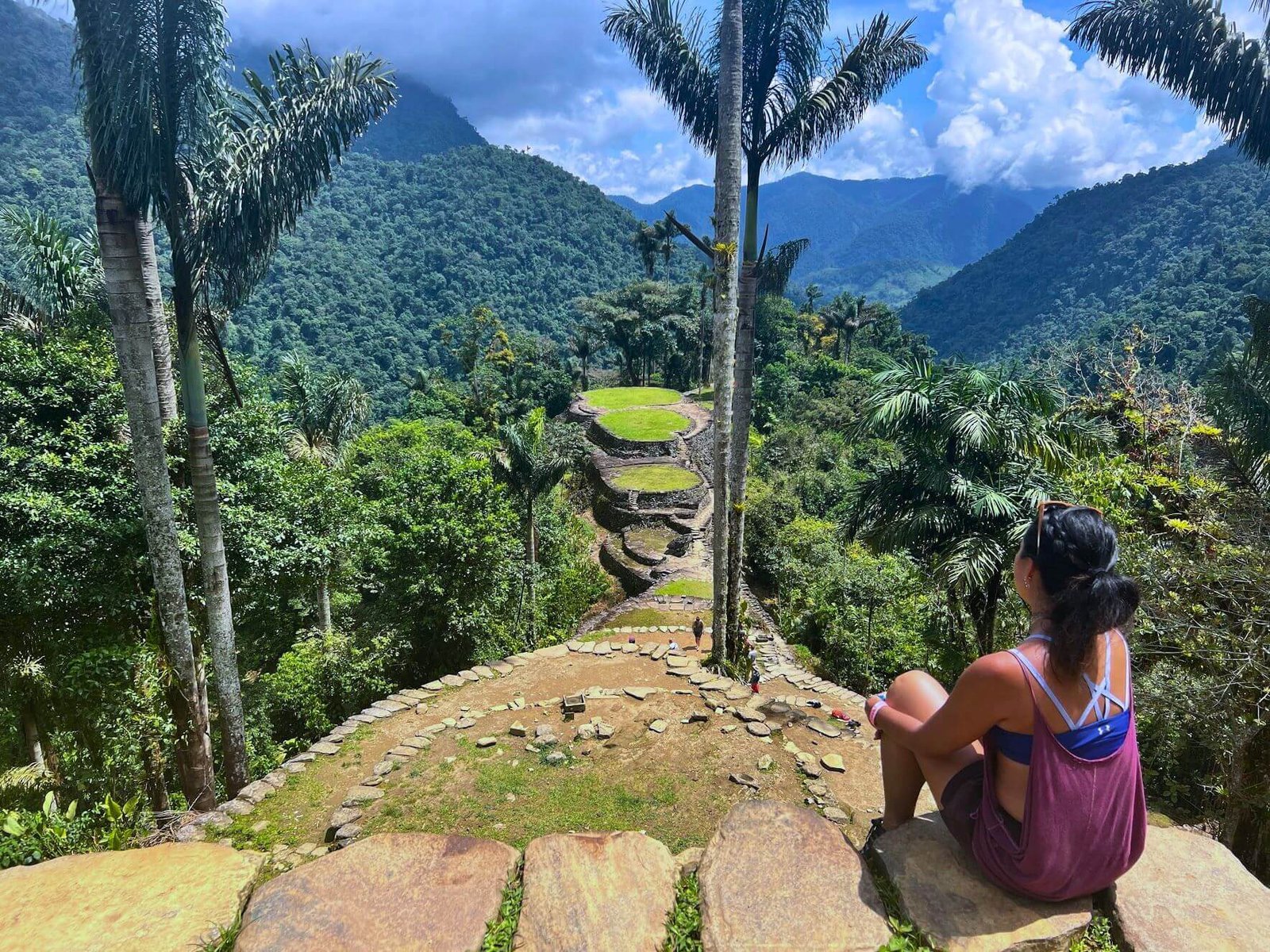
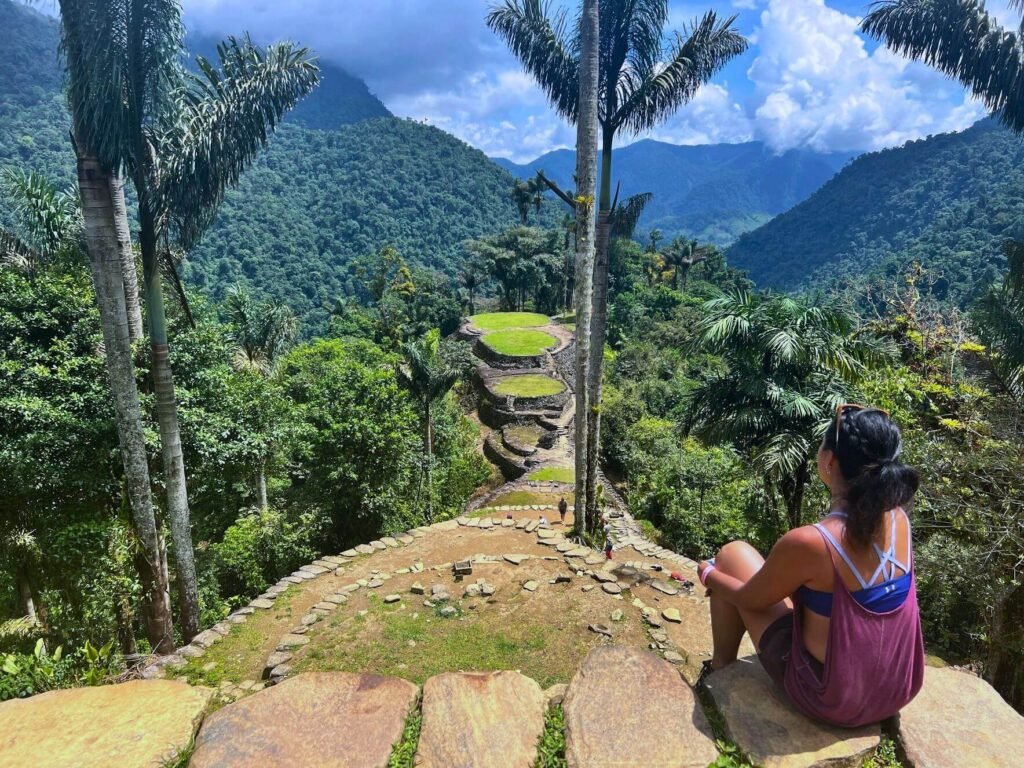
Circular stone terraces cut into the mountainside, old pathways running between them, mountains visible in every direction through the forest canopy. The city doesn’t feel like it was placed on the landscape. It feels like it was grown from it, as though the stone platforms and the jungle and the mountain are all the same thing. Our guide walked us through it, explained how people lived there, how the architecture worked with the terrain rather than against it.
We only encountered one other group while we were there. For an archaeological site this significant in a country that sees millions of tourists, it was remarkably quiet. I sat on a stone platform and looked out at the mountain views and felt that wonder that travel occasionally produces and that is very hard to plan for. It was worth every kilometer of mud.
Unfortunately, on the hike back down and toward camp, I started to feel sick.
My head started pounding on the trail. My throat got worse through the afternoon. By the time we reached camp I wasn’t social at all. I ate, got a paracetamol from a friend, and was asleep before most people had finished dinner.
Day 4: Sick, Behind, Moving Anyway
I felt worse the next morning.
Officially sick. Fever, everything. My guide told me we had about 19 kilometers to cover to get back to the trailhead. I put on my shoes and did what I had to. I started walking.
I spent most of Day 4 alone at the back of the group. The terrain was familiar since we were mostly retracing the route, but it felt different in the heat with a fever. The exposed final stretch back toward El Mamey, which I vaguely remembered being hard on Day 1, felt genuinely brutal on Day 4 while sick.
But here’s the thing: the jungle was still beautiful. The trail was still interesting. Even while feeling terrible, I wasn’t miserable about being there. The discomfort and the experience were both true at the same time.
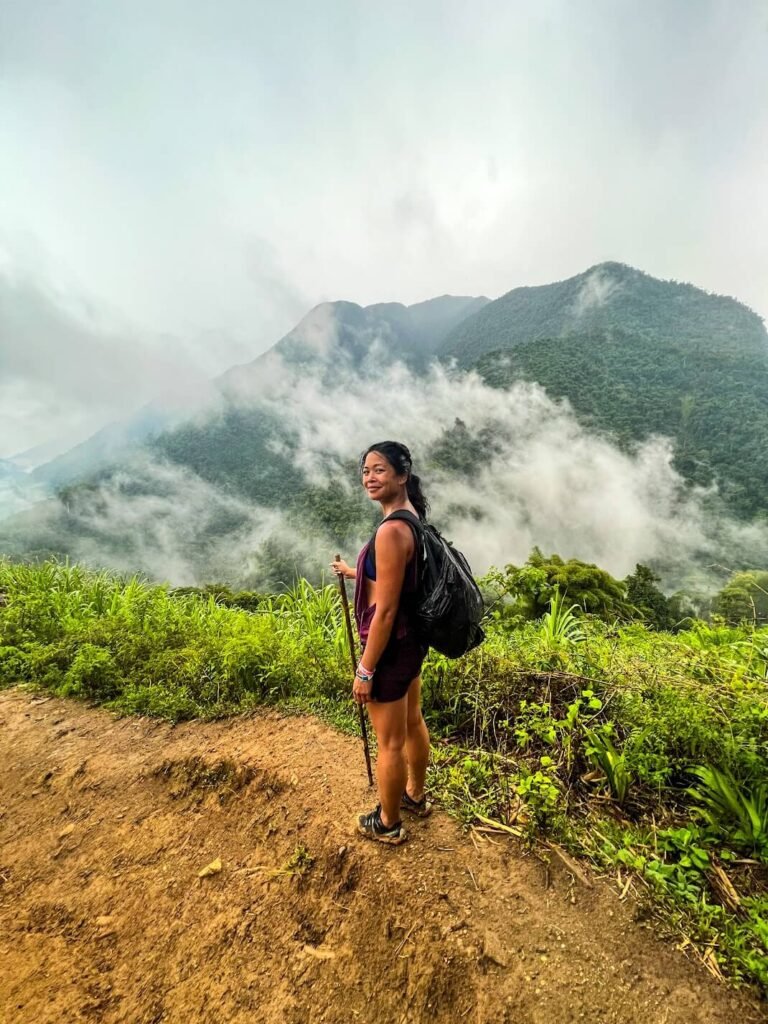
When we finally made it back to our starting point, we were treated with another fish dish and my mood picked up. Exhausted, but I did it. Even while sick. I treated myself to a beer just for the accomplishment. Then we piled back into the 4×4 toward Santa Marta.
I got out at Tayrona National Park instead of continuing to the city. I had booked an ecolodge near Tayrona with a private hot tub, which may have been the best decision I made after four days of cold showers, mud, and fever hiking.
Completely earned.
Planning your Lost City Trek?
🥾 Compare guided treks: Viator, GetYourGuide
🏨 Book a pre-trek stay in Santa Marta: Booking.com, Expedia
🩺 Get trekking insurance: World Nomads
📶 Set up data before arriving: Airalo
Who the Lost City Trek Is Actually For
This one’s for people who like earning the experience.
Not suffering for its own sake. But if the idea of four days in the jungle, rustic camps, river crossings, potential tropical rain, and a long hard push to reach something ancient sounds good to you, this trek will deliver all of it.
It’s also worth doing if you want to see a side of Colombia that most visitors miss entirely. The Sierra Nevada de Santa Marta, the Indigenous communities, the jungle ecosystem, none of this shows up in your typical Colombia Insta reel. The Lost City Trek takes you somewhere genuinely different.
If you want comfortable hotels, predictable weather, and a polished experience, this probably isn’t it. The camps are basic. You sleep near a lot of strangers. Your clothes may not fully dry. It’s hot and humid for most of the four days.
And if you get sick on Day 3 like I did, you still have to hike out.
But I’d do it again. And I think most people who actually go would say the same thing.
This was one of my favorite experiences in Northern Colombia, trekking through dense jungle, crossing over rivers, then finding and exploring ancient ruins at the end.
Your guide, meals, camps, and transportation from Santa Marta are included, but be ready for long, sweaty days, river crossings, and a lot of stairs before you finally reach the ruins.
I’m Marie, a slowmad and adventurer who left settled life in the U.S. to explore the world more deeply.
I’ve spent about four and a half months in Colombia across two extended stays, mostly based in Medellín while exploring more of the country. I share the experiences that stood out, the adventures worth making time for, and the practical and cultural insights I picked up along the way.
MORE COLOMBIA
-

Where to Stay in Medellín, Colombia: Best Areas & Hotels for Every Budget
A neighborhood-first guide to where to stay in Medellín Colombia including hotels, hostels, and apartment-style stay recommendations.
-

What the Lost City Trek in Colombia Is Really Like: My Honest Ciudad Perdida Experience
My honest Lost City Trek experience in Colombia, from muddy jungle trails and river swims to rustic camps, ancient ruins, and the feverish final hike out. I went for Ciudad…
-
Lost City Trek Colombia: What to Know Before Hiking to Ciudad Perdida
Planning the Lost City Trek in Colombia? This guide covers what to know before hiking to Ciudad Perdida, including cost, difficulty, packing tips, tour logistics, day-by-day expectations, and how to…
-

Getting Around Medellín: Uber, Metro & What Actually Works
Medellín’s transportation system is more nuanced than it first appears. After living in the city, I found myself using a mix of Uber, Metro, buses, moto, and walking depending on…