Lost City Trek Colombia: What to Know Before Hiking to Ciudad Perdida
A practical guide to Colombia’s Lost City Trek, including cost, difficulty, packing tips, day-by-day expectations, and how to fit Ciudad Perdida into your itinerary.

This post may contain affiliate links, meaning I may earn a small commission if you choose to book through them — at no extra cost to you.
When most people think about ancient cities in Latin America, they think of Machu Picchu in Peru. But hidden deep in the jungle of northern Colombia is a site that most travelers have never heard of: Ciudad Perdida, the Lost City.
The Lost City Trek in Colombia is a 3–5 day jungle hike through the Sierra Nevada de Santa Marta. Along the way, you’ll cross rivers, pass through Indigenous villages, sleep in rustic camps, swim in cold mountain water, and eventually climb 1,200 stone steps to reach ruins built centuries before Machu Picchu existed.
I went in late April during the wetter season and it’s still one of the best experiences I’ve had in Colombia. It’s the kind of adventure I love most: not polished, not effortless, but the kind that makes you feel like you actually went somewhere.
This guide covers everything I wish I’d known before booking, including cost, difficulty, what to pack, how many days, and what to actually expect each day on the trail.
Quick Overview of the Lost City Trek
Location: Sierra Nevada de Santa Marta, northern Colombia
Typical length: 4 days / 3 nights
Difficulty: Moderate to challenging
Best for: Adventurous travelers who enjoy hiking, nature, and rustic conditions
Not ideal for: Travelers who want comfort, easy sightseeing, or a quick ruins visit
What Is the Lost City Trek in Colombia?
The Lost City Trek is a multi-day jungle hike through northern Colombia to reach Ciudad Perdida, also known as Teyuna. This archaeological site was built by the Tayrona people in 800 AD. It was abandoned in the 16th century, slowly swallowed by the jungle, and then rediscovered by the outside world again in the 1970s.
Getting to Ciudad Perdida requires several days of hiking through the Sierra Nevada de Santa Marta. There are no roads in, no shortcuts, and no way to visit on your own. The trek itself is what makes this experience different from most ancient-city visits.
Where Is Ciudad Perdida?
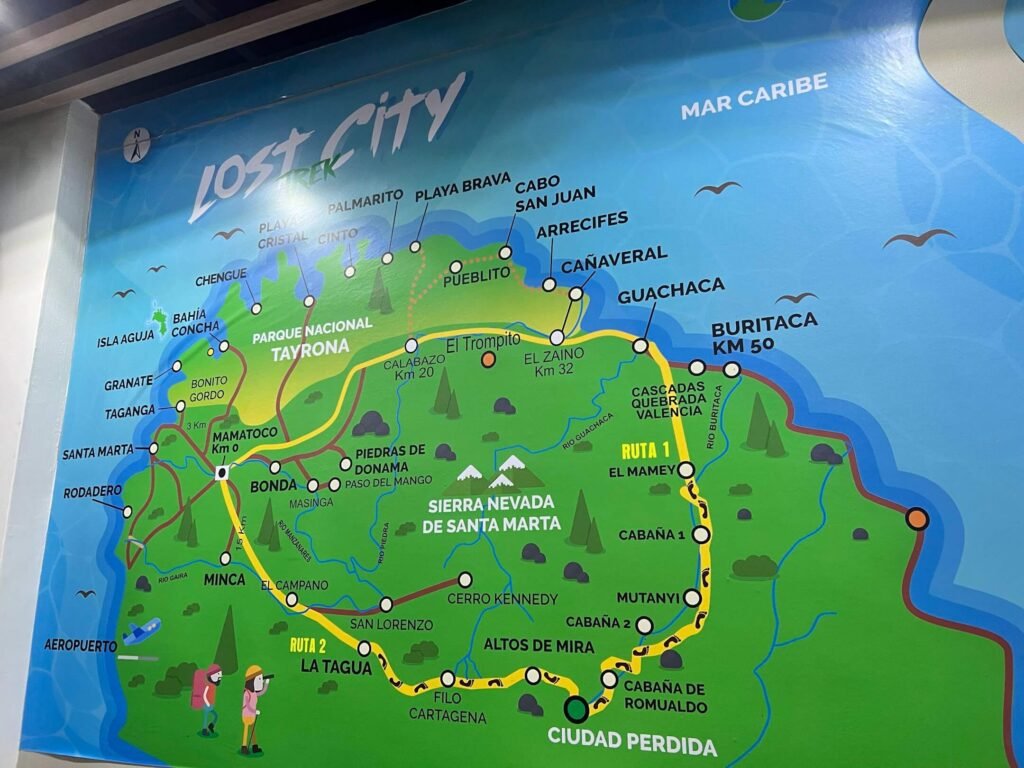
Ciudad Perdida is located in the Sierra Nevada de Santa Marta mountains in northern Colombia. Santa Marta is the coastal city you’ll fly into or travel to first, and it serves as the main base for all Lost City Trek tours. From there, tour operators drive hikers several hours inland toward the trailhead near El Mamey, where the hiking begins.
I wouldn’t think of Santa Marta as the main reason to come here. For me, it was more of a practical jumping-off point before heading into the mountains. The real magic starts once you leave the city behind and begin moving into the jungle, where the scenery shifts from exposed dirt roads and small homes to greener trails, river valleys, Indigenous villages, and dense tropical forest.
How Many Days Is the Lost City Trek?
Operators offer three options: a 3-day, 4-day, or 5-day trek. Here’s a quick breakdown:
|
Length |
Best For |
Notes |
|---|---|---|
|
3 days |
Very fit hikers or people short on time |
More rushed, less time to absorb the experience |
|
4 days |
Most travelers |
Best balance of challenge, pacing, and immersion |
|
5 days |
Those who want a slower, richer experience |
Adds waterfalls, extra cultural context, more time in nature |
I did the 4-day trek and think it’s the right call for most people. The standard out-and-back route gives you enough time to enjoy the rivers and camps along the way without feeling like you’re just powering through to get to the ruins and back. The 3-day version works if you’re fit and time-limited, but you’ll sacrifice some of what makes the trek feel immersive. The 5-day option is worth it if you have the time and budget and want the richest experience possible.
How Much Does the Lost City Trek Cost?
The Lost City Trek is not cheap, but once you’ve paid, most things are covered. Expect to pay around 2.4–2.9 million Colombian pesos, or roughly $625–$755 USD for a group tour. Prices vary by operator, group size, and trek length, so check current rates before booking.
Most tours include:
- Round-trip transportation from Santa Marta to the trailhead
- Entrance to the Ciudad Perdida
- All meals during the trek
- Basic camp accommodation
- Purified water and light snacks
- Guide services
- Contributions to the Indigenous and local communities along the route
What’s not included: tips, extra drinks or snacks, and handmade crafts from vendors you’ll pass along the trail. Bring Colombian pesos in cash.
How Difficult Is the Lost City Trek?
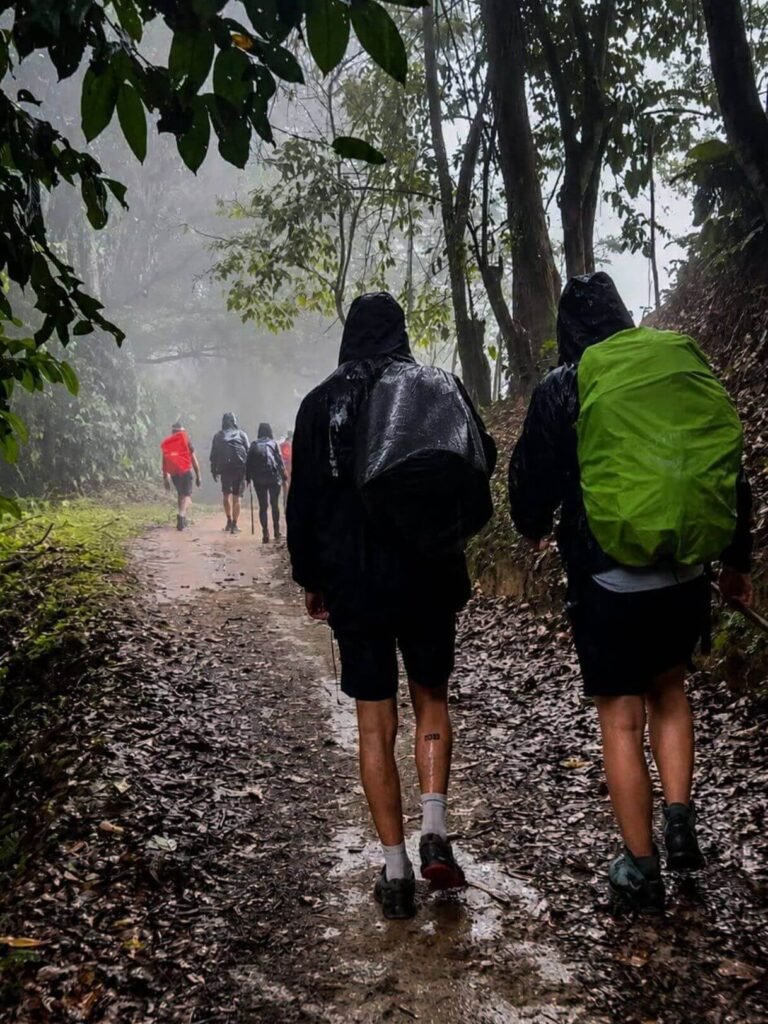
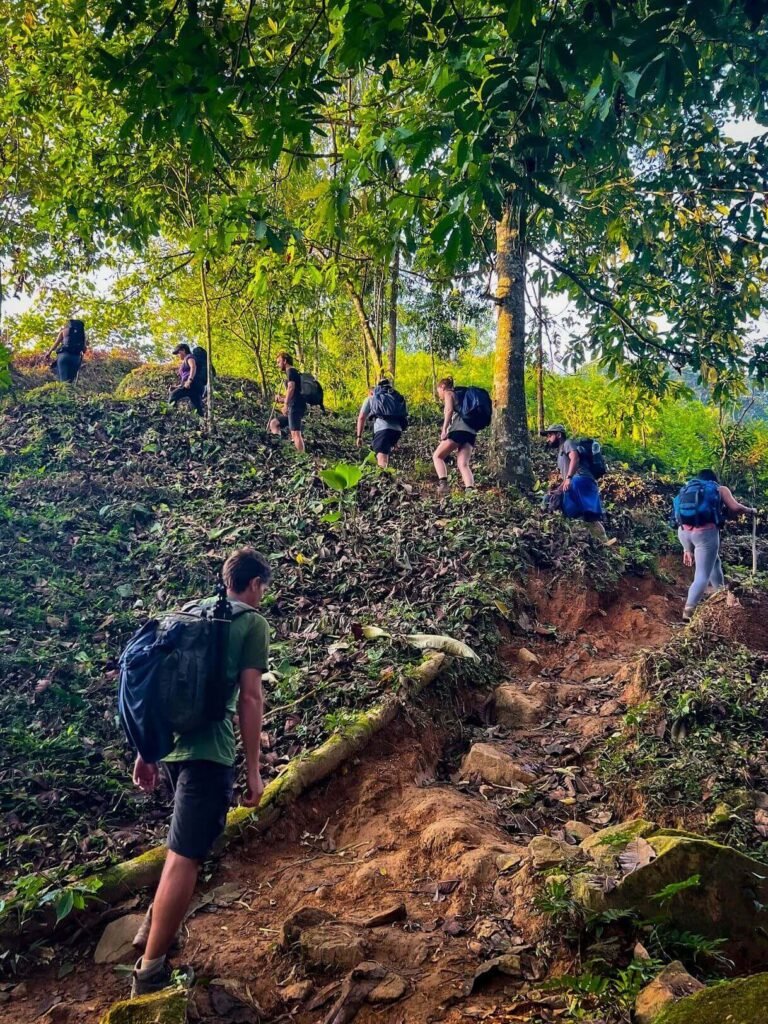
The Lost City Trek is physically demanding, but not because of elevation gain. Compared to the Inca Trail or other high-altitude hikes in South America, Ciudad Perdida sits much lower. The challenge comes from the conditions: northern Colombian heat, humidity, steep hills, muddy trails, river crossings, and hiking for multiple days in a row.
I’d rate the difficulty as moderate to challenging. You don’t need to be an elite athlete, but you should be comfortable hiking several hours a day in hot, sticky conditions. If it’s been raining, expect mud and slippery terrain.
I’ve been hiking regularly for years and I’d say I’m above average fitness-wise, though I do have asthma. The heat and humidity were harder on me than the elevation. On the rainiest days, the trails became slippery enough that I fell more than once. If you can hike 4–6 hours a day, handle basic conditions, and stay flexible when things get uncomfortable, you can do this trek.
Can You Do the Lost City Trek Without a Guide?
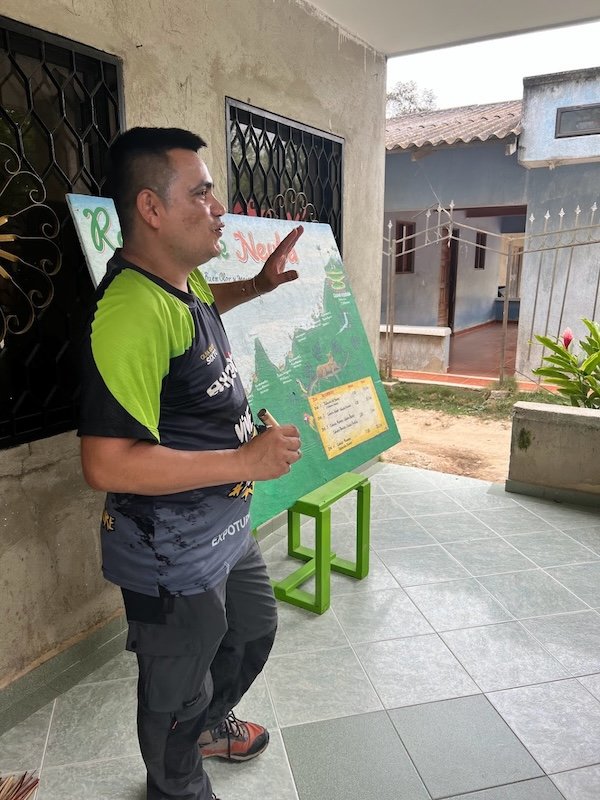
No, you cannot hike to Ciudad Perdida on your own. The trek passes through protected Indigenous territory in the Sierra Nevada de Santa Marta, and access is strictly managed through authorized tour operators. Guides are core to the experience, as they’ll help with navigation and cultural context throughout the route.
🥾 Need a guided trek?
Compare routes by length, group size, reviews, inclusions, and pace before booking.
What the 4-Day Lost City Trek Is Actually Like: Day by Day
Every operator structures the trek slightly differently, but many 4-day routes follow a similar out-and-back path from El Mamey to Ciudad Perdida. Here’s what to expect from each day, based on my own experience.
I’m keeping this section focused on the practical day-by-day details. If you want the more personal version, I also wrote about my full Lost City Trek experience, including the rain, river swims, jungle camps, stone steps, and the day I hiked out sick.
*A quick note on distances below: Official distances come from the given itinerary; GPS data came from a wearable device during the trek.
Day 1: Santa Marta to El Mamey, then to Camp 1
Distance: 7.6km official / 10.4 km GPS | Time: ~ 4 hours
Day 1 starts with a drive from Santa Marta to the trailhead near El Mamey, followed by lunch and a trek briefing before the hiking begins.
The first section is exposed and uphill, so expect heat almost immediately. You’re not deep in the jungle yet. It’s more dirt road, sun, and sweat for the first hour or so.
Later in the day, the trail becomes greener and more remote. If you’re hiking during the wetter season, this is also where you may get your first real taste of rain and mud. We definitely did.
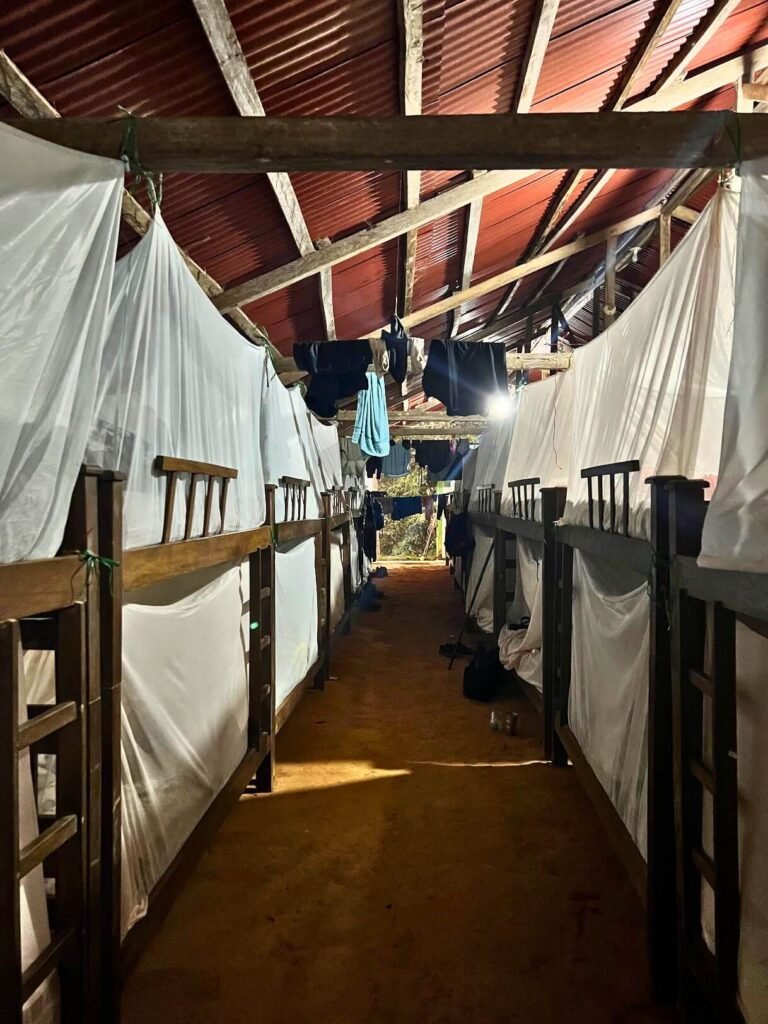
Our first camp was Cabaña Adam. It was basic but comfortable enough: rows of bunk beds with mosquito nets, shared bathrooms, cold showers, long communal tables, and space to hang wet clothes.
Day 2: Camp 1 to Cabaña Paraíso
Distance: 9.1 km official / 15.6 km GPS | Time:~ 6 hours
Day 2 starts early, around 6 AM while it was still cooler. From here, you continue deeper into the Sierra Nevada de Santa Marta.
The trail starts to feel much greener than Day 1, with more jungle, mountain views, river sections, and Indigenous villages along the route. This was the day the trek started to feel more remote to me, like we were moving farther away from normal life with every hour.
One of the best parts of Day 2 was the chance to swim in the Buritaca River. After hours of hiking in heat and humidity, the cold water gives you a nice refreshing break.
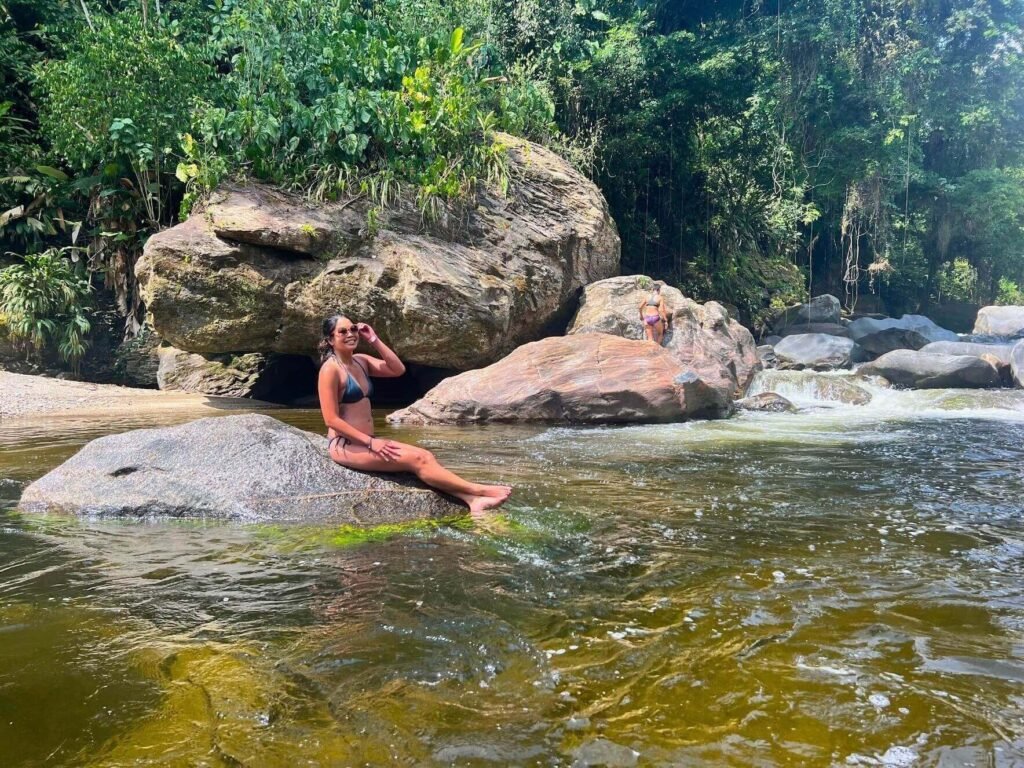
By the afternoon, expect to be tired. If it rains, the trail can get muddy and slippery fast, especially on the downhills. On this night we slept at Cabaña Paraíso, the closest camp to Ciudad Perdida.
Day 3: Ciudad Perdida, then back toward Wiwa Camp
Distance: ~9 km official / 16 km GPS | Time: ~ 6 hours
*This day’s GPS data also includes exploration around the exploring Ciudad Perdida, so distance appears much higher than the official noted distance for the day.
Day 3 is the highlight of the trip. You start early again and hike toward Ciudad Perdida, doing more river crossing and climbing the famous stone steps through the jungle. If you’re lucky, you might cross the river via carrucha, a small hanging cart suspended by a cable that someone pulls you across on.
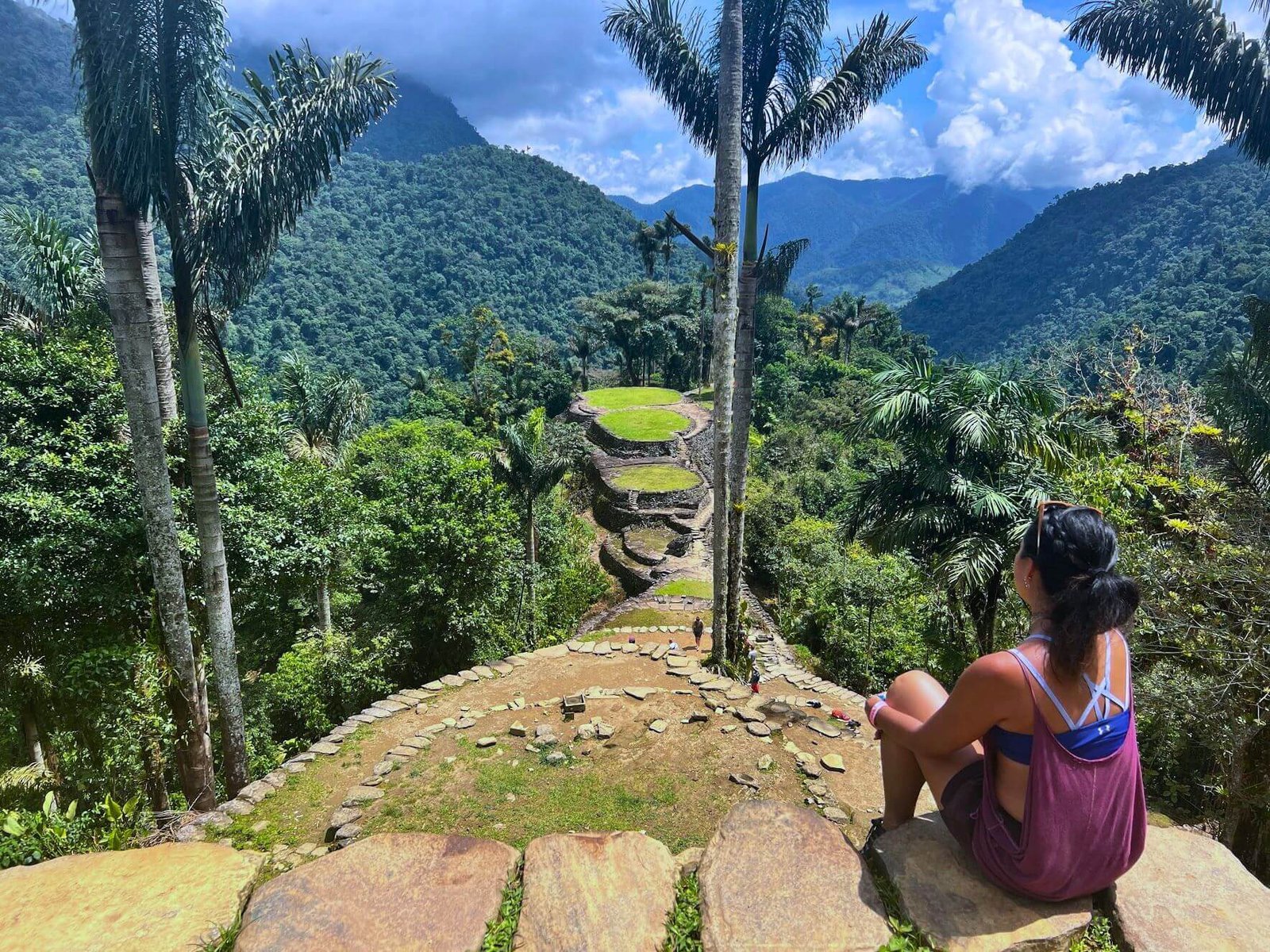
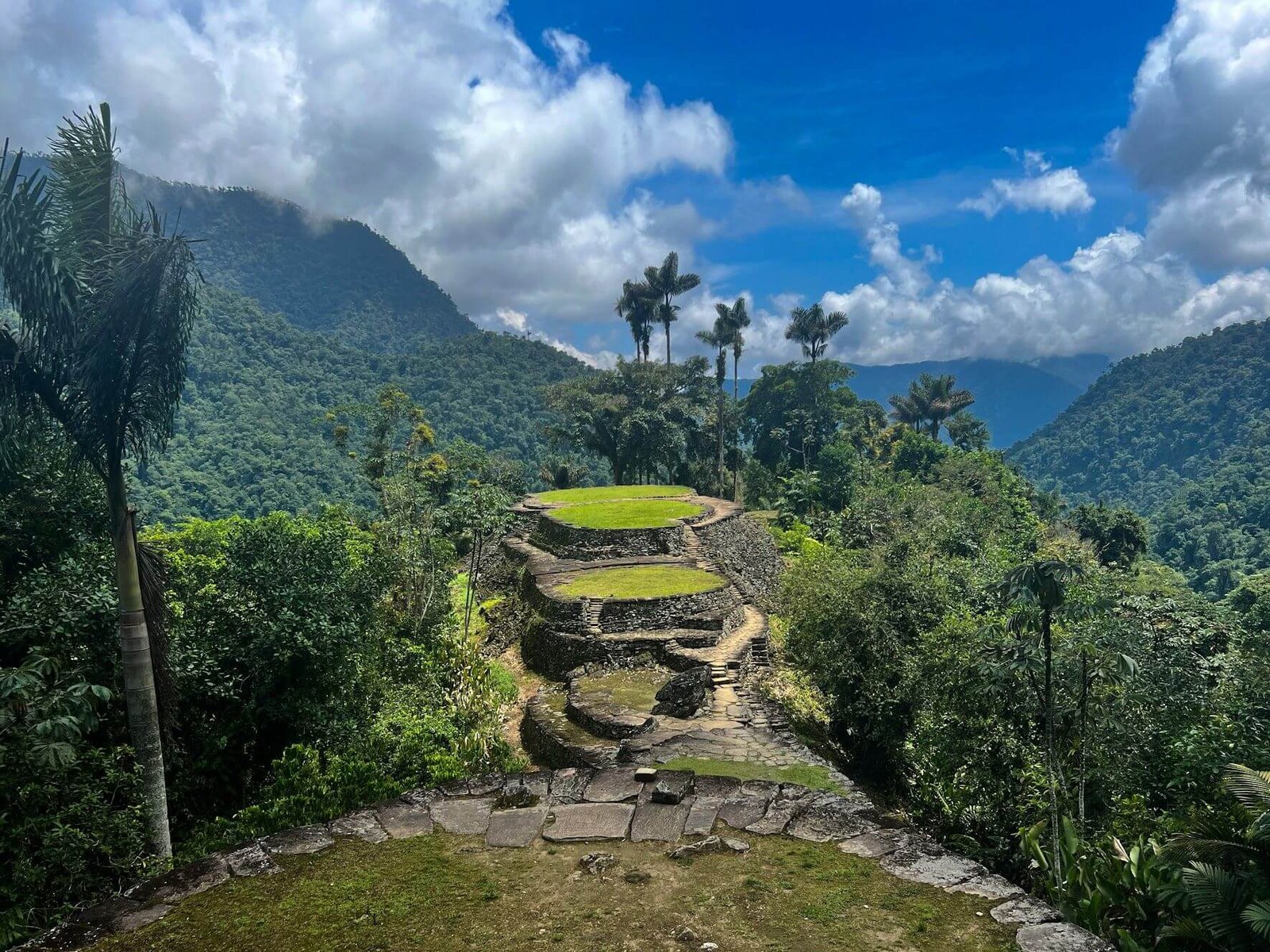
The final climb to the city includes roughly 1,200 uneven stone steps. Once you reach the top, the jungle opens into circular stone terraces built into the mountainside. Our guide gave us plenty of time to explore the site, take photos, and sit with the view before hiking back down.
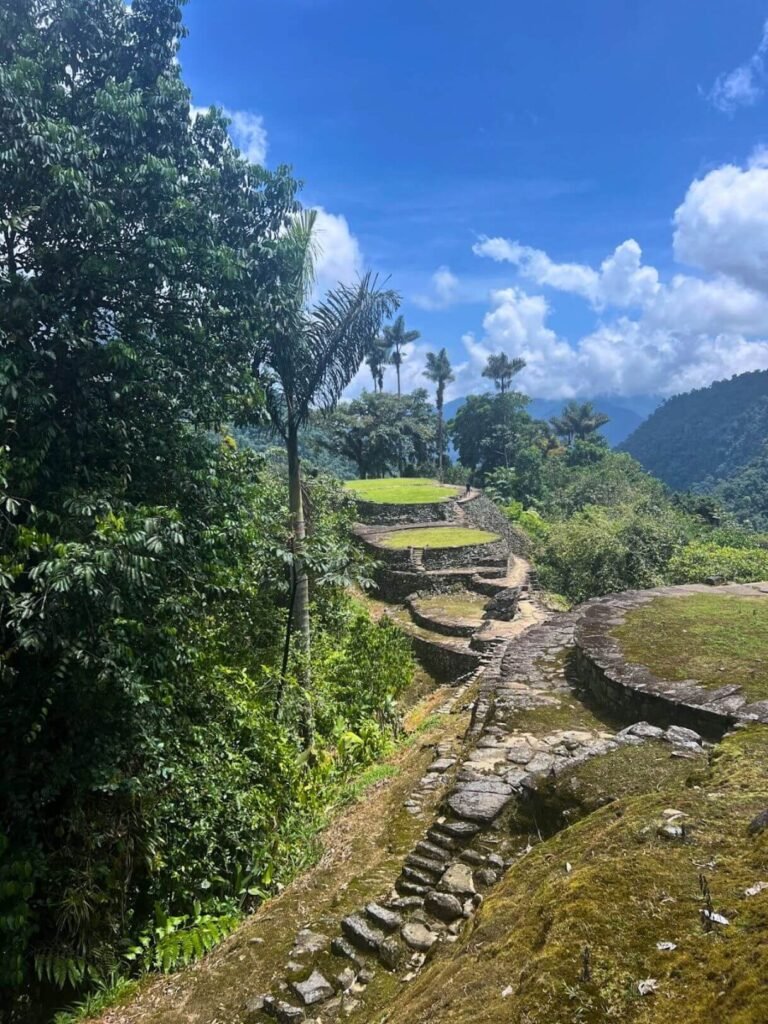
After visiting Ciudad Perdida, we continued hiking and briefly stopped at a small Indigenous village to meet with a local community member before heading back to one of the lower camps. Even though the ruins are the highlight, this is still a full hiking day.
Day 4: Hiking back to El Mamey
Distance: 15.2 km official / 19 km GPS | Time: ~ 5 hours
Day 4 is the final push back to the trailhead. Since you’re mostly retracing the route back out, the terrain will feel familiar, but it can still be a hard day because of the distance, heat, humidity, and exhaustion from the previous days.
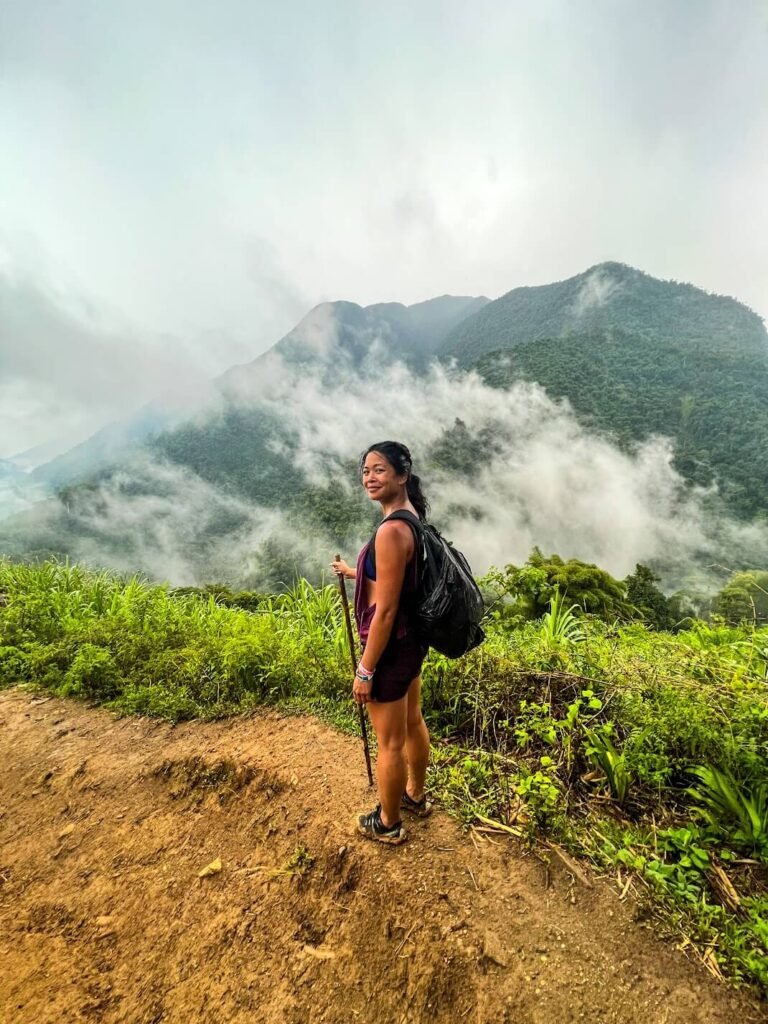
For me, this was the hardest day because I was sick by then, but even without that, it’s a long final stretch. The exposed sections near El Mamey can feel especially hot.
Once you reach the trailhead, most tours include lunch before driving back toward Santa Marta. Some travelers return to Santa Marta for the night, while others continue on to Tayrona or Minca if they still have energy.
What to Pack for the Lost City Trek
Pack light. You’re carrying your bag for four days in the jungle, and every extra kilo counts.
Clothing
- Quick-dry shirts or tanks (2–3)
- Shorts or lightweight hiking pants
- Trail runners or hiking shoes with solid grip
- Hiking socks
- Swimsuit
- Hat and sunglasses
I wore shorts the entire trek because it was too hot for anything else. Some people prefer lightweight pants for bug protection. Either works.
Rain and dry gear
- Backpack rain cover (this is essential, not optional)
- Dry bag for clean clothes
- Ziplock or waterproof pouch for electronics
- Extra plastic bag for wet or dirty clothes
- Rain jacket or poncho (optional, but bring a cover for your bag regardless)
I didn’t hike with a rain jacket because even when it was pouring, it was still hot, and jackets trap heat. I preferred getting wet. But I deeply regretted not having a bag cover. The guides helped me out with a plastic bag but it wasn’t ideal.
Camp essentials
- Sandals or flip-flops for camp
- Small quick-dry towel
- Sleeping clothes
- Headlamp
Other
- Bug spray
- Sunscreen
- Reusable water bottle or hydration bladder
- Portable charger
- Personal medication (paracetamol, antihistamines, blister care)
- Cash in Colombian pesos
I got sick on Day 3. Having paracetamol on hand made Day 4 survivable. Even if you travel light on medication, bring the basics.
Where to Stay Before and After the Lost City Trek
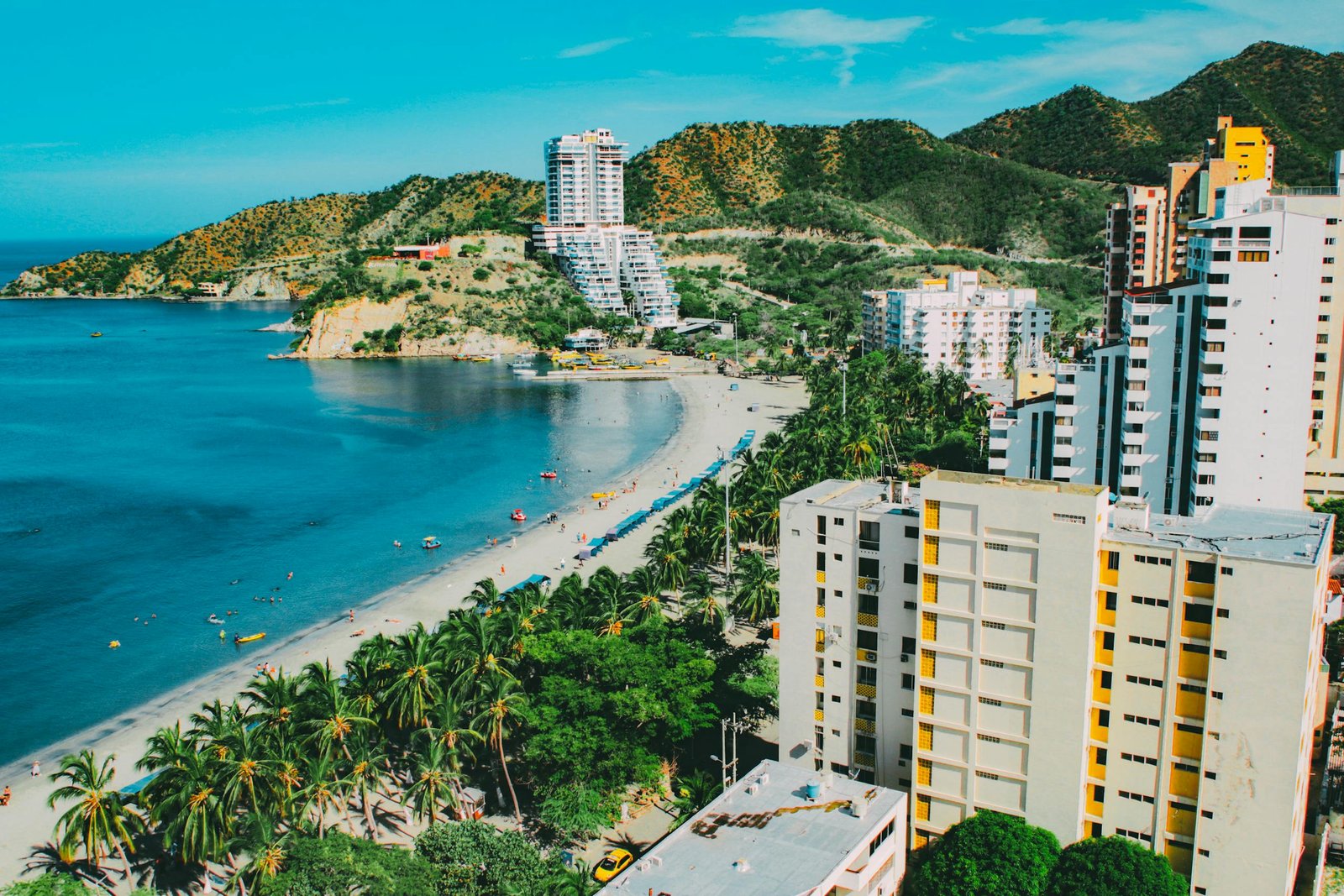
Before the trek, Santa Marta is the easiest place to base yourself. Most Lost City Trek tours start there, and you’ll want at least one night before the hike to repack your bag, buy any last-minute supplies, and get a decent night of sleep before heading into the jungle.
Santa Marta was more of a practical jumping-off point for me than a destination I explored deeply, so I’d prioritize somewhere central, easy for tour pickup, and comfortable enough before an early start.
After the trek, you have a few options. You can return to Santa Marta for a recovery night, head up to Minca for cooler mountain air, or continue toward Tayrona National Park for more nature and beaches after the jungle. I went straight to Tayrona, which worked well for me, but if you’re exhausted, a night in Santa Marta before moving on may be a good choice.
🏨 Need a pre-trek base?
Most Lost City Trek tours start in Santa Marta, so it’s worth booking one easy night before the hike.
How to Fit the Lost City Trek Into a Colombia Itinerary
The Lost City Trek is worth building a proper northern Colombia trip around rather than doing as a standalone add-on. You need at least one night in Santa Marta before you start, I’d stay somewhere practical: central with easy access for pickup, and comfortable enough for a decent sleep before your adventure. Then the trek itself takes 4 days, so plan for at least 6–7 days in the region minimum.
A solid northern Colombia route:
Cartagena (3–4 days) → Santa Marta (1 night) → Lost City Trek (4 days) → Tayrona or Minca (2–3 days)
Cartagena gives you history, color, and Caribbean culture before the trek. Santa Marta is the practical jumping-off point. After the Lost City, Tayrona National Park is an easy and beautiful next stop, with beaches and jungle just a short drive from the trailhead. Minca is a better option if you want cooler temperatures and a slower pace to recover.
If your Colombia trip also includes Medellín, a workable sequence is:
Medellín → Cartagena → Santa Marta → Lost City Trek → fly back from Cartagena or Bogotá
If you’re also spending time in Medellín, it pairs well with this kind of northern Colombia route. You can use my guide to the best things to do in Medellín for first-time visitors to plan the highlights, and my Medellín beyond the usual tourist trail guide if you’re staying longer and want a slower, less checklist-y version of the city.
Is the Lost City Trek Worth It?
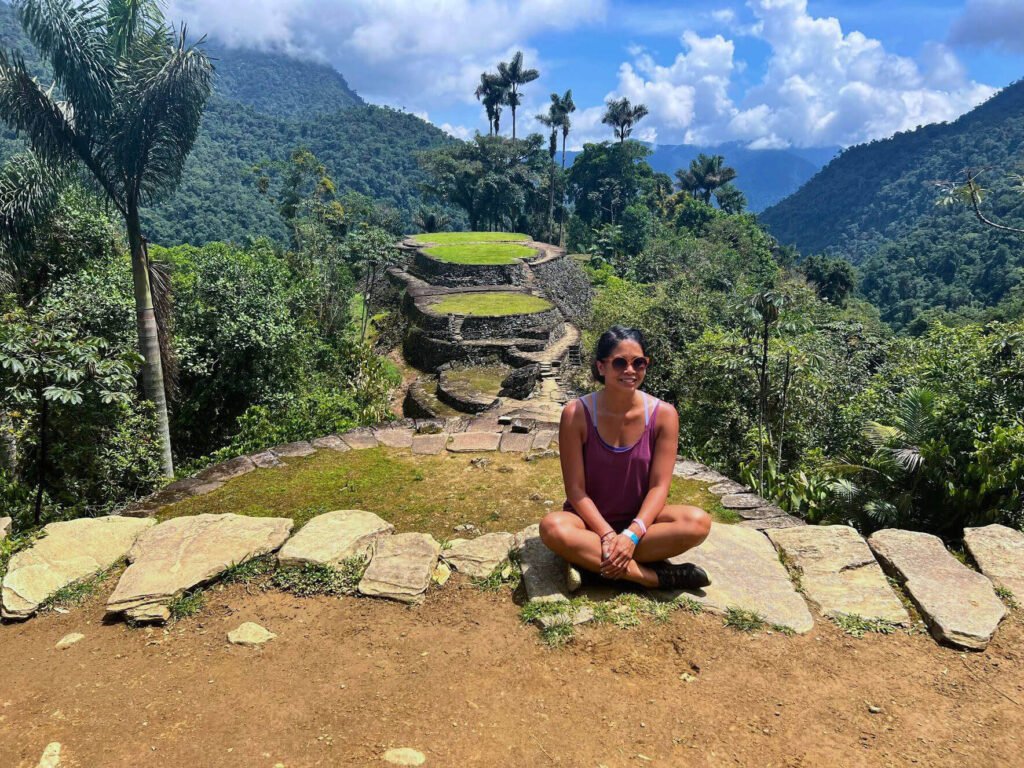
Yes, and I say that as someone who hiked out on the last day with a fever, sweating through every hill.
The trek is not only about the ruins, even though the ruins are genuinely impressive. It’s about the full experience: days of jungle hiking, crossing rivers, passing through Indigenous communities, sleeping in rustic camps, getting rained on, and continuing anyway. Ciudad Perdida is a highlight, but the journey is what you’ll actually remember.
It’s worth it if you enjoy experiences that require some discomfort to earn. If you like being deep in nature, you’re comfortable with basic accommodations, and you don’t mind mud, bugs, and unpredictable weather, this trek can be extraordinary.
It’s probably not for you if you want comfortable accommodation, predictable conditions, or you’re mainly interested in seeing the archaeological site without the physical commitment. The camps are basic, you sleep near a lot of strangers, and the trail is hot and muddy for most of the four days. If the journey sounds like something to get through rather than enjoy, a different experience might be a better fit.
Tips Before You Book
Choose the right season for your travel style
Dry season (December through March) means drier trails, easier river crossings, and more predictable conditions. It’s also the most popular time, so expect more people on the trail.
Shoulder months (late November, March, or early April) have a better balance nice balance of manageable weather and fewer crowds.
I went in late April, which is wetter and muddier, but personally loved it. The jungle felt wild and alive, and the rain made the trek feel more like an expedition. But it also meant slippery trails, wet clothes, and the acceptance that staying dry was not an option.
So if you want the most comfortable version of this trek, aim for dry season. If you’re okay with a little chaos and want the jungle to feel extra alive, the wetter months can be beautiful.
Bring cash
You’ll be in nature for most of the trek, but there are small vendors along the route selling drinks, snacks, and handmade crafts. Bring Colombian pesos for extras, tips for your guides and camp staff, and anything you may want to buy from local communities along the trail.
📶 Stay connected before and after the trek
You probably won’t have reliable service once you’re deep on the trek, but having mobile data before and after is useful for messaging your tour operator, arranging transportation, navigating Santa Marta, and getting yourself to Tayrona or Minca afterward.
Check Out Airalo eSIMs for Colombia
Prepare for bugs
You’re in the jungle. Bring bug spray and consider lightweight long sleeves for evenings if mosquitoes tend to find you easily.
Protect your bag
This is one of the biggest things I learned the hard way. I didn’t have a backpack rain cover, and I regretted it almost immediately once the rain started. Bring a backpack cover, dry bag, or at least extra plastic bags to keep the important things dry.
Be honest about your fitness
You don’t need to be an elite athlete to do the Lost City Trek, but you do need a decent fitness level. The challenge is less about technical hiking and more about endurance in uncomfortable conditions.
If you can hike for 4–6 hours in heat and humidity, handle back-to-back hiking days, and stay mentally flexible when things get muddy or inconvenient, you can probably do this trek.
Get travel insurance
The Lost City Trek is remote and physically demanding. If you get injured or sick during the trek, you want coverage in place before you need it. I recommend getting travel insurance before the trek. This is the kind of trip where I’d rather have coverage than hope for the best.
If you’re a digital nomad and enjoy going on adventures while living abroad, I’d recommend checking out SafetyWing Nomad Insurance.
Final Thoughts on the Lost City Trek in Colombia
The Lost City Trek was one of my favorite experiences in Colombia because it combined so many things I love about travel: nature, physical challenge, ancient history, local culture, and the kind of unpredictability that makes a trip stick with you.
It’s not the easiest adventure to add to a Colombia itinerary, and it’s definitely not the most comfortable. But if you’re drawn to getting lost in jungle trails, river crossings, rustic camps, and ancient ruins hidden in the mountains, the Lost City Trek is absolutely worth considering.
For me, this is the kind of experience that makes slow travel so rewarding. By spending more time in Colombia, I was able to build a routine in Medellín, explore nearby places like Guatapé and Jardín, and still make room for bigger adventures like Ciudad Perdida, Tayrona, Cartagena, and the Rosario Islands.
If you’re planning a longer Colombia trip, I’d treat the Lost City Trek as one of the adventure anchors of your itinerary.
Lost City FAQs
Planning your Lost City Trek?
🥾 Compare Lost City Trek tours
🏨 Find a stay in Santa Marta before the trek
🩺 Get covered abroad: SafetyWing Nomad Insurance
📶 Set up data before you land: Airalo Colombia eSIM
📗 Read about my Lost City Trek Experience
MORE COLOMBIA
-

Where to Stay in Medellín, Colombia: Best Areas & Hotels for Every Budget
A neighborhood-first guide to where to stay in Medellín Colombia including hotels, hostels, and apartment-style stay recommendations.
-
What the Lost City Trek in Colombia Is Really Like: My Honest Ciudad Perdida Experience
My honest Lost City Trek experience in Colombia, from muddy jungle trails and river swims to rustic camps, ancient ruins, and the feverish final hike out. I went for Ciudad…
-
Lost City Trek Colombia: What to Know Before Hiking to Ciudad Perdida
Planning the Lost City Trek in Colombia? This guide covers what to know before hiking to Ciudad Perdida, including cost, difficulty, packing tips, tour logistics, day-by-day expectations, and how to…
-
Where to Dance Bachata in Medellín: My Favorite Socials, Classes & Dance Nights
A lived-in guide to where to dance bachata in Medellín, including my favorite socials, weekly dance nights, beginner-friendly spots, and tips for joining the scene solo.