SPAIN
What Nobody Tells You About San Fermín: My Experience in Pamplona
•
SHARE:
This post contains affiliate links. If you book through them, I earn a commission at no cost to you. Learn more
I showed up thinking I was coming for one chaotic morning. What I found was a city that had stopped sleeping entirely.
San Fermín is marketed as the Running of the Bulls in Pamplona. That’s the thing on the postcards, the thing people book flights for, the thing that lasts about two to three minutes. What nobody really tells you is that the San Fermín experience is a nine day long festival where the city runs on almost no sleep, and the famous bull run is only a small part of the giant festival.
Getting There

I took the Renfe train from Barcelona Sants, about a four-and-a-half-hour ride with a connection in Zaragoza. The Barcelona station is large and I had no idea where to go, so I asked a worker for help. He looked at my ticket, noticed there was no seat assigned, took it from me, walked off, came back, and handed it over with a straight face: “I got you a really good seat.”
I was in the presidential suite. Solo. Air-conditioned. Wide seats, tables, a cabin entirely to myself. I spent the entire ride to Pamplona convinced this was a sign that it was going to be an amazing weekend.
After arriving I took a taxi to the edge of town. The driver said he couldn’t go further in, so I walked the last ten minutes on foot. It was around 4:00 p.m. The streets were quiet at first. A few people in white here and there. The further I walked, the more red and white I started to see, scattered at first, then more. Calm enough that I second-guessed whether I had the dates right.
By midnight, those same streets were shoulder to shoulder.
What Actually Surprised Me
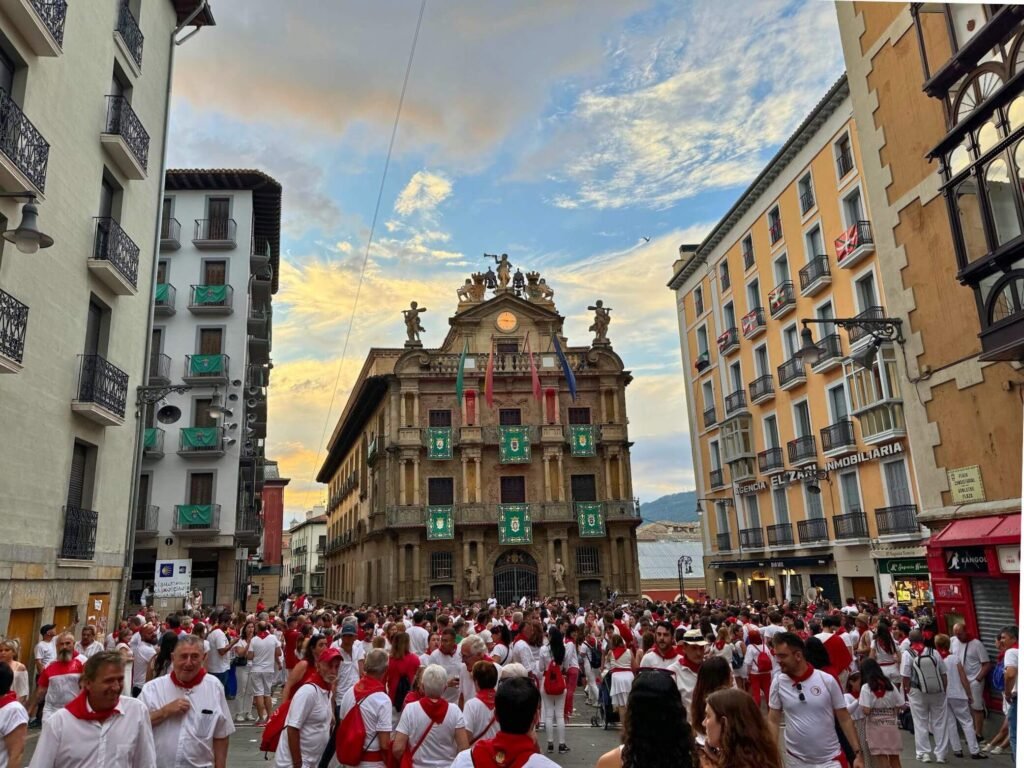
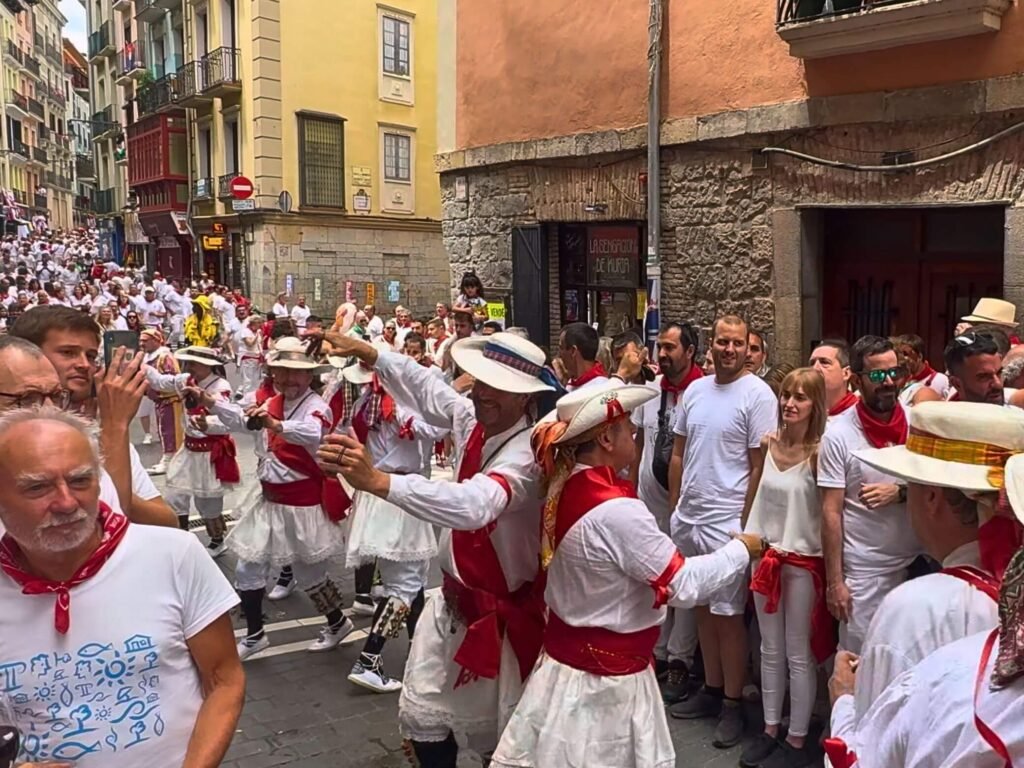
I came for the run. What I got was something harder to describe.
San Fermín started as a religious feast day. Saint Fermín was the first bishop of Pamplona, martyred in the third century. Over the centuries that merged with summer livestock fairs and bull-running traditions, and somewhere in that long chain of history a saint’s feast became one of Europe’s most chaotic festivals. The white clothes represent purity and renewal. The red scarf and belt represent his martyrdom. He was beheaded, so the red is for blood. Everyone wears them, from kids to grandparents, because this isn’t just a party. It’s part of who they are.
Daytime San Fermín is genuinely family-friendly. Marching bands in the streets, folk performers in traditional dress, a full fairground with carnival rides and games blasting reggaeton. I wandered into what felt like a county fair with a completely different soundtrack and half the crowd in red and white. Families, kids, grandparents. The chaos had layers.
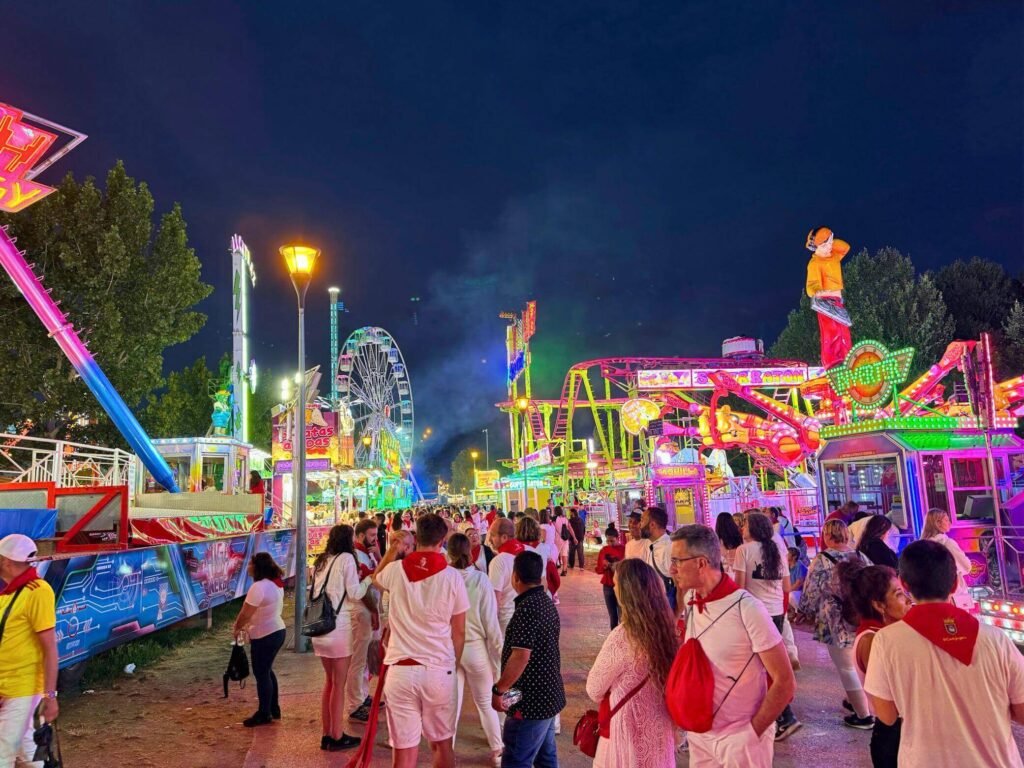
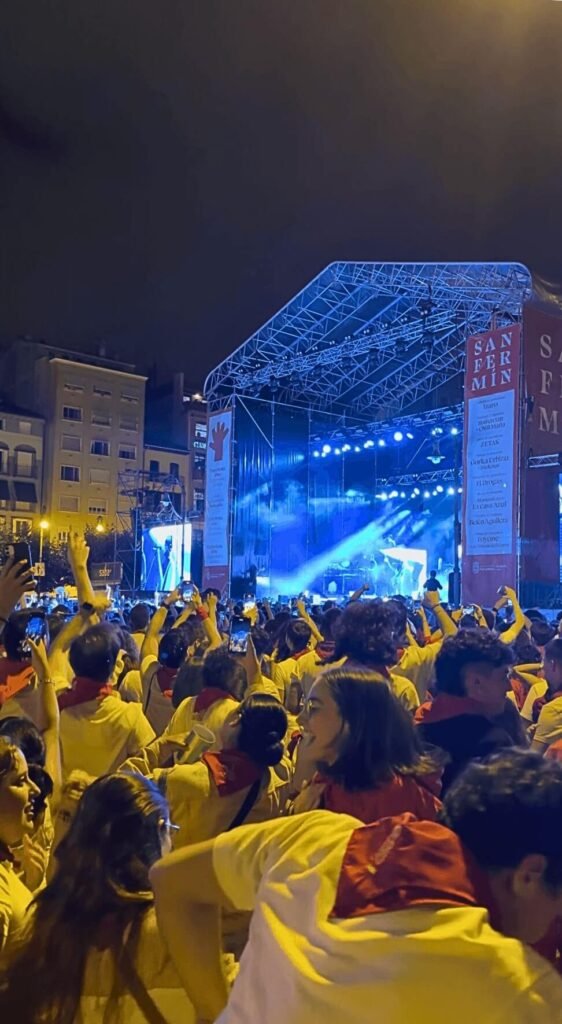
By night, it shifted. The square near my hotel, Plaza Consistorial, went from lively to packed to overwhelming over the course of a few hours. Bands paraded through with mobile amplifiers playing ska and people danced behind them down the streets. One stage had an all-girl rock band playing what I think was in the Basque language. Pamplona sits at the edge of Basque Country and the cultural identity there is distinct. Bilingual signs, different music, different traditions woven into the noise.
There were even fireworks every night. People find spots around the city to watch, then go straight back to dancing.
The Rhythm of a Day
This is the part that’s hard to convey: the festival has a rhythm that doesn’t really pause.
Afternoon. Quiet arrival, relative calm, wandering. Pintxos here, a drink there, music starting to filter in from different corners of the city.
Evening. The streets fill. Bands pass through every few minutes. The energy builds without anyone announcing it.
Night. Packed, loud, a lot of people dancing, a lot of people very drunk, a lot of music everywhere at once. It’s joyful in a way that’s almost overwhelming. By midnight, Plaza del Castillo is a live music venue the size of a city block.
Pre-dawn. The streets show the aftermath of the party, while workers diligently clean for the big event. Attendees either pick spots to watch the run, or head home to crash.
8:00 a.m. The run.
After. The city exhales. Quiet for a few hours while people sleep it off. Then it starts again.
Watching the Run
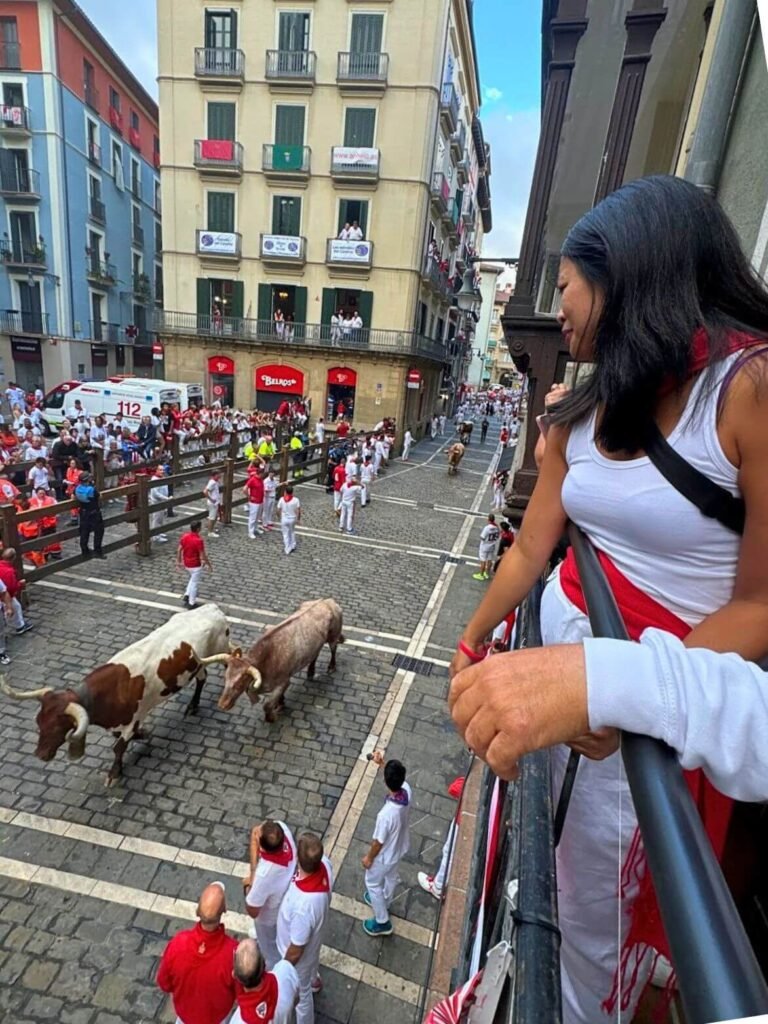
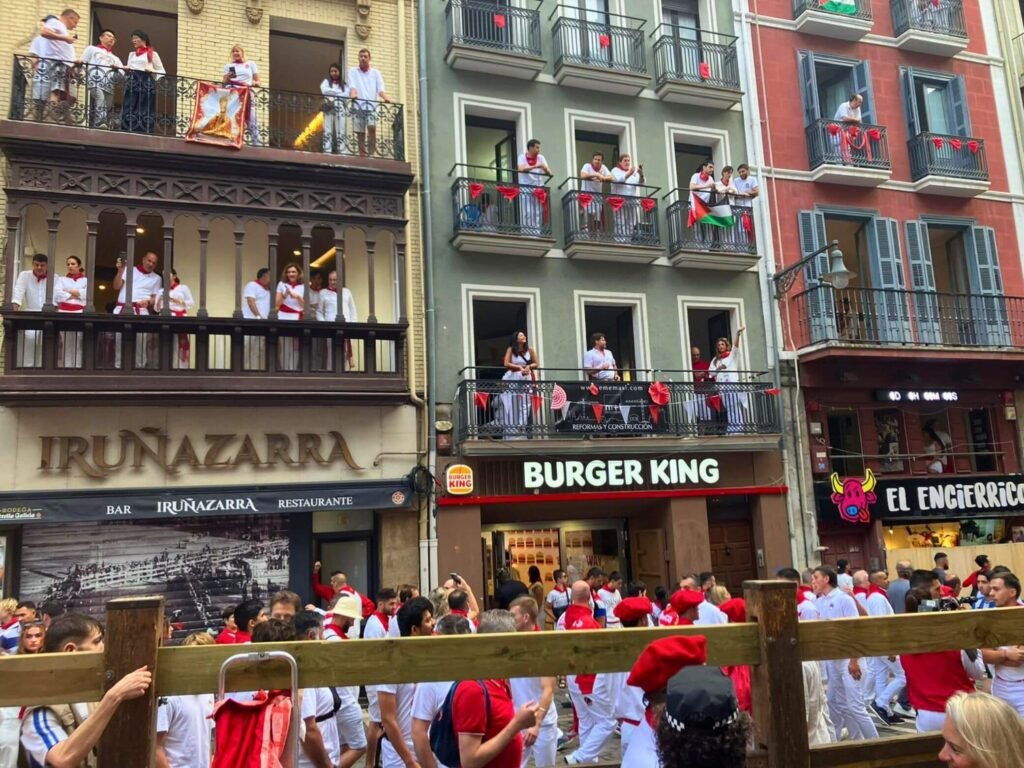
I didn’t run. I booked a balcony.
Mine had a direct view of Dead Man’s Corner, the curve where momentum causes chaos between the bulls and runners. I’d love to tell you it was above some storied historic café. It was above a Burger King. Peak American abroad energy. The view was elite anyway.
I booked through Destino Navarra for a last-minute spot. One or two spots were left when I booked four days out. I got lucky.
The buildup is its own thing. In the early morning hours, Basque flute and drum players called txistularis drifted down the route. It doesn’t start the run, that’s the rockets. But it tunes the morning to something older than the festival itself.
Then crews cleaned the streets. Then a line of police officers in blue walked the entire route. After the sweep, runners filled back in. A mix of tourists looking for a thrill and locals who had been preparing for this specific morning all year. The veterans were easy to spot. Stretching, choosing their positions carefully, knowing exactly which sections of the course gave them the most control.
First gunshot: bulls released from the pen. Second: they’re on the street. The crowd starts moving.
And then the bulls come through.
It lasts maybe two minutes. And then it’s over before you’ve fully processed it. Within minutes there were highlights playing on the TV behind me, a broadcast of something I’d just watched from ten feet above the street.
⛨ Travel insurance for Running of the Bulls
Thinking about running yourself? Most standard travel insurance policies won’t cover bull running, but World Nomads currently lists it under the Explorer Plan for eligible U.S. travelers. Coverage varies, so make sure “Running of the Bulls” appears in your country’s policy details before relying on it.
The Part Nobody Talks About
A few hours after the run, the city is quiet. I sat on my balcony and didn’t do much. After being overstimulated for an entire night and day, I needed to relax for a little bit.
The festival has an intensity that accumulates. Every street has music. Every square has a crowd. The sensory input doesn’t stop. Certain areas smell strongly of beer and urine. The dumpsters were not subtle about this. It’s not glamorous. But it’s not trying to be.
What it actually is is a city running on adrenaline, tradition, and almost no sleep. Some of the music is planned, some of it is just people on balconies with instruments, or a band that decided this corner was a good place to play, or strangers sharing pintxos and speaking to you in three different languages.
By afternoon on day two I wandered with no plan and let the music decide where to go. A salsa band set up on a balcony above one street. People were dancing outside bars with no particular reason other than there was music and it was afternoon and why not. Later I caught Los Danzantes de Pamplona, folk performers in traditional dress moving through the crowd with castanets and a txistu cutting through the air. It felt less like a spectacle and more like a city showing you who it is.
On the Bulls
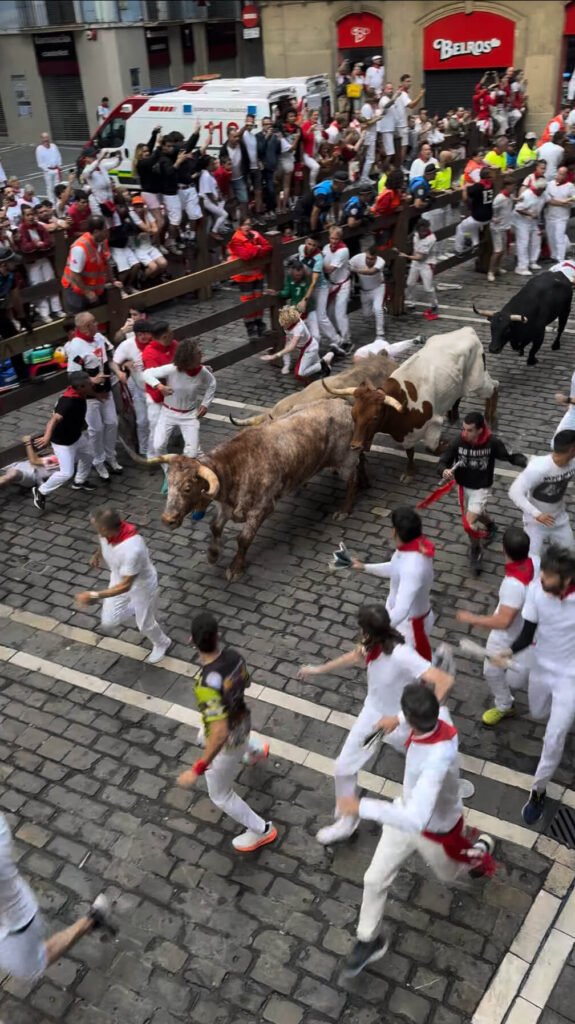
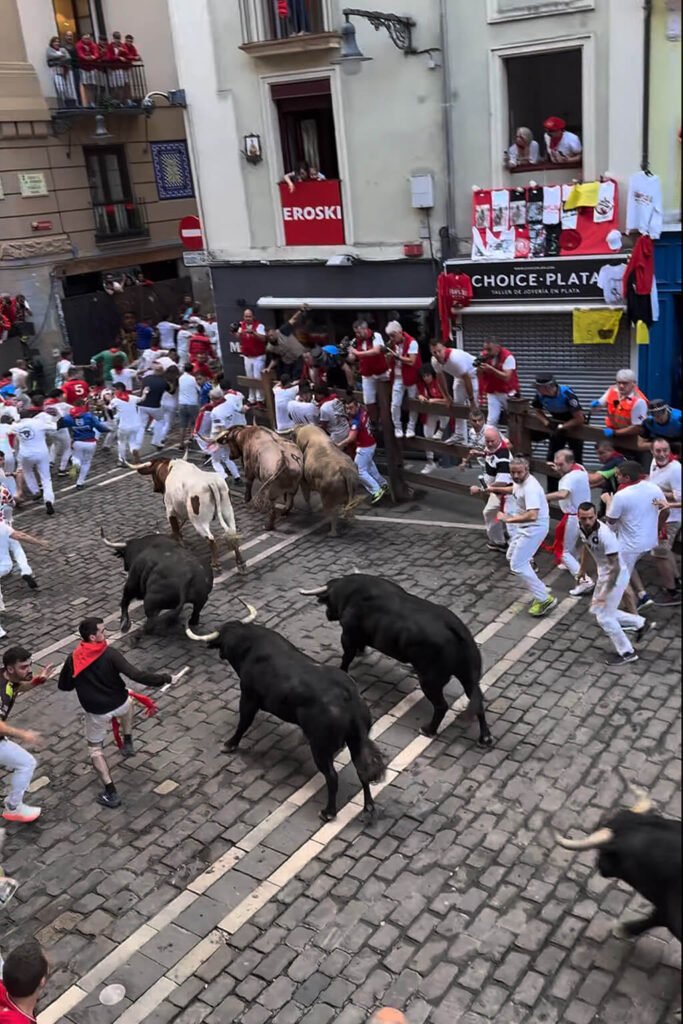
The bulls that run in the morning fight in the ring that evening. I didn’t watch and I had no interest in watching. That’s my honest position, not a verdict on anyone else’s.
What I’d push back on is the idea that San Fermín is only about the bulls. Most of what fills nine days has nothing to do with them. The run itself is free, open, and completely separate from buying a ticket to the fights. The encierro felt like something different to me than the bullfighting, though I understand why others don’t draw that line. You can experience the whole festival and never set foot in the arena or the track. A lot of people do. The festival is bigger than the headline version most people know.
Would I Recommend San Fermín?
Yes, if you want one of Europe’s most atmosphere-heavy festivals, you can handle noise and crowds and very little sleep, and you’re genuinely curious about what happens when a city commits fully to nine days of collective celebration.
No, if you need comfort, quiet, or an ethically uncomplicated trip. The bullfighting is there. The connection between the run and the ring is direct. You don’t have to engage with it, but it doesn’t disappear.
I went for the bull run. I stayed for everything else. The run was two minutes. The rest of it, the music at 2:00 a.m., the fireworks above the fortress, the folk dancers with their castanets, the eerie quiet of a city that had just been screaming, that’s what I actually remember.
San Fermín is louder than you expect. And somehow more human, too.
I filmed my trip to Pamplona, from arriving in the city to the music, crowds, and watching the run.
Planning your San Fermín trip?
🛌 Book your Pamplona hotel: Booking.com, and Expedia
👓 Book tours: GetYourGuide, and Tripadvisor
📱 Set up data in Spain: Airalo
🏥 Travel insurance: IMG for spectators, World Nomads Explorer for U.S. runners
🚘 Rent a car after the event: Discover Cars
READ MORE ABOUT SAN FERMÍN
Looking for more information about attending San Fermín? Here’s some further reading that may be helpful for your trip:
💃🏻 For the full story of what San Fermín felt like — the atmosphere, the music, the moment the bulls came through… read: What Nobody Tells You About San Fermín: My Experience in Pamplona.
🏨 Looking for the best spots to stay based on area? Check out Where to Stay in Pamplona for Running of the Bulls.
▶️ Want to see what San Fermín is like? Check out my Youtube video: Beyond the Bull Run.
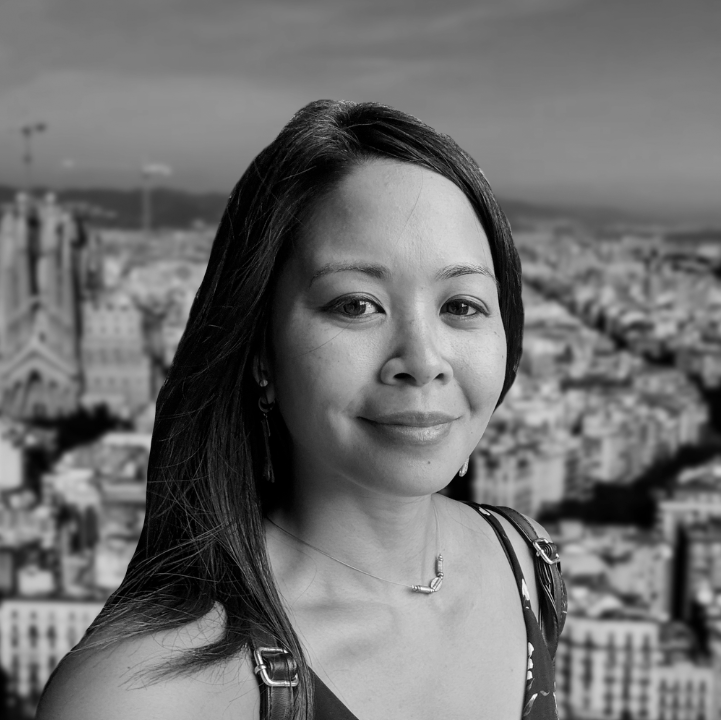
I’m Marie, a slowmad and adventurer who left settled life in the U.S. to explore the world more deeply.
I’ve spent about five months in Spain across three stays, mostly in Barcelona, and share what I’ve learned firsthand — from the experiences and adventures worth seeking out to local culture and the little things you notice when you stay a bit longer.
MORE SPAIN
-
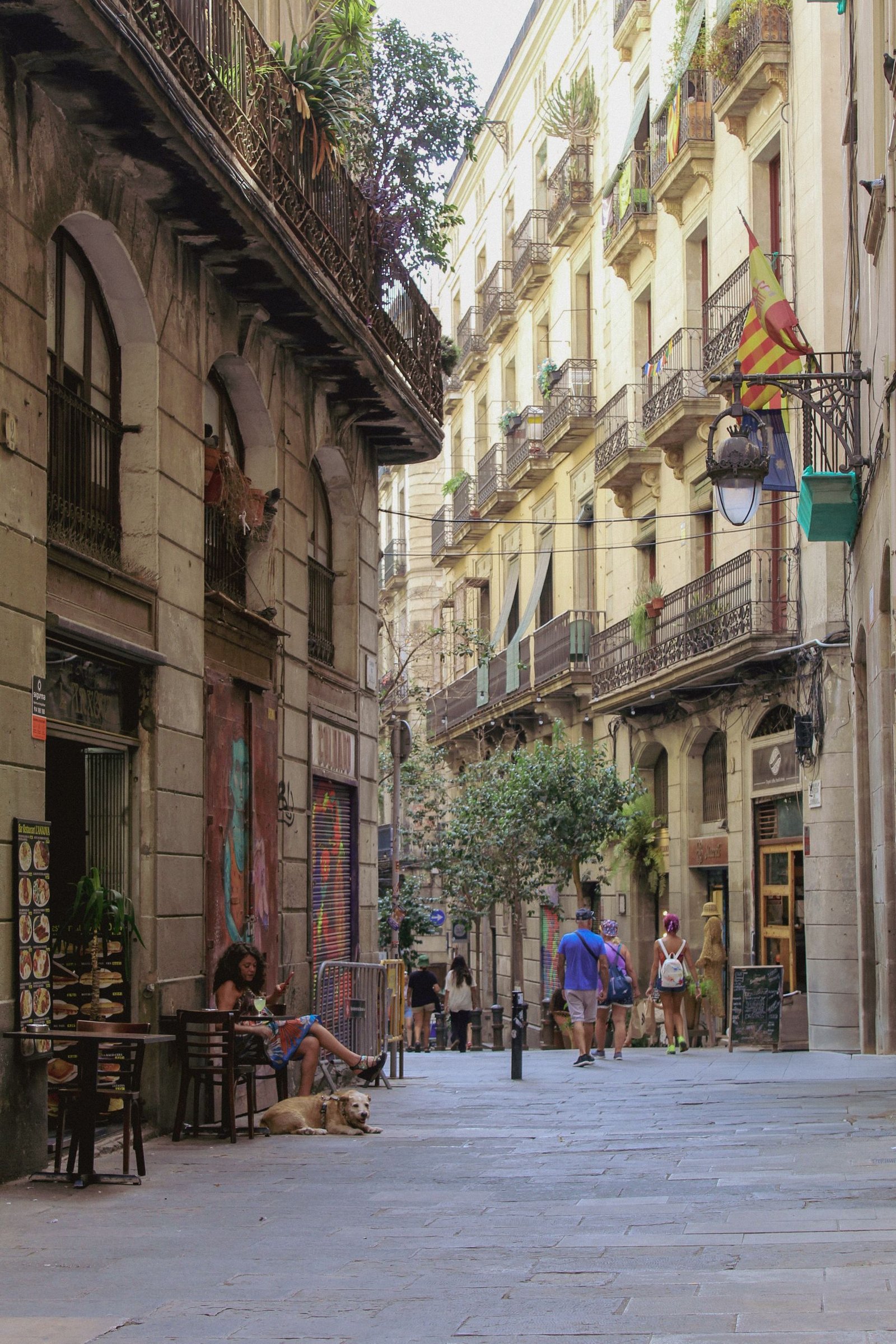
Where to Stay in Barcelona: Best Neighborhoods for Your Trip
After spending about five months living in Barcelona across multiple stays, I’ve seen how much the neighborhood you choose can shape your trip. This guide compares the best areas to…
-
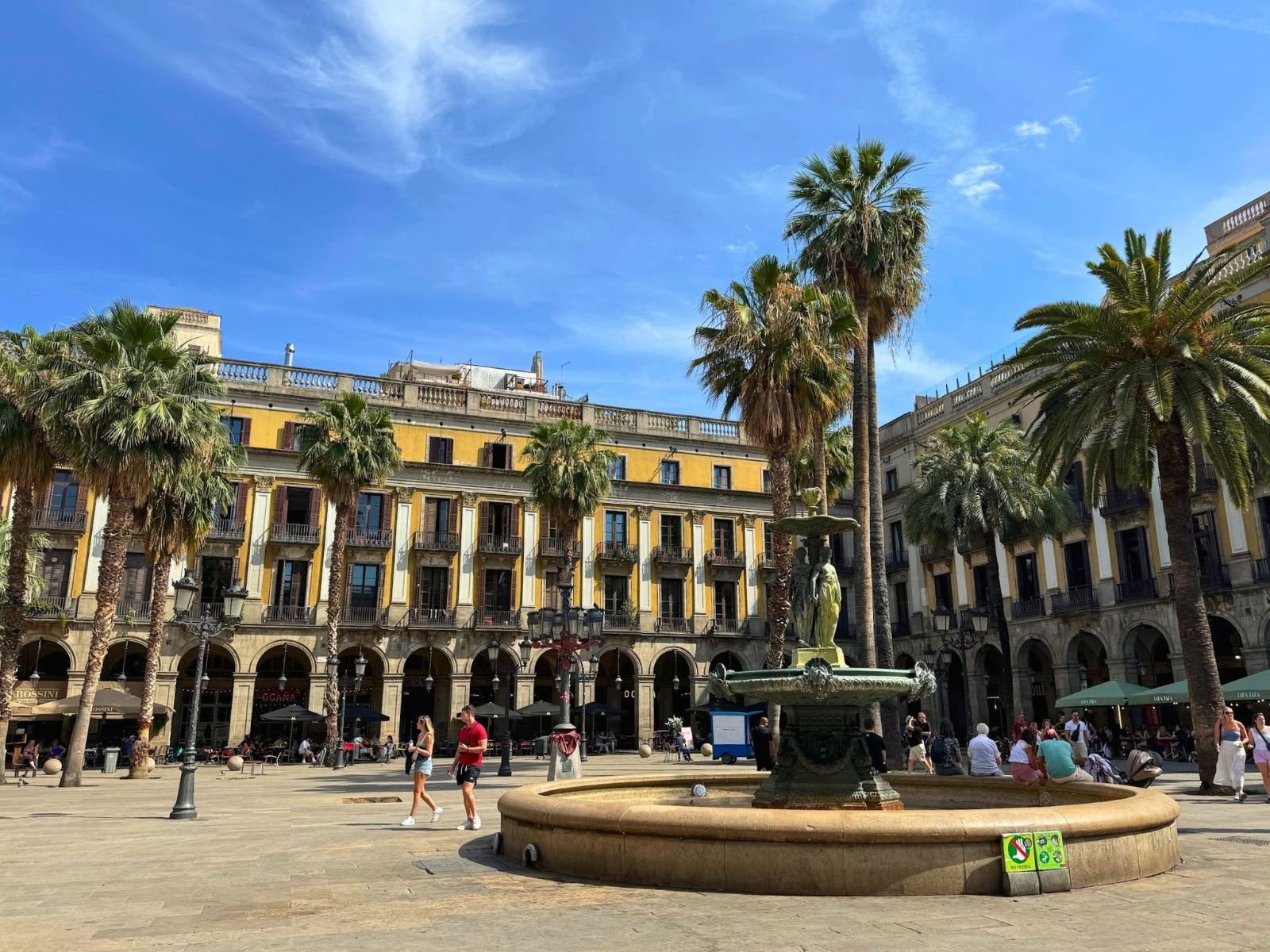
Is Barcelona Safe? My Experience Living There Solo
I’ve spent months living in Barcelona, regularly navigating the city alone and coming home late at night. Here’s how safe Barcelona actually feels to me, where I’m more cautious, and…
-
Top 10 Things to Do in Barcelona That Are Actually Worth It
Barcelona has plenty of famous sights worth seeing, but some of the best experiences go beyond the usual checklist. These are the 10 things I’d actually make time for, from…
-
Is Barcelona Worth Visiting? My Honest Take After Living There
Barcelona is one of my favorite cities in Europe, but it isn’t for everyone. After living there for months, here’s my honest take on what makes Barcelona worth visiting, what…