BRAZIL
SHARE:
This post contains affiliate links. If you book through them, I earn a commission at no cost to you. Learn more
Where should you stay in Rio de Janeiro? You might be picturing mornings on the beach and sunset views of Dois Irmãos, or evenings hopping between bars where people spill out onto the sidewalks. Choosing somewhere to stay in Rio means looking beyond the beach photos. Even the streets a few blocks behind the sand can feel quite different depending on the neighborhood — from busy commercial avenues to quieter residential pockets with cafés and restaurants.
After living there for three months, I think the best area to stay in Rio really comes down to how you want to spend your time outside of regular sightseeing. In this guide, I’ll walk you through the neighborhoods I’d consider, what staying in each one feels like, and the hotel options I’d pick to help you narrow down your search.
In a rush? Here are my top hotels in Rio de Janeiro:
⭐️ Best overall: Ipanema Inn ★★★★
💸 Best value: Atlantis Copacabana ★★★
✨ Treat-yourself pick: Copacabana Palace ★★★★★
Best Areas to Stay in Rio de Janeiro
Here are the neighborhoods in Rio that I’d honestly look at first for a trip. My neighborhood suggestions are based on safety, beach access, and atmosphere.
|
Area |
Best for |
Main tradeoff |
|---|---|---|
|
Iconic beachfront with lively atmosphere |
Can be packed with tourists, and some streets are very busy |
|
|
Same Copacabana beach front without the crowds |
A bit more difficult to get around without an Uber. |
|
|
Vibrant beach life and a trendy neighborhood vibe |
Higher accommodation prices |
|
|
A quieter, upscale beach stay |
Higher prices and further away from main tourist sights |
|
|
Nightlife, restaurants and bars |
Further away from the nicer beaches |
Copacabana: Best for Hotel Choice and Beachfront Energy
Copacabana is the Rio beachfront most people recognize in photos: a long curve of sand lined with umbrellas, the patterned black and white promenade and beach kiosks where people stop for food and drinks. There’s a lot to see, from people walking along the waterfront to groups playing beach volleyball. If staying beside that famous beach is part of what brought you to Rio, I understand the appeal.

Behind it though, you get a much more intense urban neighborhood. Tall apartment buildings, hotels and businesses packing the streets, cars and motorbikes moving through traffic while people weave between shops, pharmacies and restaurants. In Copacabana, you can leave the beach and then feel like you’ve stepped straight back into busy city life.
Parts of the neighborhood feel more hectic and less clean to me than neighboring Ipanema, and the beach had a lot more tourists at all times of the day. The benefit Copacabana, though, is location convenience — a central urban location means easy access to tourist sites, any kind of shop or business you may need, and also a wider range of hotels. It’s worth looking here if you want beach access at a price or comfort level that works better for your trip.
The neighborhood is quite large, but for me, I’d prefer staying near the western end of the neighborhood near Posto 6. This area gives you easy access to both Copacabana and Ipanema.
BETWEEN TWO BEACHES
Atlantis Copacabana Hotel
Sitting in the Arpoador pocket between Copacabana and Ipanema, with both beaches within walking distance. There’s a rooftop pool for a break from sightseeing. Rooms are fairly traditional; I’d choose it for the location rather than a luxury hotel experience.

BEACHFRONT COMFORT
Windsor California Copacabana
Sitting at the center of Copacabana, this four-star hotel will put you right on the beach with a rooftop pool and bar overlooking the ocean. Not all rooms have a beach view, so check the room category before booking.

ICONIC RIO SPLURGE
Copacabana Palace
Copacabana Palace is the grand, historic hotel facing the beach, with a very different feel from the smaller options here. I’d consider it if the hotel itself is part of your Rio experience and you plan to spend time enjoying it.

Leme: A Calmer Beachfront Alternative
Just east of Copacabana is Leme, a small neighborhood connected to the same famous curved beach, but with a much calmer vibe. Like Copa, Leme will have beach kiosks and bars to enjoy but without the chaos or crowds. I think this area would be good for people with families or that are just looking to relax.
I used to come here for latin dance socials and enjoyed the switch in atmosphere. What’s nice about the location is that if you want to swap to a more energetic vibe, Copacabana was a short stroll away.
The tradeoff in Leme is lack of metro options to get around. Yes, there are busses that stop here, but in my opinion the bus tends to be less safe to use in Rio than the metro. Getting to and from Leme usually meant an Uber ride for me, so I’d weigh that against how often you plan to go across to Ipanema or other neighborhoods while exploring Rio de Janeiro.
QUIETER BEACHFRONT BASE
Windsor Leme
Windsor Leme faces the beach at the quieter end of the Copacabana curve, with an infinity pool and poolside bar upstairs. It’s a good fit if you want beach days and somewhere calmer to return to. Ocean views depend on the room you book.

Ipanema: My Personal Pick
Ipanema has the beach setting I’d want for a first trip to Rio: Dois Irmãos rising beyond the sand, surfers around Arpoador and people gathering on the rock as sunset approaches. Along the beach, you’ll find chairs and umbrellas, vendors passing through and people enjoying the sun. You can spend plenty of time here without organizing much of anything.

The streets behind the waterfront are a big part of why I’d stay here. Cafés, restaurants and shops sit among residential buildings, with people heading to the gym, meeting friends or going about normal life. It’s still a developed city neighborhood, but I found it less commercial and intense than Copacabana. You have somewhere enjoyable to walk around even when you’re done with the beach.
When in Rio, I lived few blocks inland in a more residential part of Ipanema. I was still close enough to walk to the beach easily, so I don’t think you have to stay right on the beach to enjoy it. Quite frankly, you’ll save some money with phenomenal beach access even if you don’t.
For a shorter trip, I like the Arpoador area, especially if you want sunset and the connection to Copacabana nearby. Just expect more concentrated activity around the rock and Posto 8. Farther west toward Posto 9 and 10, I often found more space along the beach, though there were still plenty of people and vendors.
The main compromise in Ipanema is hotel cost (it tends to be one of the more expensive neighborhoods), especially if you’re comparing it with the wider range of hotel options in Copacabana.
SIMPLER IPANEMA STAY
Hotel Vermont
Hotel Vermont puts you among Ipanema’s shops and restaurants, a few blocks from the beach. I’d consider it if you want the neighborhood without stretching to a beachfront hotel. Rooms are straightforward; the location is the main reason to book this one.
MY IPANEMA PICK
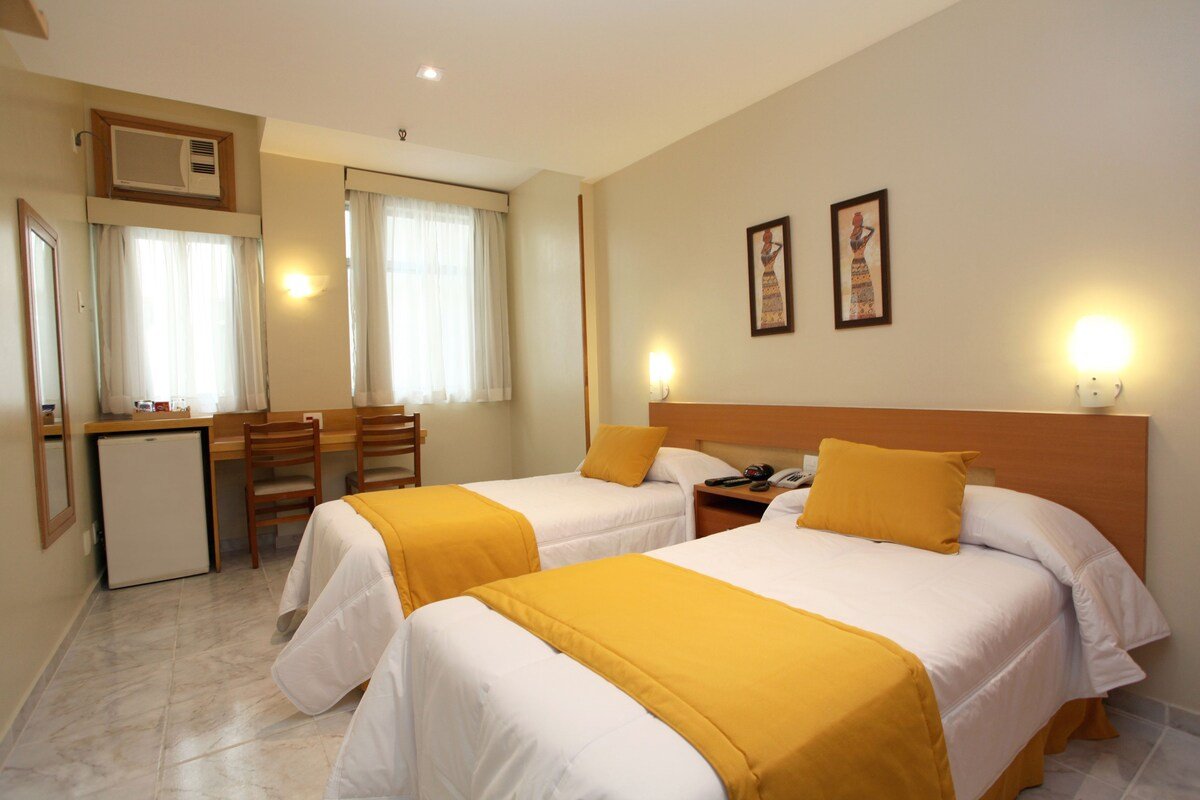
Ipanema Inn
Ipanema Inn would be my starting point for a comfortable stay close to the beach, cafés and restaurants. Quitéria, the restaurant downstairs, adds to the appeal. Another plus is that you’re also a block away from Square Nossa Senhora da Paz, a nice park that has markets certain days of the week.
BEACHFRONT SPLURGE
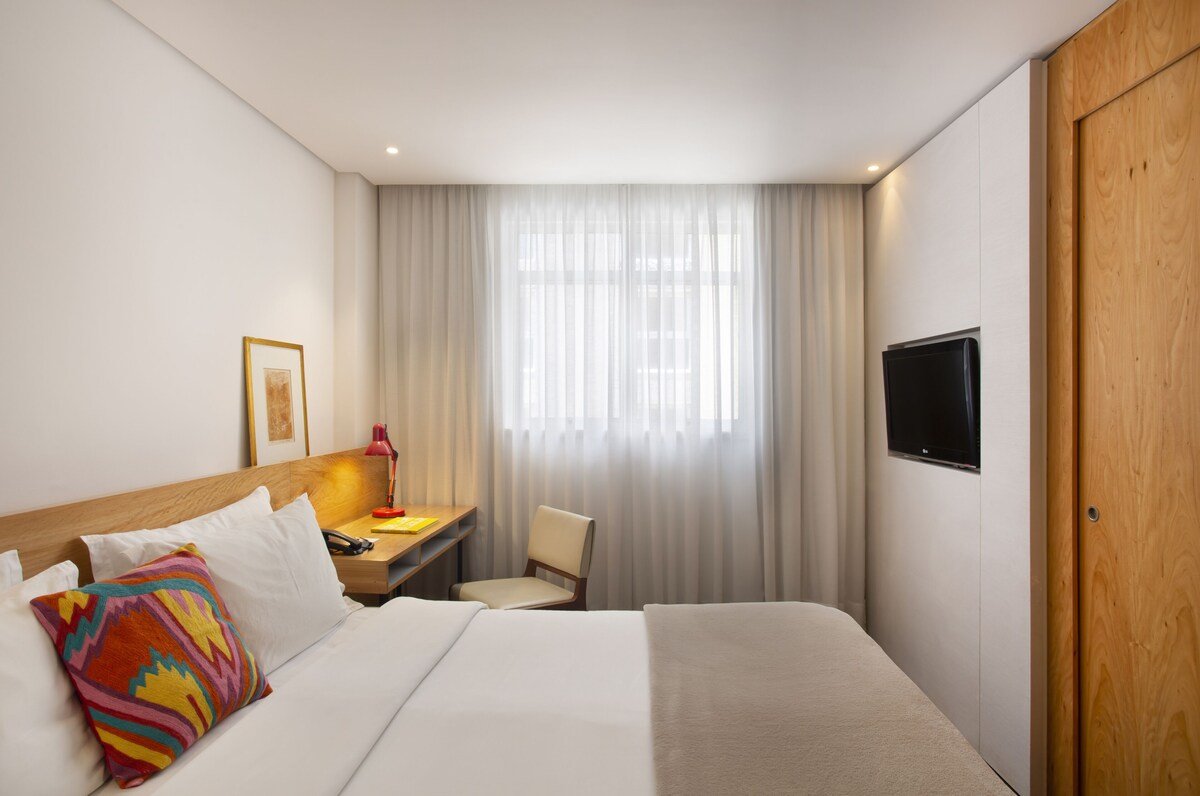
Hotel Arpoador
This four-star hotel sits on the waterfront near Pedra do Arpoadora — a giant rock where people hang out and watch sunset. It’s honestly in one of my favorite spots since you have access to the beach, park, and an outdoor gym nearby. This is the location I’d look at if beach access were my priority.

Leblon: Best for a Quieter, Upscale Beach Stay
If you keep heading west along Ipanema’s beachfront, you’ll reach Leblon, a more upscale neighborhood in Zona Sul. The beach still has kiosks and people playing sports, but is a lot calmer and more spacious than both Copacabana and Ipanema.
For me, the change becomes noticeable when I walk farther west: fewer tourists and less traffic, residential streets, restaurants and more polished shopping areas behind the beach.
Similar to my Leme recommendation, I think Leblon works great if you want a quieter beach experience or are traveling with a family. The difference here is that Leblon gives you more access to cafes, restaurants, and shopping. A nice benefit so that you can enjoy the area around your hotel when you come back after exploring or hanging at the beach.
The two drawbacks are cost and distance to central Rio attractions. I’d be more inclined to pay for a Leblon stay if I planned to spend plenty of time around the beach and neighborhood.
MORE ROOM TO SETTLE IN
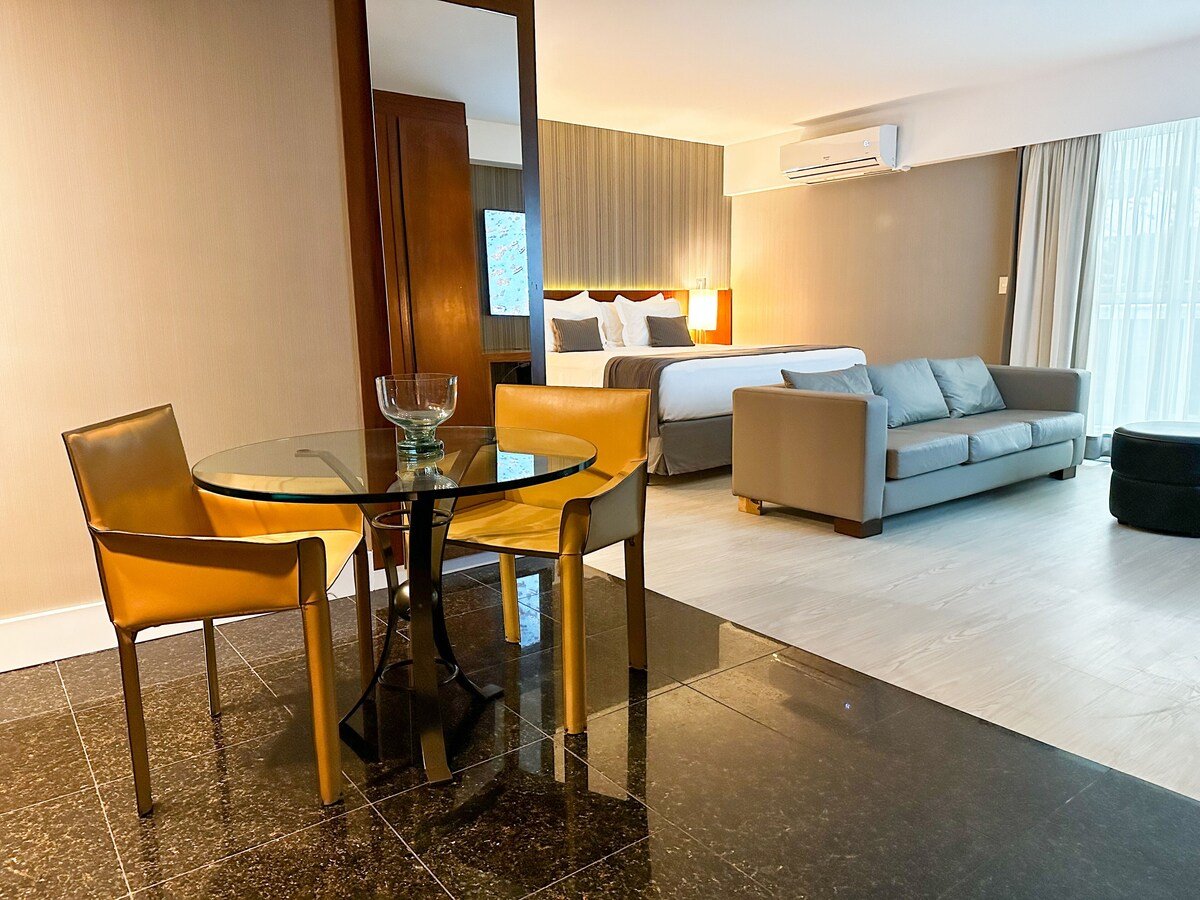
Promenade Palladium Leblon
Promenade Palladium offers spacious rooms and suites on a neighborhood street, with restaurants and cafes nearby. While not directly on the beach, the hotel is a short two block walk to Leblon beach and is close to the metro to help you travel to other neighborhoods.
BEACHFRONT SPLURGE
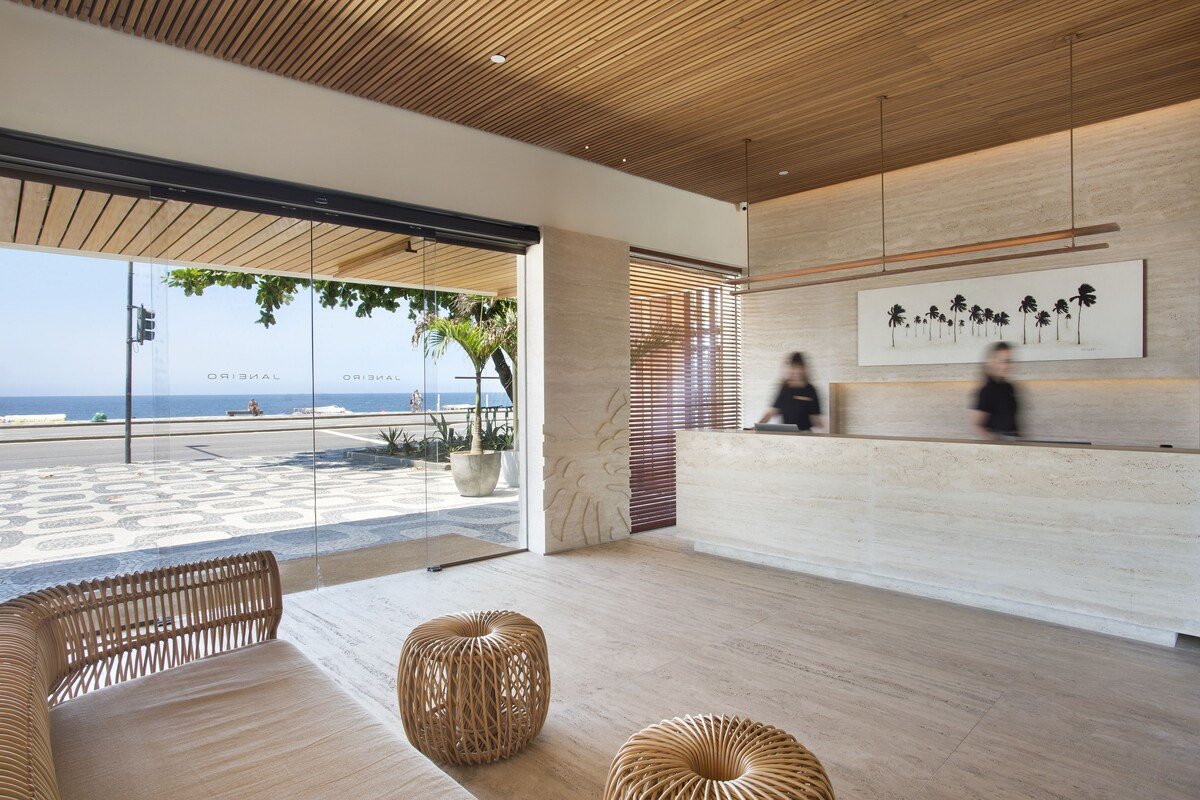
JANEIRO Hotel
JANEIRO is a five-star, design-focused hotel that’s right on Leblon Beach, with restaurants and a rooftop pool bar overlooking the coast. I’d look here for a slower stay built around the beach and good meals.
Botafogo: Best for Nightlife and Restaurants
Botafogo is where Rio starts to feel less like a beach destination and more like a city you could actually live in. While the neighborhood bay has views of the famous Sugarloaf Mountain, Botafogo’s real personality is a few streets inland, where cafés, restaurants, and crowded bars mix with apartment buildings and everyday carioca life.
Around Rua Arnaldo Quintela, I found streets packed with bars, with people gathering outside over drinks and crowds spilling across the sidewalks and into parts of the road. If going out for food and drinks is a big part of your trip, this is somewhere I’d look.

Staying nearby lets you go out around your accommodation instead of crossing the city for every evening plan. Just check reviews for room noise; I’d want easy access to that social atmosphere but also want somewhere I could sleep afterward.
The waterfront in Botafogo gives you views of Sugarloaf across the bay, and Urca is nearby for a visit to Sugarloaf Mountain. However, I wouldn’t choose Botafogo for its beach. I my opinion, It’s not that nice and can be a bit dirty. If walking onto nice beach sand every morning is the part you’re most excited about, I’d stay further west then come to Botafogo for a night out.
NIGHTLIFE BASE
ibis Rio de Janeiro Botafogo
ibis Botafogo is a three-star hotel in the heart of Botafogo. It’s location is great if you want to spend your evenings around the neighborhood’s restaurants and bars (it’s right by the Hocus Pocus DNA Brewery, solid spot if you enjoy beer). It’ also close to the metro to explore other neighborhoods.

ROOFTOP & SUGARLOAF VIEWS
Yoo2 Rio de Janeiro
Yoo2 gives you the other side of Botafogo, with a rooftop pool and bar overlooking the bay toward Sugarloaf. It’s what I’d choose if I wanted those views and somewhere to unwind, with trips farther into the neighborhood for the bars around Rua Arnaldo Quintela.

Where Would I Stay in Rio if Safety Were My Main Concern?
For me, Ipanema and Leblon are where I felt most comfortable with the everyday atmosphere. Copacabana is also somewhere I’ve stayed, but I’d be more particular about the block and the streets around your hotel.
I wouldn’t choose Centro or Lapa as my base. I’ve gone for sightseeing, music and nights out, but I’d be weary of wandering around at night time and prefer using Uber to get around here rather than walking. One late night phone-theft experience in Centro during Carnival reinforces that preference.
I also know Santa Teresa is popular to visit for its hilly streets, art and little shops, which is why I love the neighborhood. That said, the quieter streets and less convenient transport made me uncomfortable with the idea of returning there late, so I wouldn’t choose it for accommodation either.
Should I stay in a Hotel or an Airbnb in Rio de Janeiro?
For shorter Rio de Janeiro stays, I’d recommend a hotel as having facilities and a reception / concierge to help you navigate the city is useful. Not everybody in Rio speaks english, so having someone readily available can alleviate stress. A lot of hotels can help with activities, transportation, and even include breakfast too.
For longer stays (1 week +) and apartment or Airbnb work well as they’ll provide you more space, facilities like a kitchen and laundry, and save you money. Pay attention to reviews though — I’ve had some great Airbnb stays in the city and one that was dirty with bed bugs, and finding last minute accommodations while you’re trying to enjoy a trip is not ideal.
Final Thoughts: Where Should You Stay in Rio de Janeiro?
I think the biggest thing to consider when looking for accommodation in Rio is what you want your days to look like outside of sightseeing.
If you want to come back to solid restaurant and bar scene at the end of the day and don’t care about the sand, Botafogo is my pick.
If beach time is a priority then head further west toward Copacabana, Leme, Ipanema, and Leblon, but decide what vibe you want. Copacabana and Ipanema gave me more of an active beach scenes, where the Leme and Leblon neighborhoods are where I would go for calmer vibes.

READ MORE ABOUT RIO DE JANEIRO
Looking for more information about traveling to Rio de Janeiro? Here’s some further reading that may be helpful for your trip:
👀 Need ideas for things to do in Rio? Here are the 12 Best Things to Do in Rio de Janeiro.
🪅 Visiting Rio de Janeiro for Carnival? Read my Rio Carnival Guide.
🥾 Curious which hike to do in Rio de Janeiro? I reviewed the best ones here: Best hikes in Rio de Janeiro.
🌅 Want to catch the best sunrise in Rio? Check out my Dois Irmãos Sunrise Hike Guide.
🌄 Want to get the best panoramic views of the city and surrounding nature? Sugarloaf Mountain: 3 Ways to Reach the Top.
⛰️ Looking for a good workout with phenomenal views? Read my Guide to Pedra da Gávea.

I’m Marie, a slowmad and adventurer who left settled life in the U.S. to explore the world more deeply.
I spent four months in Brazil, including three living in Rio de Janeiro, and traveled widely beyond the city — from island escapes and jungle landscapes to the Pantanal and Brazil’s northeast.
I share what I learned firsthand, from local life and culture to the adventures that made me want to keep exploring.
MORE RIO DE JANEIRO
-

Is Rio Carnival Safe? What I’d Actually Worry About
I loved Rio Carnival, but I wouldn’t call it carefree. After witnessing two phone thefts in two days, here’s what actually felt risky and what I’d do differently.
-

Pedra da Gávea Hike: How Hard Is It Really?
After hiking Pedra da Gávea three times, with others and solo, here’s what I’d want you to know about the climb, descent, changing weather and whether to book a guide.
-

Sugarloaf Mountain Rio: 3 Ways to Reach the Top
A firsthand guide to visiting Sugarloaf Mountain in Rio by cable car, hiking Morro da Urca, or climbing Costão, with tickets, timing and sunset advice.
-

What Is Rio Carnival Like? My Honest Experience
I returned to Rio for Carnival after living there for a few months. From spontaneous street parties to the Sambadrome and a stolen phone, here’s what the experience was really…