BRAZIL
SHARE:
This post contains affiliate links. If you book through them, I earn a commission at no cost to you. Learn more
Rio de Janeiro, Brazil, is one of South America’s most iconic cities, with dramatic mountain views, famous beaches, energetic neighborhoods, and Christ the Redeemer watching over it all. There’s a lot to see, but most people only have a few days, so which experiences are actually worth your time?
I spent 4 months total in Brazil, and 3 of those were spent living in Rio. I did the major sights, explored neighborhoods, and experienced everyday life — and while there’s a ton to do, you likely only have time for a hand full. Here’s the list of things to do in Rio de Janeiro that I’d prioritize for a first time visitor.
Planning a trip to Rio de Janeiro?
🛌 Book a hotel: Booking.com, and Expedia
👓 Book local tours: Viator, and GetYourGuide
📱 Setup international data Airalo
🏥 Travel insurance: IMG
Best Things to Do in Rio de Janeiro
1. See Christ the Redeemer (But watch the weather)

When you look up Rio de Janeiro, one of the first photos you’ll probably see is Christ the Redeemer, one of the New Seven Wonders of the World. This giant statue is just shy of 100ft tall and towers over the city on top of Corcovado Mountain, arms stretched wide to symbolize Christ embracing the world.
You can spot the monument from all over Rio, but standing underneath the statue with the city and mountains surrounding you gives you a much stronger sense of its scale. Is it touristy? Absolutely. I still think it’s worth seeing at least once.


You can hike up Corcovado or take the train, which is what I did. My biggest advice is to pay attention to the weather. Rio is incredibly mountainous, and conditions can change fast. The day I went started out beautiful and sunny, but by the time I reached the top, clouds had rolled in. It suddenly became cold and misty, and the panoramic views slowly disappeared.
If you have some flexibility in your plans, use it. Clear weather makes a huge difference in how much of Rio you’ll actually see from the top.
2. Spend an Afternoon at Ipanema Beach and Stay for Sunset

Copacabana may be Rio’s most recognizable beach, with its huge curved shoreline and black-and-white promenade, and I still think it’s worth seeing. However, if I had to choose one beach to actually spend a few hours at, I’d pick Ipanema.
I spent a lot of time at both while living in Rio, and Ipanema always felt calmer and less tourist-focused to me. Don’t get me wrong, it still gets busy, but I noticed more of a mix of locals and visitors rather than the heavier tourist crowd you tend to get in Copacabana.


Ipanema also feels very lived-in. You’ll see vendors moving along the sand, people playing sports, and groups just hanging out.
After a beach day, one of my favorite things to do is walk toward 📍Arpoador, the rocky point between Ipanema and Copacabana, for sunset. It became one of my favorite places in Rio to watch the sun go down, with Ipanema stretching toward Dois Irmãos in the distance.
3. Explore Santa Teresa
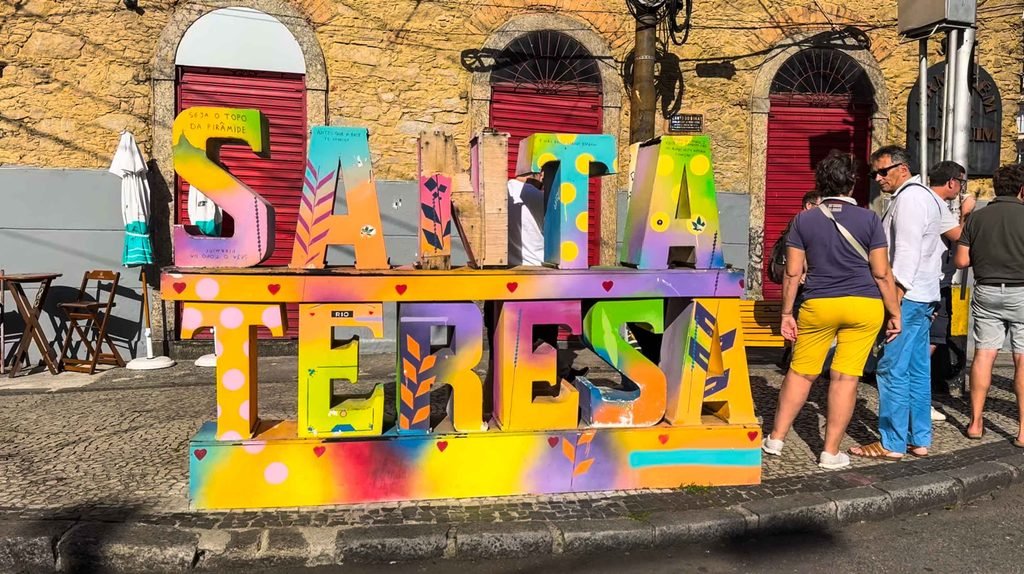
Santa Teresa swaps Rio’s beach and nature scenery for steep streets, old buildings, tram tracks, colorful murals, and small artisan shops. The old yellow tram still runs through the neighborhood, and part of the charm is how all of that sits alongside normal residential streets rather than feeling like a polished tourist district.
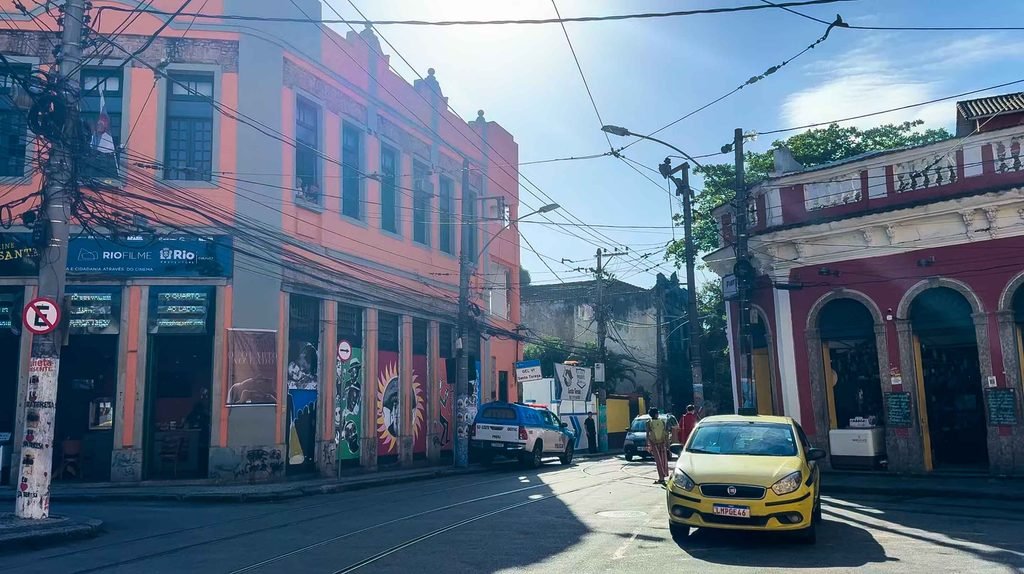
It’s one of those neighborhoods I especially enjoyed wandering without much of a plan. I’d stop for coffee, browse a few shops, look at the street art, and see where the streets took me. Parque Glória Maria, formerly Parque das Ruínas, is worth stopping at for the views and old mansion ruins, but I wouldn’t treat Santa Teresa like a checklist. The neighborhood itself is the experience.
4. Experience Sugarloaf and Morro da Urca

Sugarloaf is one of Rio’s classic viewpoints for a reason: from the top, you get sweeping views over the coastline, mountains, and city below.
Most people take the cable car from Praia Vermelha to Morro da Urca and then continue to Sugarloaf. I’ve done it that way, but if you’re up for a little walking, I’d recommend hiking to Morro da Urca first. The trail is relatively easy and shaded, and it makes the experience feel a little less like you’re simply riding from viewpoint to viewpoint. There’s tours available for the hike, but it’s completely doable on your own.


From Morro da Urca, take the second cable car up to Sugarloaf for the bigger panoramic views. I’d also give yourself time to hang out rather than immediately heading back down. Morro da Urca has places to grab food and drinks, and I’ve been there when music and events were happening, which makes it a fun place to hang around around sunset.
🧗🏻Want the adventurous way up Sugarloaf?
I climbed Sugarloaf via the Costão route as well, which combines hiking, scrambling and technical climbing on the mountain itself. If that sounds more appealing than riding the cable car the whole way, I’d do it with a guide who provides the proper equipment and knows the route.
5. Try Brazilian Churrasco

Brazil is known for its churrasco, and if you eat meat, trying it in Rio is one of the easiest ways to experience a very Brazilian style of dining.
You can experience churrasco a few different ways. For something casual, places like 📍Galeto Sat’s serve grilled meats straight from the fire with beer and sides. For the full experience, try a rodízio, where waiters circle through the restaurant offering different cuts of meat until you signal that you’ve had enough. Cues to the waitstaff are communicated through a double sided card — green for “serve me more meat,” and red for “I need a break.”
I tried both styles while living in Rio, and if you’ve never experienced a Brazilian rodízio before, I’d do it at least once. I went to 📍Rio Brasa Lagoa, where there was a huge buffet alongside the seemingly endless parade of meat coming to the table.
For a normal dinner, though, you definitely don’t need the full all-you-can-eat production. Some of my favorite meals were at the more casual churrasco spots.
6. Hike Dois Irmãos for Sunrise

For one of my favorite views over Rio, hike Dois Irmãos for sunrise. From the top, you look down over Ipanema and Leblon with the coastline, mountains, and city spreading out below you as the sun comes up. It’s pretty breathtaking.
The hike itself is steep in parts but fairly manageable. What makes it a little more complicated is getting there. The trail starts above Vidigal (one of the favelas). For sunrise you’ll usually arrive before dawn, take a local moto taxi up through the favela, and then continue to the trailhead from there.


I did the hike independently, and the experience of climbing in the dark while music from Vidigal carried up through the trees at 3AM is something I still remember.
For most first-time visitors, though, I’d recommend going with a local guide. The trail isn’t particularly difficult, but navigating Vidigal and arranging the moto ride in the middle of the night can feel intimidating if you don’t know the area. If you’re already trying to be safety-conscious in Rio, having someone who knows the neighborhood, trail access, and early-morning logistics takes away a lot of unnecessary uncertainty.
🗺️ Make the Dois Irmãos sunrise hike easy
This guided hike takes care of the trickiest part of doing Dois Irmãos on your own: getting through Vidigal, taking the moto-taxi up, and finding the trailhead before sunrise. You can choose a sunrise or daytime hike, and the whole experience takes about 3.5 hours.
7. Take a Guided Tour of Rocinha

Rocinha, the largest favela in the city, is a part of Rio that many visitors only ever see from the outside. Visiting with someone from the community gave me much more context about what everyday life there actually looks like.
What stood out to me most was how much normal daily life was packed into the narrow streets and alleyways: grocery stores, barbershops, laundromats, homes, and people going about their day. Having someone there to explain what I was seeing made a huge difference and kept me from making assumptions about a place I didn’t understand.
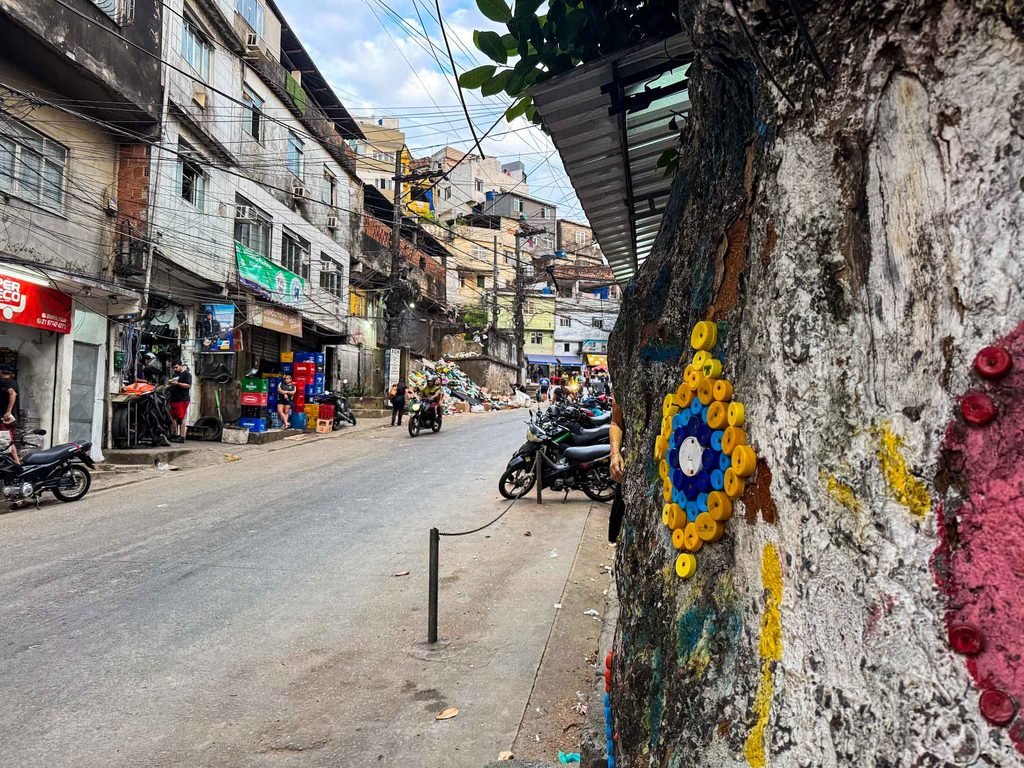
If you visit, go to learn, not to stare. These are people’s homes and actual lives. Be respectful with photography, follow your guide’s lead, and treat the experience as a chance to understand the community rather than as a spectacle.
Looking for a local-led Rocinha tour?
Choose a tour led by someone who actually knows or lives in the community. The local perspective makes a big difference in your experiences. Here’s the tour I’d recommend:
8. See Escadaria Selarón
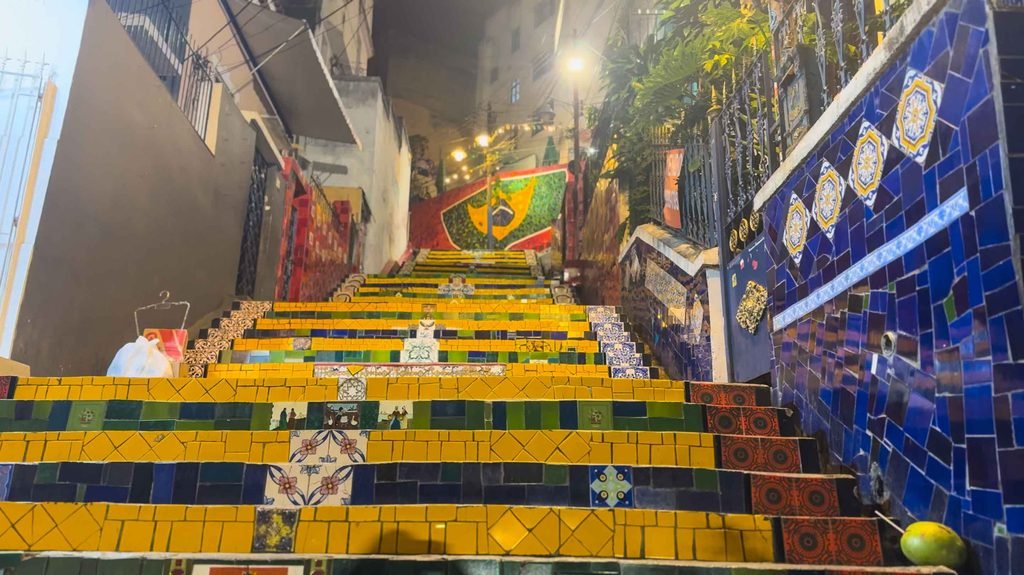
Escadaria Selarón, or the Lapa Steps, is one of Rio’s most colorful landmarks, with hundreds of tiled steps covered in mosaics collected from around the world.
It’s an easy stop, and you don’t need to spend a huge amount of time here, but I think it’s more interesting if you actually look at the individual tiles instead of just taking a photo from the bottom. I’ve visited several times, and part of the fun is spotting details from different countries and cities. I was especially excited to find tiles from San Francisco — my former home — which made me smile.
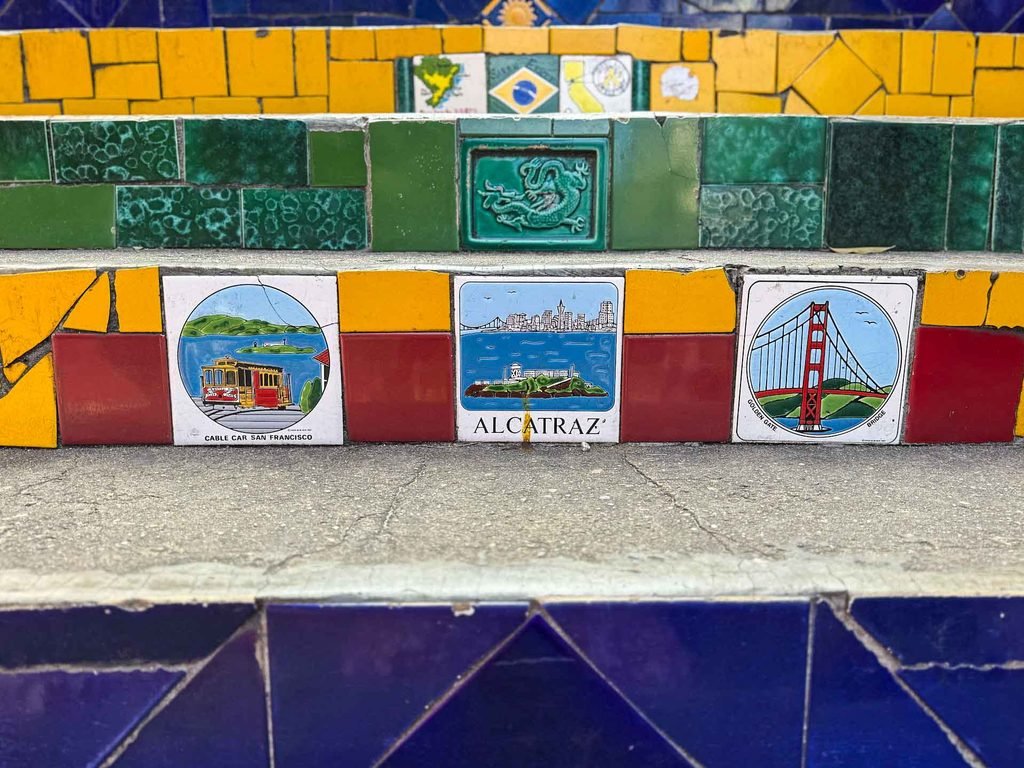

The stairs can get crowded throughout the day, so don’t expect an empty photo unless you come earlier in the morning or later in the evening — and if you decide to go in the empty hours, please don’t go alone for safety reasons. Even so, the steps are a fun place to wander through and one of the easiest locations to work into exploring Lapa or Santa Teresa.
9. Experience Pedra do Sal on a Monday Night

Pedra do Sal is one of Rio’s best-known samba nights, where a Monday roda de samba turns the surrounding streets into a giant outdoor party.
The site itself has Afro-Brazilian and samba history, but most people come for the atmosphere: live musicians, cheap caipirinhas, food vendors, and crowds spilling across the streets, steps, and hillside.


When I went, the streets leading in were packed shoulder-to-shoulder, and unless you were close to the center, you could barely see the musicians. That’s also part of the experience. Pedra do Sal feels less like going to watch a performance and more like being dropped into a huge street party with samba at the center.
Go expecting crowds, noise, and a very social night rather than a relaxed live-music experience. I would also be be especially careful with your phone and belongings when squeezing through the crowd, since pickpockets are common there.
10. Experience a Smaller Samba Roda

Pedra do Sal shows you samba on a huge scale, but I’d also make time for a smaller samba roda, because the experience is almost the opposite: more intimate, easier to get close to, and much more focused on the music itself.
A roda de samba feels less like watching a performance and more like gathering around the music. Musicians sit closely together while people crowd around them, singing, clapping, dancing, and sometimes even joining in.
One of my favorite samba experiences happened by accident in Santa Teresa. I was walking through the neighborhood one evening, heard music coming from a small bar, and followed it inside. The musicians were sitting around a table, people filled the room and spilled outside, everyone seemed to know the songs, and a few people were dancing nearby.
That’s what I loved about it: samba rodas in Rio don’t feel like performances put on for an audience. They feel communal. For the easiest place to experience one, start around Lapa or Centro, where samba venues and recurring rodas are more concentrated.
11. Step Inside the Real Gabinete Português de Leitura

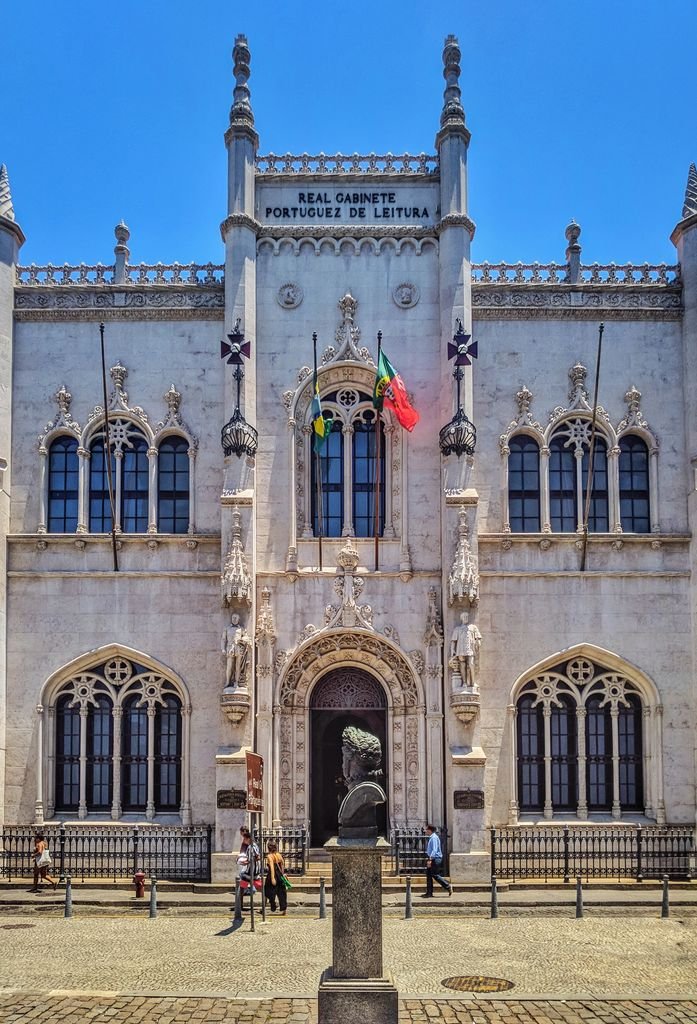
After so much time spent around Rio’s beaches, mountains, and viewpoints, the Real Gabinete Português de Leitura shifts the mood completely. Located in Centro, this historic library is a quick but memorable stop for its dramatic architecture and Harry Potter-like atmosphere.
The entrance immediately reminded me of Portugal, especially the intricate patterned tiles and ornate arches. The main reading room is what really surprised me. Dark wooden bookshelves rise several stories around the room, with balconies wrapping the walls and a stained-glass skylight letting light in from above.
It feels grand, historic, and a little unexpected in a city better known for its outdoor scenery. It’s almost like stepping into another era for a few minutes. If you’re already exploring Centro, it’s an easy stop and one of the most visually distinctive interiors I saw in Rio.
12. See Rio from a Helicopter

Rio is one of those cities that changes from above. A helicopter ride will give you sweeping views of the coastline, mountains, lagoons, forest, and dense neighborhoods all at once… Something that’s hard to get from any single viewpoint on the ground.
What I liked most wasn’t just the views themselves. Seeing Rio from the air made the geography of the city click for me. You can really see how tightly the city is built around the area’s natural features, and how far some neighborhoods stretch up the hillsides.


If you want panoramic views of Rio without hiking for them, or you simply want to see the city from a perspective you can’t get anywhere else, this is one experience I’d consider spending on.
Interested in a helicopter ride? Check out these tours:
How I’d Choose What to Do on a First Trip
Like I said before, there are so many amazing things to do in Rio de Janeiro, and these are just my top 12. You definitely don’t need to do all of them, and depending on how long you’re in the city, you probably won’t have time to.
If you’re short on time, I’d think about it this way: start with one big panoramic experience, like Christ the Redeemer, Sugarloaf, or even a helicopter ride depending on your travel style. Add one beach experience (my pick would be Ipanema), then choose one or two things based on what you’re most interested in.
If you want nightlife and music, go for Pedra do Sal or a smaller samba roda. If you’re more interested in neighborhoods and local culture, spend time in Santa Teresa or take a favela tour of Rocinha. And if you want something more active, hike one of the many peaks around the city, like Dois Irmãos.
Popular Tours Worth Considering
You definitely don’t need a tour for everything in Rio, but there are a few experiences where having a guide can make the logistics easier, provide a layer of safety, or add useful local context.
They also offer multiple experiences in one tour, which I think could help you schedule your days if you have limited time.
If you’d rather book something organized, these are the kinds of tours I’d look at:
FAQ
READ MORE ABOUT RIO DE JANEIRO
Looking for more information about traveling to Rio de Janeiro? Here’s some further reading that may be helpful for your trip:
👀 Need ideas for things to do in Rio? Here are the 12 Best Things to Do in Rio de Janeiro.
🪅 Visiting Rio de Janeiro for Carnival? Read my Rio Carnival Guide.
🥾 Curious which hike to do in Rio de Janeiro? I reviewed the best ones here: Best hikes in Rio de Janeiro.
🌅 Want to catch the best sunrise in Rio? Check out my Dois Irmãos Sunrise Hike Guide.
🌄 Want to get the best panoramic views of the city and surrounding nature? Sugarloaf Mountain: 3 Ways to Reach the Top.
⛰️ Looking for a good workout with phenomenal views? Read my Guide to Pedra da Gávea.

I’m Marie, a slowmad and adventurer who left settled life in the U.S. to explore the world more deeply.
I spent four months in Brazil, including three living in Rio de Janeiro, and traveled widely beyond the city — from island escapes and jungle landscapes to the Pantanal and Brazil’s northeast.
I share what I learned firsthand, from local life and culture to the adventures that made me want to keep exploring.
MORE BRAZIL
-

Is Rio Carnival Safe? What I’d Actually Worry About
I loved Rio Carnival, but I wouldn’t call it carefree. After witnessing two phone thefts in two days, here’s what actually felt risky and what I’d do differently.
-

Pedra da Gávea Hike: How Hard Is It Really?
After hiking Pedra da Gávea three times, with others and solo, here’s what I’d want you to know about the climb, descent, changing weather and whether to book a guide.
-

Sugarloaf Mountain Rio: 3 Ways to Reach the Top
A firsthand guide to visiting Sugarloaf Mountain in Rio by cable car, hiking Morro da Urca, or climbing Costão, with tickets, timing and sunset advice.
-

What Is Rio Carnival Like? My Honest Experience
I returned to Rio for Carnival after living there for a few months. From spontaneous street parties to the Sambadrome and a stolen phone, here’s what the experience was really…
-

Dois Irmãos Hike in Rio: Sunrise, Vidigal & What to Expect
I hiked Dois Irmãos for sunrise without a guide. Here’s what to expect, from taking a moto taxi through Vidigal to the steep trail, summit views and walk back down.
-
8 Best Hikes in Rio de Janeiro: Easy Trails to Technical Climbs
I’ve hiked these eight routes around Rio, from easy forest trails to technical granite climbs. Here’s who I’d recommend each one to and which I’d choose for a short first…
-
Rio de Janeiro Carnival 2027 Guide: How to Plan Your Trip Without Burning Out
A practical first-timer’s guide to Rio de Janeiro Carnival 2027, including when to go, blocos vs. the Sambadrome, how many days to stay, where to base yourself, transportation, safety, and…
-
Where to Stay in Rio for Carnival 2027: Best Areas & Hotels
Choose your Rio Carnival base with my guide to Flamengo, Botafogo, Copacabana and Ipanema, including hotel recommendations and the areas I’d avoid staying in.
-

12 Best Things to Do in Rio de Janeiro After Living There
After spending three months living in Rio de Janeiro, these are the 12 experiences I’d prioritize for a first trip—from iconic viewpoints and beaches to samba, hikes, and neighborhood culture.