COLOMBIA
Getting Around Medellín: Uber, Metro & What Actually Works
•
SHARE:
This post contains affiliate links. If you book through them, I earn a commission at no cost to you. Learn more
When I first got to Medellín, I assumed getting around would be pretty straightforward. It looks compact on the map, and there’s a Metro system, so how hard could it be?
In reality, it’s more nuanced than it looks. Medellín is built in a valley surrounded by hills, and that shapes everything about how you get around. Most people end up using a mix of transportation depending on where they’re staying, the weather, and how comfortable they are navigating the city.
This is what actually worked for me after living here, not every route or schedule, just what I’d recommend whether you’re visiting or thinking about staying longer.
Quick tip
Having mobile data makes getting around Medellín way easier. You’ll be calling Ubers, checking routes, and using apps constantly. I usually use an eSIM like Airalo so I’m set up as soon as I land.
The Best Ways to Get Around Medellín
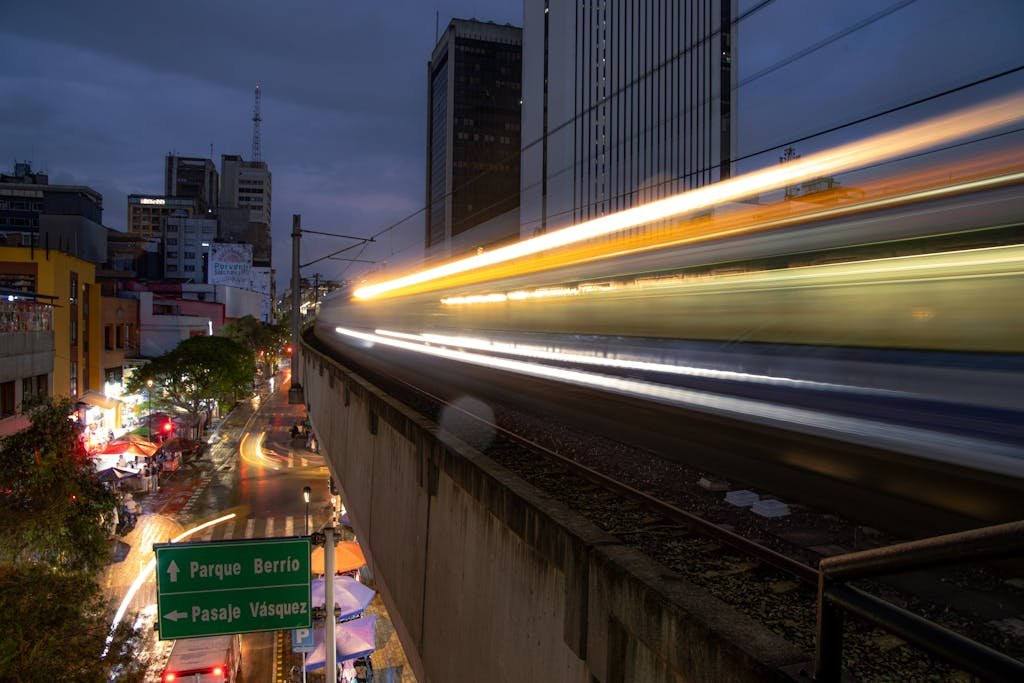
Here’s the simple breakdown of transportation in Medellín and what you’ll be using to get around the city.
- Rideshare Apps – easy, safe, and reliable.
- Metro – best for getting across the city quickly
- Metrocable (cable cars) – connects hillside areas
- Metroplús & Tram (Tranvía) – part of the system, but more area-specific
- Local buses – cheap, but less intuitive
- Walking – great in certain neighborhoods
- Uber Moto – sometimes faster than regular Uber, but comes with tradeoffs
Rideshare: Uber, Didi & Taxis
Uber was my go-to for getting around Medellín. It’s affordable, easy to use, and especially helpful at night, in the rain, or when I was heading somewhere unfamiliar and didn’t want to think too hard about logistics.
Compared to the U.S., rides are pretty inexpensive, though they’re still more expensive than public transportation.
A few things to know:
- You may be asked to sit in the front. Uber is technically legal, but some drivers still try to keep a low profile around taxis.
- Don’t slam the door. Cars tend to be lighter, and drivers are pretty particular about it.
- Seatbelts aren’t guaranteed. Some cars have missing or non-functioning seatbelts, so don’t assume they’ll always be available.
Traffic can definitely affect how convenient Uber feels, especially during rush hour or when traveling between neighborhoods like Laureles and Poblado.
Didi is another rideshare app that works similarly to Uber and is worth having downloaded as a backup. Sometimes one app is cheaper or has drivers available faster than the other.
Taxis exist too, but I personally never used them. I preferred rideshare apps since you can see the price upfront, track the route, and avoid any miscommunication about cost.
Uber Moto (Something You Won’t See in the U.S.)
One option you’ll see in Medellín that doesn’t really exist in the U.S. is Uber Moto, where you ride on the back of a motorcycle instead of taking a car.
I do use it, and sometimes it is the better option. If traffic is bad and you get matched quickly, it can be faster and often about half the price of a car, since motos can move between cars and aren’t as affected by traffic.
That said, it definitely feels less safe than being in a car, so I’m more selective about when I use it.
If it’s been raining, the roads are wet, or it looks like it might rain soon, I’ll almost always choose a car instead. The same goes if I’m heading somewhere unfamiliar or just want a bit more protection.
I also usually wear a rain jacket when I ride, not just for the weather, but as a small layer of protection.
Uber Moto can be a really useful option, but it’s not something I use without thinking about the conditions first.
Metro
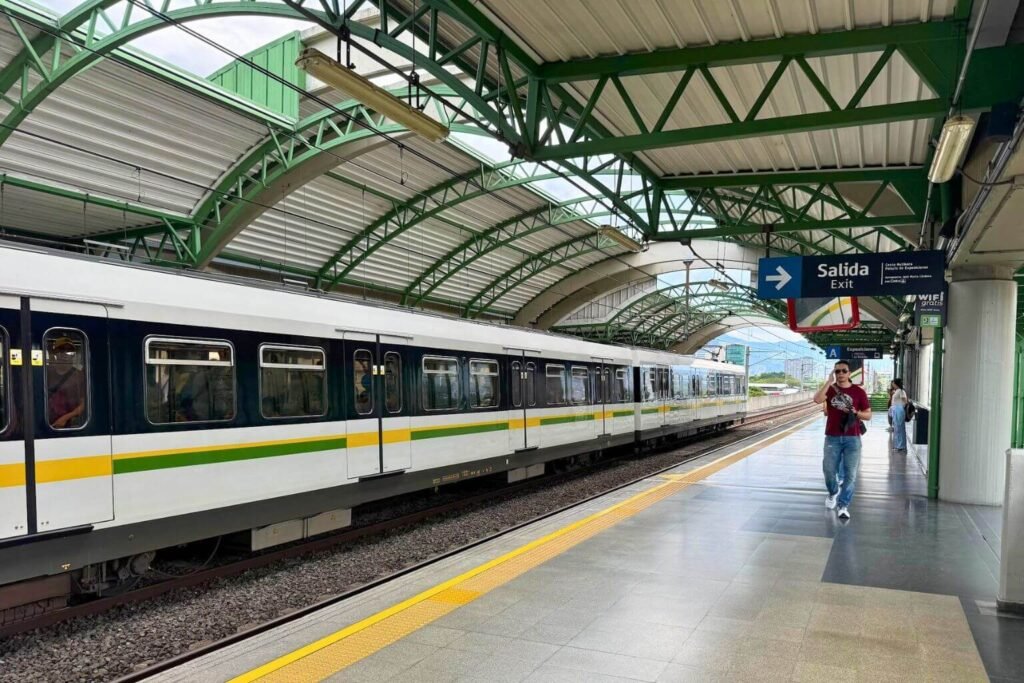
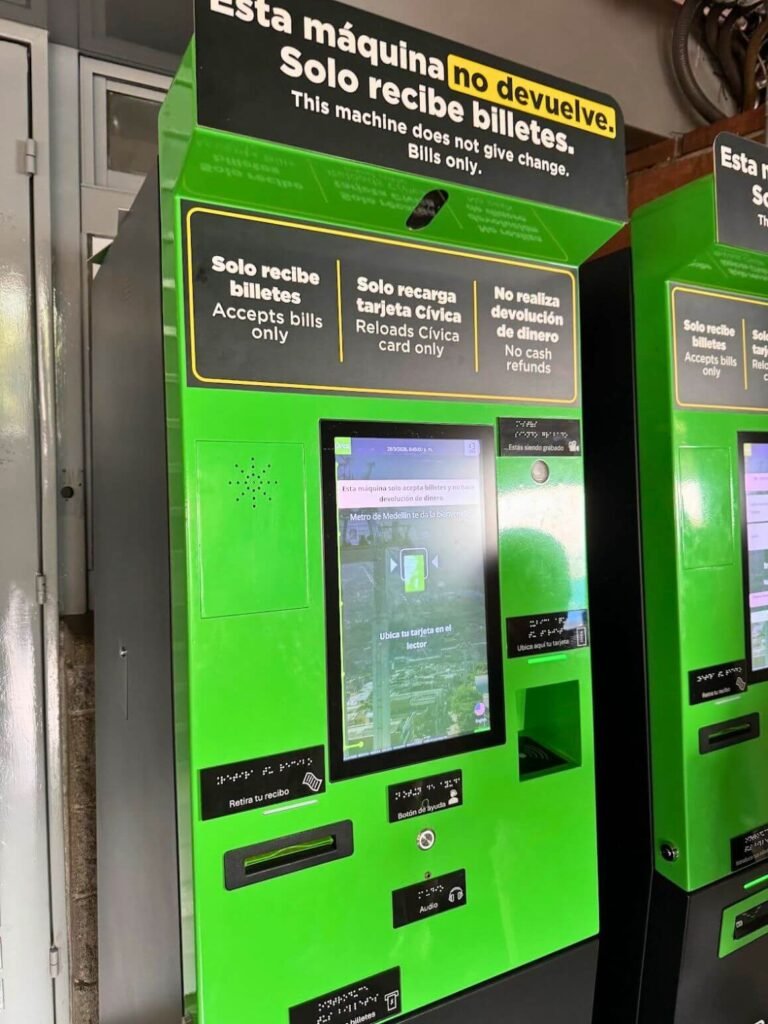
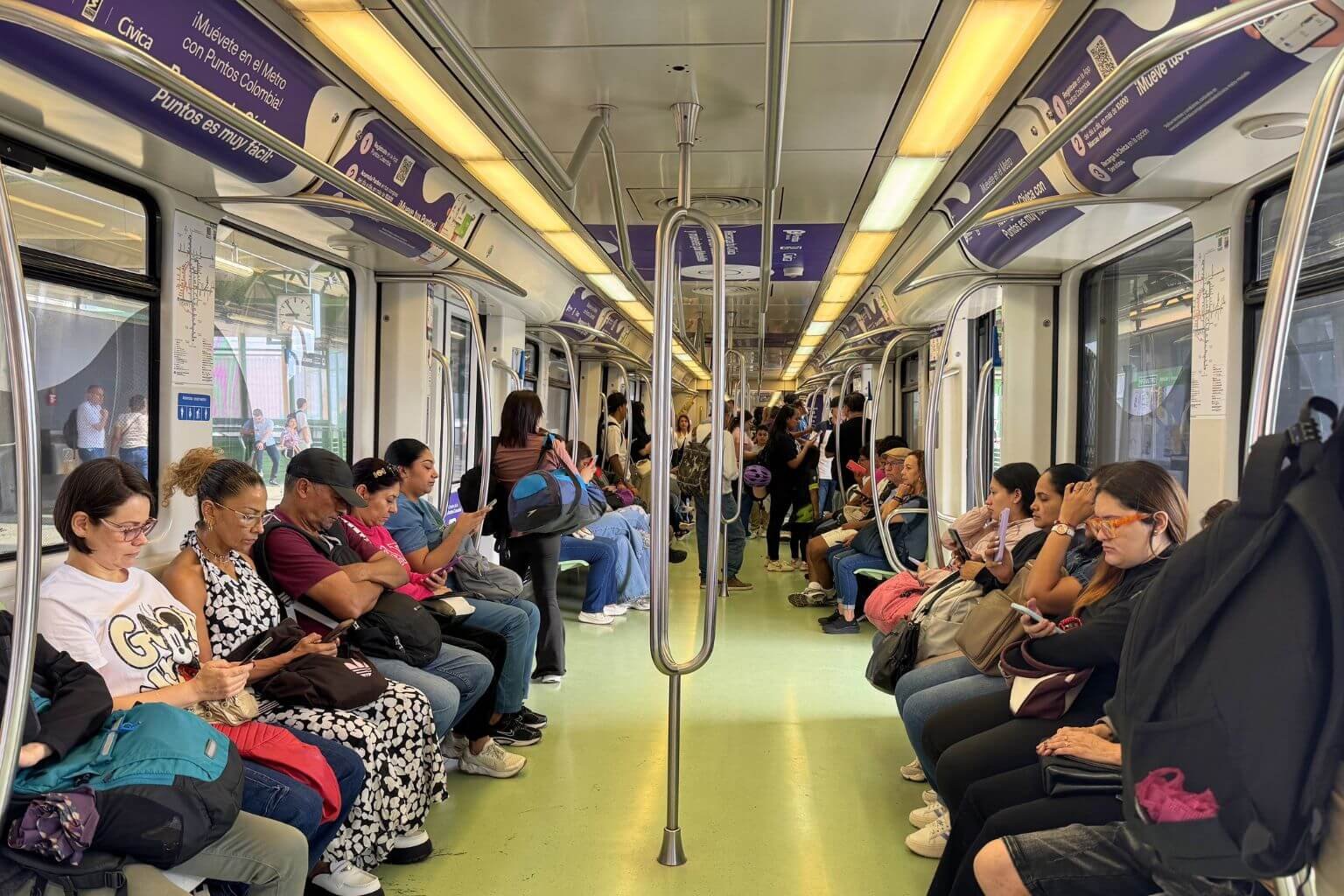
The Metro is one of the easiest public transportation systems I’ve used.
It’s clean, straightforward, and honestly much more intuitive than the buses. They’ll cost you around 4,000 COP (roughly $1 USD) per trip. If you’re trying to get across the city, especially north to south, it’s a great option.
You’ll need to get a Cívica card, a rechargeable smart card that works on the Metro and some buses, to use it. You can buy and reload one at Metro stations, usually from the ticket machines or service counters.
It’s also nice because it avoids traffic, which can make it faster than a car in certain situations.
That said, the Metro is not door-to-door, so you’ll usually still need to walk or take another form of transportation to your final destination.
Local Buses (Cheap, Useful… and a Bit Confusing)
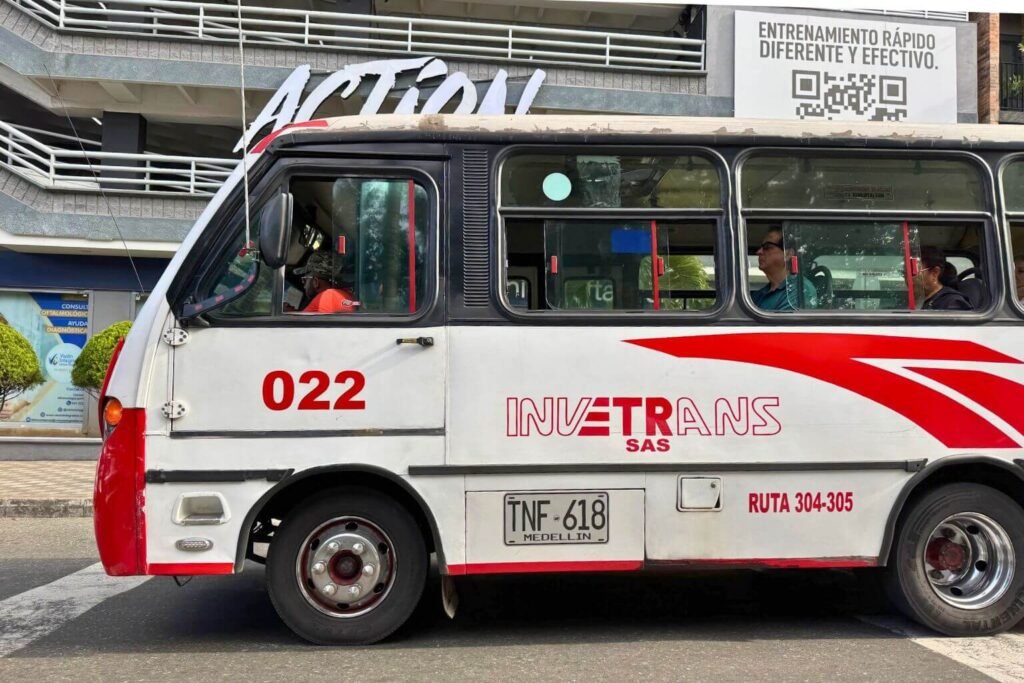
Local buses are a nice, cheap option, but they were definitely the least intuitive way to get around at first.
They’re smaller than what you might expect – usually fitting around 30 people – with older interiors, and the rides can be pretty bumpy (and sometimes fast, depending on your driver). They’re also very affordable, typically around 3,800 COP (just over $1 USD) per ride.
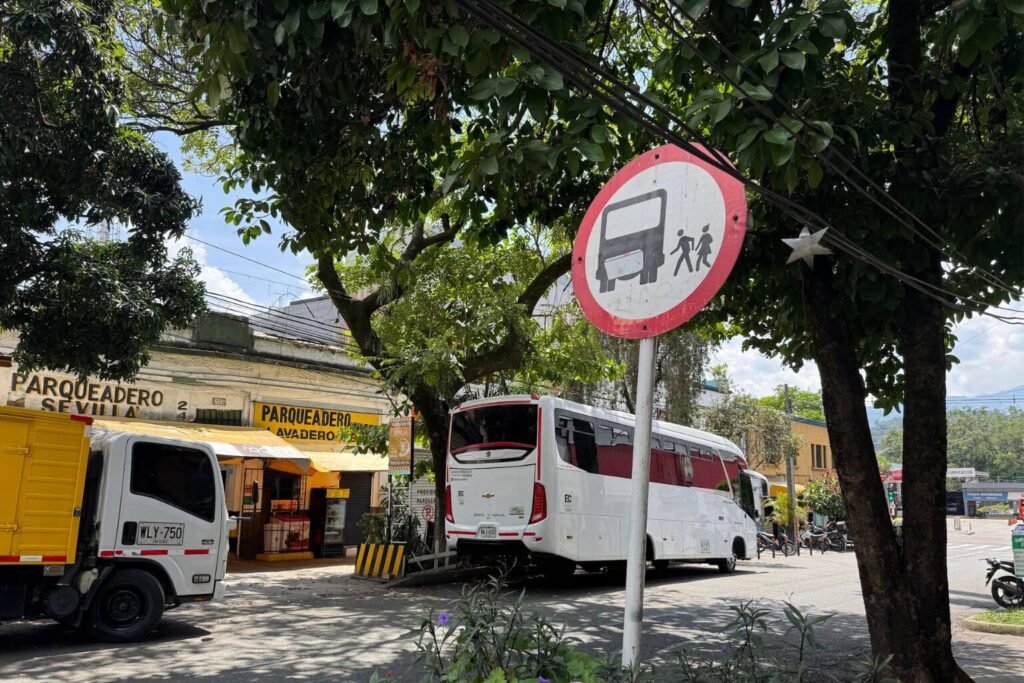
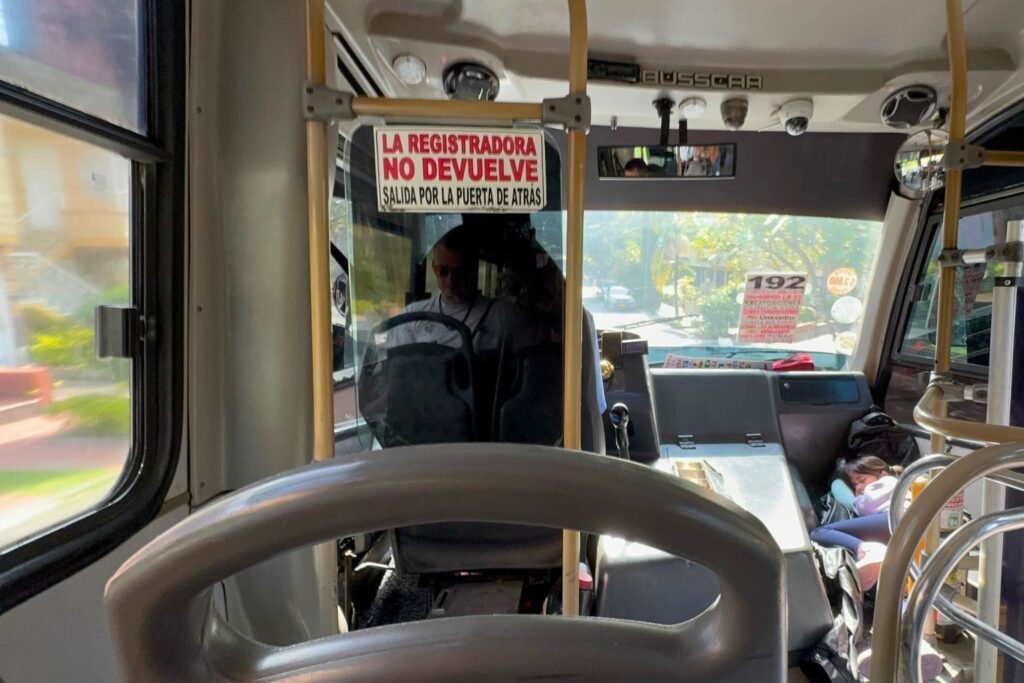
Catching one can take a bit of getting used to. Sometimes there’s a proper bus shelter with seating, and other times there’s just a sign (usually a red circle with a bus icon). But in some spots, it’s even less clear – it’s basically just people standing on the side of the road waiting.
On top of that, bus routes aren’t always fully listed on Google Maps. I’ve literally waited for a bus just because I saw someone else standing there and assumed it was a stop.
The Moovit app is much more reliable for buses than Google Maps, but even then, they don’t always run exactly on time.
They’re definitely useful, especially if you’re staying longer, but they take a bit more effort and patience to figure out.
Metrocable
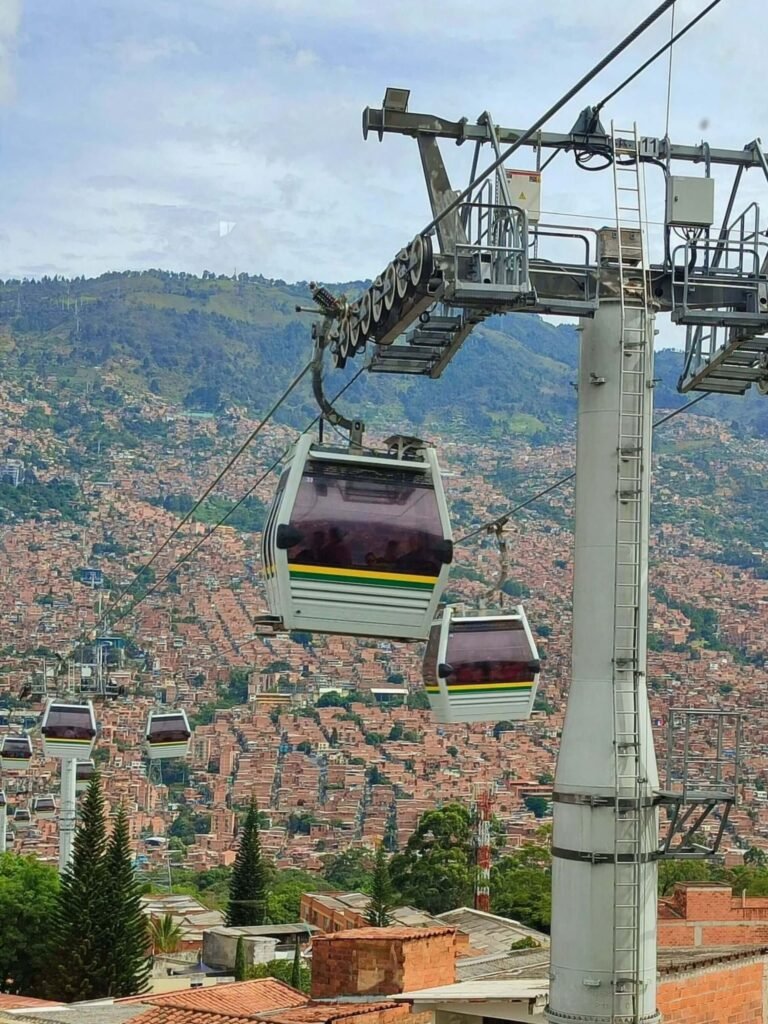
One of the more unique parts of Medellín’s transportation system is the cable cars.
They’re not just for views, they actually connect hillside neighborhoods to the Metro system and are used by locals as part of their daily commute.
If you go out to places like Parque Arví, you’ll likely use them, and the views over the city are incredible.
Even if you don’t use them regularly, they give you a good sense of how the city is built and how transportation here has adapted to the terrain.
Metroplús & Tram (Part of the System, But Area Specific)
There are also a couple other parts of the system you might hear about:
- Metroplús – a bus system that runs in dedicated lanes and functions more like a train
- Tranvía (tram) – a street-level train that runs through the Ayacucho area on the east side of the city
They’re both integrated with the Metro and use the same Cívica card, but they serve more specific parts of Medellín.
To be honest, I didn’t use these much, mostly because they weren’t in the areas I was spending time in (Laureles, Belén, Poblado, Envigado). But they’re still part of how locals get around depending on where they live.
Walking Around Medellín
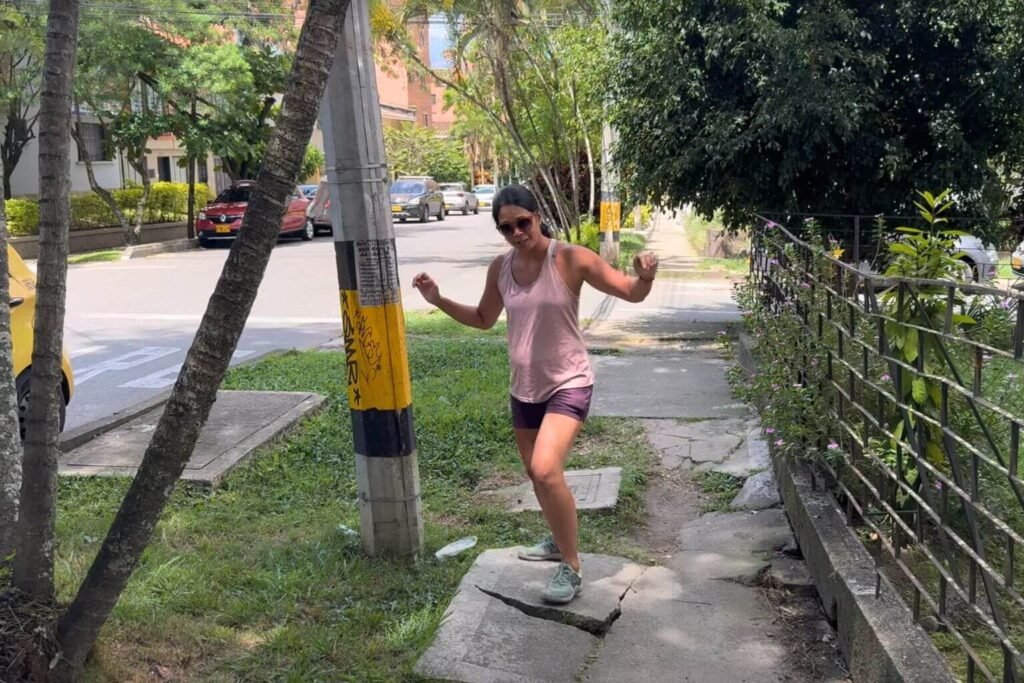
Walking really depends on the neighborhood. In areas like Laureles, Belén, and Envigado, it’s actually really pleasant. Tree-lined streets, lots of sidewalks, parks, cafés… I walked a lot in these areas.
But Medellín isn’t a fully walkable city overall.
One of the easiest mistakes to make is assuming something is close just because it looks close on the map. Hills, traffic, and how neighborhoods connect can make distances feel longer than expected.
Also worth noting: some sidewalks are uneven because of tree growth, so you do have to watch your step.
Medellín’s Terrain Shapes How You Get Around
One thing that helps make sense of all this is understanding that Medellín is built in a valley, surrounded by hills. A lot of the transportation here has been designed around that.
The cable cars are the big example, but you’ll also see smaller-scale solutions like the outdoor escalators in Comuna 13, which were built to help residents move up and down steep hills more easily.
It’s not something you’ll use day-to-day, but it gives you a better understanding of how the city works.
What Makes Getting Around Harder Than You Expect
Two things that impacted my plans more than I expected:
Rain in Medellín
It rains a lot in Medellín. Sometimes lightly, and sometimes really hard.
Rain affects getting around more than you might expect. It slows down traffic, makes Ubers take longer to arrive, and can turn even short distances into something inconvenient.
I’ve had days where I planned to just grab an Uber after a dance class and ended up waiting 20–30 minutes for the rain to calm down enough to get a ride. Even short walks can catch you off guard. I’ve walked 15 feet from a café to an Uber with an umbrella and still gotten soaked.
Sometimes it’s not even about distance, it’s about timing. If it’s raining heavily, you might find yourself waiting it out before ordering a ride, even if your pickup spot is close by.
Traffic in Medellín
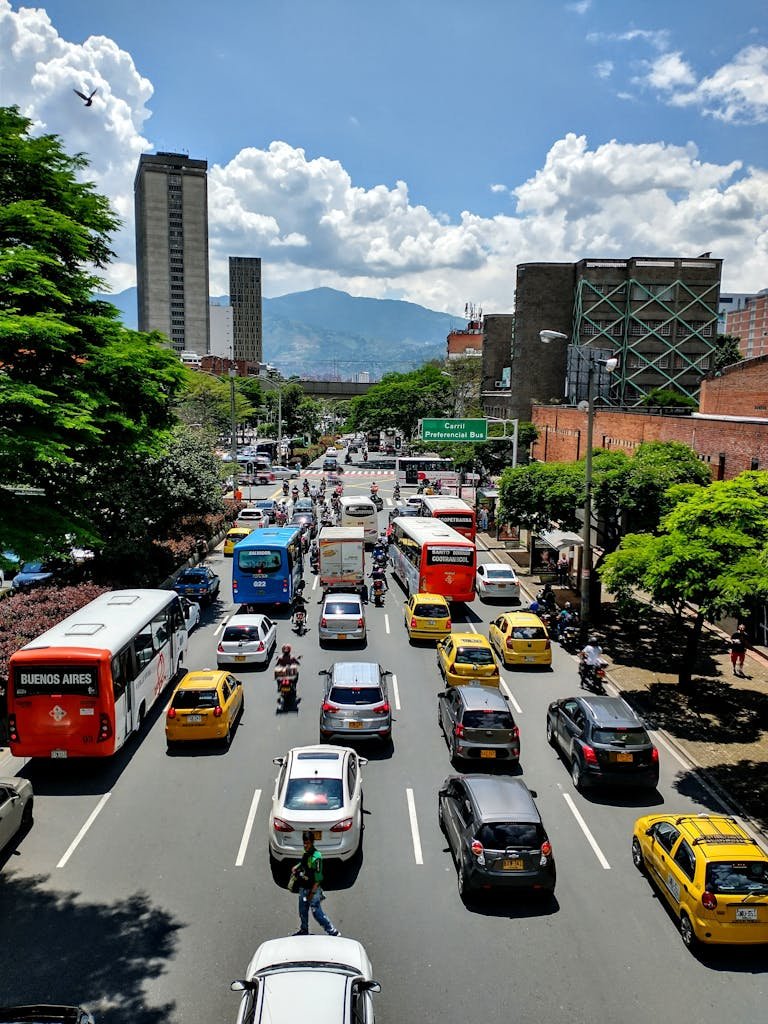
Traffic can definitely change how convenient it feels to get around, depending on the time of day.
I noticed this the most when going between neighborhoods like Laureles and Poblado. What looks like a quick ride on the map can take a lot longer during peak hours. I’ve had Ubers get stuck in traffic on the way to a salsa class in Poblado, turning what looked like a quick ride into something much slower than expected.
A lot of congestion builds up along major routes like Avenida Regional and Las Palmas, which connect different parts of the city. During morning and evening rush hour, things can slow down quite a bit.
Buses can take even longer since they make frequent stops and don’t always take the most direct route.
This is also where the Metro really stands out. Since it avoids road traffic entirely, it can sometimes be the faster option even if it’s not as convenient door-to-door.
Getting From the Airport
From the airport, your main options are:
- Uber or Taxi – most direct option but can cost around 120,000 COP+ depending on where you go in the city.
- Bus – the Combuses will take you to the San Diego Mall and cost about 20,000 COP.
The ride is usually around 45 minutes to an hour depending on traffic.
What I’d Use as a Visitor vs. Living Here
If you’re visiting:
- Uber / Didi
- Metro for longer distances
- Walking in the right neighborhoods
- Metrocable for the experience – it’s not just a tourist thing, locals use it daily
Most first-time visitors stay fairly concentrated around the main areas and attractions, so transportation tends to feel simpler overall. I also put together a guide on the best things to do in Medellín for first-time visitors if you’re planning your itinerary.
If you’re staying longer:
If you’re spending a few weeks or more, your relationship with the city changes, and so does how you get around.
- You’ll rely less on Uber and more on a mix of transportation
- Buses become more useful once you’re comfortable navigating them
- Where you stay starts affecting your day-to-day life a lot more (I write more about this in my Medellín neighborhoods guide)
- You’ll likely spend more time outside the main tourist areas
I put together a guide on things to do in Medellín beyond the tourist trail – the spots and experiences you find when you’re actually living there.
How I’d Get Around Medellín
Most of the time, I relied on Uber for convenience and moto when conditions felt right. I walked a lot in Laureles and Belén, used the Metro for longer distances, and eventually worked buses into the mix once I got more comfortable navigating the city.
If I could give one practical tip, it would be this: get Uber set up before you land and grab a Cívica card early. Those two things alone will cover most of what you need when you first arrive.
After that, you’ll naturally start figuring out what works best for you depending on where you’re staying, where you spend most of your time, and how comfortable you are using public transportation. That’s when getting around Medellín starts feeling much easier.
Getting Around Medellín: FAQs
Still have questions on getting around Medellín? Here’s what comes up most.
Planning a trip to Medellín?
📘 Read my full guide to Living in Medellín
🏡 Find the Best Neighborhoods in Medellín
👮🏻Learn about Safety in Medellin
📶 Set up data before you land: Airalo
🩺 Get covered abroad: SafetyWing Nomad Insurance

I’m Marie, a slowmad and adventurer who left settled life in the U.S. to explore the world more deeply.
I’ve spent about four and a half months in Colombia across two extended stays, mostly based in Medellín while exploring more of the country. I share the experiences that stood out, the adventures worth making time for, and the practical and cultural insights I picked up along the way.
MORE MEDELLÍN
-

Where to Dance Bachata in Medellín: My Favorite Socials & Dance Nights
A lived-in guide to where to dance bachata in Medellín, including my favorite socials, weekly dance nights, beginner-friendly spots, and tips for joining the scene solo.
-

Where to Stay in Medellín, Colombia: Best Areas & Hotels for Every Budget
A neighborhood-first guide to where to stay in Medellín Colombia including hotels, hostels, and apartment-style stay recommendations.
-

Getting Around Medellín: Uber, Metro & What Actually Works
Medellín’s transportation system is more nuanced than it first appears. After living in the city, I found myself using a mix of Uber, Metro, buses, moto, and walking depending on…
-
Medellín: Things to Do Beyond The Tourist Trail
Staying longer in Medellín? These are the non-touristy things I’d recommend — from menú del día spots and Comuna 4 to Bachata al Parque and slower versions of popular experiences.